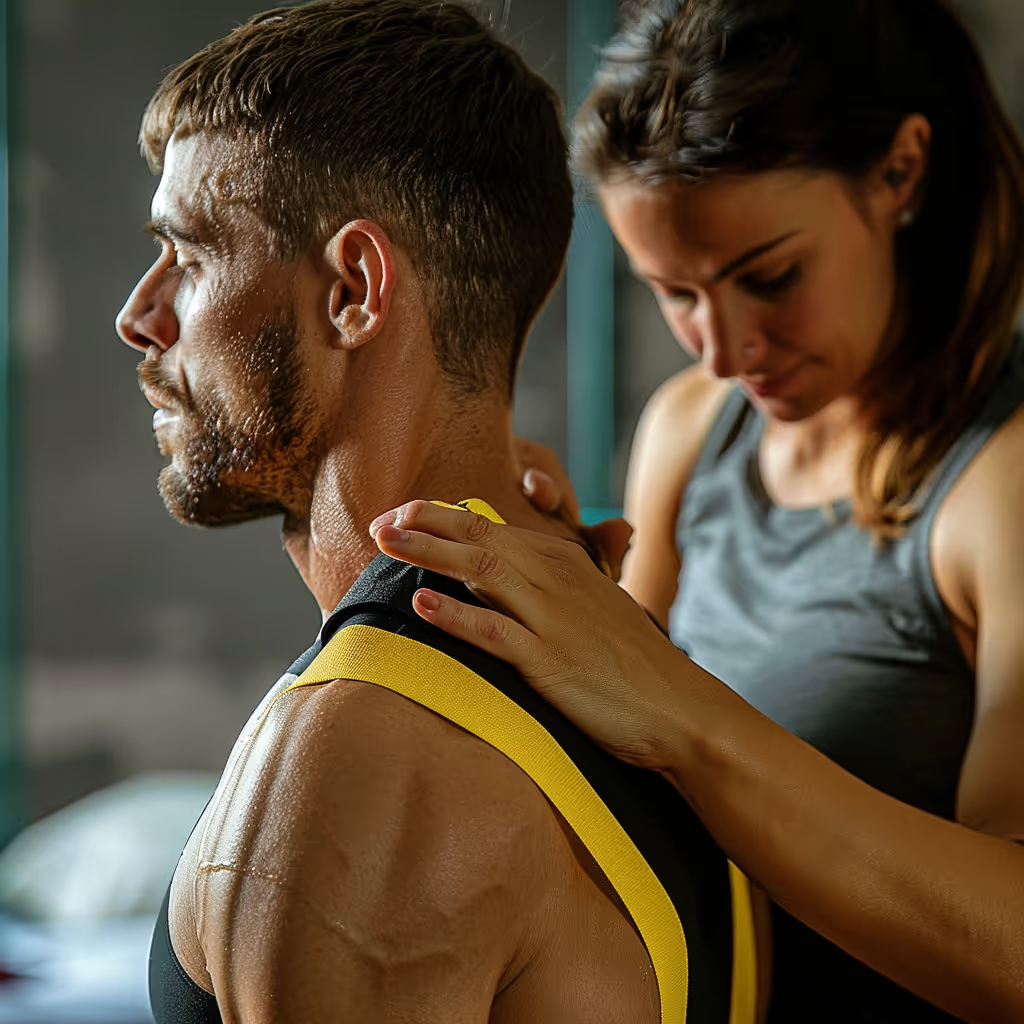
Physiotherapy for Jaw (TMJ) Pain
.png)
.png)
.png)




Physiotherapy for the Jaw (TMJ): How to Treat Pain and Restore Normal Function
Physiotherapy is one of the most effective treatments for temporomandibular joint (TMJ) disorders. Studies show that manual therapy combined with exercises reduces pain by 55 to 75% and improves mouth opening by 4 to 6 mm. This guide explains how physiotherapy can help you regain a functional and pain-free jaw.
You might experience pain when eating, clicking sounds when opening your mouth, or headaches that originate from your jaw. These symptoms can be quite bothersome in daily life. The good news? In 70 to 90% of cases, TMJ disorders respond well to conservative treatment, without surgery or invasive procedures.
To understand the causes and symptoms of your jaw pain, consult our complete guide to jaw pain and TMJ.
What is Physiotherapy for the Jaw (TMJ)?
Jaw physiotherapy is a specialized approach that treats temporomandibular joint disorders through manual techniques, therapeutic exercises, and patient education. It targets the chewing muscles, the joint, and the cervical structures that influence jaw function.
Unlike a night guard that protects your teeth from bruxism, physiotherapy addresses the root causes of the problem. It aims to reduce muscle tension, improve joint mobility, correct postural imbalances, and teach you strategies to prevent recurrence.
How Does Physiotherapy Work for TMJ?
Physiotherapy addresses issues in several ways. First, manual techniques help relax tense muscles and improve joint movement. Next, specific exercises retrain your jaw to move properly. Finally, patient education helps you identify and change habits that contribute to the problem.
Treatment isn't just focused on the jaw. Your physiotherapist also assesses your neck, as the upper neck vertebrae (C1 to C3) share nerve connections with the jaw through the trigeminal nerve. Issues in the upper neck can either cause or worsen jaw pain.
Who can benefit from TMJ physiotherapy?
Physiotherapy helps individuals experiencing myofascial pain (muscle tension), jaw joint disc displacement, limited mouth opening, painful clicking or cracking sounds, and headaches linked to the jaw. It is effective regardless of how long you've had symptoms.
What conditions does physiotherapy treat?
Physiotherapy treats several types of TMJ disorders: myofascial pain in the chewing muscles, jaw joint disc displacement (whether it moves back into place or not), jaw-related headaches, bruxism and its consequences, and postural problems that affect the jaw.
Myofascial Pain in the Chewing Muscles
Myofascial pain is the most common cause of jaw pain. It originates from the chewing muscles becoming tense, fatigued, or developing trigger points. These knots of tension can cause both local and radiating pain.
The main muscles involved are the masseter (the muscle you feel on your cheek when you clench your teeth), the temporalis (on the side of your head), and the pterygoids (inside the mouth). Physiotherapy uses release techniques that can provide quick relief.
Jaw Joint Disc Displacement
The jaw joint disc is a cushion of cartilage located between the bones of the TMJ. When it moves out of its normal position, you might experience clicking sounds when opening your mouth, limited opening, or a feeling that your jaw is "catching".
Physiotherapy can improve jaw function even if the disc doesn't return to its exact position. Coordination exercises and manual techniques help restore smooth jaw movement.
Jaw-Related Headaches
TMJ disorders can cause or worsen several types of headaches. Tension in the temporalis muscles can create a pain that feels like a tight band around your head. Trigger points in the chewing muscles can also refer pain to the head.
If you experience recurrent headaches that don't respond to typical treatments, a jaw assessment might uncover an underlying cause. To learn more, consult our guide on headaches.
| Condition | Main Symptoms | Response to Physiotherapy |
|---|---|---|
| Myofascial Pain | Pain in Cheeks and Temples | Excellent (70-85% improvement) |
| Disc Displacement | Clicking, Limited Jaw Opening | Very Good (functional improvement) |
| Related Headaches | Band-like Pain, Temples | Good to Excellent |
| Bruxism | Tight Jaw Upon Waking | Good (combined with a night guard) |
10 Quick Tips for Understanding Your Pain
The ones that have made the biggest difference in my patients' lives. 1 a day, 2 minutes.
What to Expect During Your First Assessment?
The initial assessment lasts approximately 60 minutes and includes a detailed questionnaire about your symptoms, a physical examination of your jaw, neck, and posture, mobility and provocation tests, and the development of a personalized treatment plan.
Questions Your Physiotherapist Will Ask
Your physiotherapist aims to understand your condition thoroughly. Expect questions about:
- How long have you had the pain?
- What triggers or worsens your symptoms?
- Does your jaw click, crack, or lock?
- Do you experience headaches or neck pain?
- Have you been told that you clench or grind your teeth?
- Has your stress level changed recently?
This information helps identify contributing factors and allows for a personalized treatment plan.
Physical examination
The physical exam assesses several aspects:
Observation: Your physiotherapist observes your posture, facial symmetry, and how your jaw moves when you open it. Palpation: The muscles of your jaw, neck, and shoulders are palpated to identify tension, tender points, and restricted areas. Range of motion: Your maximum mouth opening is measured (normal: 40-50 mm). Lateral movements and protrusion are also assessed. Provocation tests: Specific tests reproduce your symptoms to confirm the source of the problem. Cervical Assessment: The neck is examined because it can contribute to jaw symptoms.What Happens Next
At the end of the assessment, your physiotherapist will explain their findings, their understanding of the problem, and the proposed treatment plan. This is your opportunity to ask questions and discuss your goals.
What Treatment Techniques Are Used?
Techniques include manual therapy (muscle release, joint mobilizations), therapeutic exercises, education and counseling, and sometimes modalities like heat or electrical stimulation. Treatment is always tailored to your specific condition.3,7
External Manual Therapy
External manual therapy targets muscles that the physiotherapist can reach from the outside: the masseter, temporalis, and neck and shoulder muscles. Techniques include:
Myofascial Release: Sustained pressure on tense muscles allows the tissues to relax. This often feels like a "good pain" that turns into relief. Trigger Point Treatment: These knots of tension are treated with direct pressure, which may reproduce your usual pain before providing relief. Cervical Mobilizations: The upper neck joints are mobilized to improve their movement and reduce tensions that affect the jaw.Intra-oral Manual Therapy
The pterygoid muscles, located inside the mouth, are often very tense in people with TMJ disorders. To reach them, the physiotherapist needs to work inside the mouth.
This is a specialized technique. The physiotherapist wears gloves and uses a finger to release the muscles from inside the cheek. It's not painful but might feel a bit unusual at first. Patients often notice significant relief after this technique.
Joint Mobilizations
The joint itself can be mobilized through gentle and controlled movements. These mobilizations aim to:
- Improve the gliding of the condyle within the joint socket
- Reduce movement restrictions
- Decrease joint pain
- Restore normal mechanics
Complementary treatments
Depending on your condition, your physiotherapist may use:
- Heat: To relax muscles before manual treatment
- Ultrasound: To promote tissue healing
- Physiotherapeutic Dry Needling: To release deep trigger points
- TENS: To modulate pain
These modalities complement treatment but do not replace it.
What exercises will the physiotherapist prescribe for me?
The exercise program includes jaw relaxation and positioning exercises, mobility and coordination exercises, stabilization and control exercises, and postural exercises for the neck and shoulders.
Jaw Relaxation Exercises
Jaw Resting Position: This is fundamental. At rest, your teeth should not touch. The ideal position is: teeth slightly apart (1-2 mm), lips closed and relaxed, tongue resting on the roof of your mouth (the tip of your tongue touching behind your upper front teeth).Practice this position several times a day. Use visual reminders (stickers, phone alarms) to check your jaw regularly. If you catch yourself clenching your teeth, consciously relax.
Breathing and Relaxation: Diaphragmatic breathing exercises help reduce the reflexive clenching of the jaw. As you exhale slowly, consciously allow your jaw to relax.Mobility Exercises
Controlled Opening: Place your tongue on the roof of your mouth and slowly open your mouth, keeping your tongue in place. This technique encourages coordinated opening and prevents jaw deviation. Lateral Movements: Gently slide your jaw to the left, return to the center, then slide it to the right. These movements improve lateral mobility. Anterior Glides: Move your lower jaw forward as if to bite with your bottom teeth in front of your top teeth, then return. This exercise works on protrusion.Stabilization exercises
Resisted Opening: Place your fist under your chin. Gently open your mouth against the resistance of your fist. Hold for 5 seconds, then release. Lateral Resistance: Place your hand on the side of your jaw. Gently push against your hand without moving your jaw. This exercise strengthens the stabilizing muscles.Postural exercises
Advanced head posture (or "text neck") is common in people with TMJ disorders, especially if you spend your days in front of a screen or using your phone. Postural exercises aim to correct this posture:
Cervical Retraction: Gently pull your chin backward, as if making a double chin. Hold for 5 seconds. This exercise strengthens the deep neck flexors. Posterior Muscle Stretches: Gently tilt your ear towards your shoulder to stretch the side of your neck. Hold for 30 seconds. Scapular Stabilizer Strengthening: Exercises for the muscles between your shoulder blades improve your overall posture.What is the duration and frequency of treatment?
Most patients see significant improvement within 4 to 8 weeks, with sessions scheduled 1 to 2 times per week. More complex or chronic cases may require 3 to 6 months of treatment. Consistently doing your home exercises greatly impacts how quickly you recover.
Typical Structure of a Care Episode
Weeks 1-2A complete assessment, initial treatment to relieve acute symptoms, and introduction of basic exercises. The goal is to reduce pain and teach you the first exercises. Weeks 3-6Progression of treatment and exercises. Manual techniques target deeper structures. Exercises become more challenging as your jaw improves. Weeks 7-12Consolidating progress. Sessions may become less frequent. The focus is on self-management and preventing recurrence.Factors influencing duration
| Factor | Impact on Duration |
|---|---|
| Duration of symptoms before treatment | The more recent the issue, the faster the recovery. |
| Consistency of Exercises | Crucial for Progress |
| Stress Level | Unmanaged stress slows down recovery. |
| Nighttime Bruxism | May also require a night guard. |
| Work Posture | Ergonomic adjustments speed up results. |
The Importance of Home Exercises
Home exercises are crucial for successful treatment. Plan for 10 to 15 minutes daily. Doing a little bit each day is more effective than doing a lot once a week.
Don't get discouraged if progress seems slow at first. Your tissues need time to adapt. Consistency is key to success. As the saying goes, practice makes perfect.
Need professional advice?
Our physical therapists can assess your condition and provide you with a personalized treatment plan.
Make an appointmentHow does physiotherapy compare to other treatments?
Physiotherapy is recommended as a first-line treatment for TMJ disorders. It is as effective as or more effective than other conservative treatments, with the added benefit of addressing the root causes of the problem rather than just the symptoms.2,10
Physiotherapy vs. Occlusal Splint
An occlusal splint protects your teeth and can reduce nighttime muscle tension. However, it doesn't address the root causes of the problem. Combining both approaches is often more effective than using either one alone.
An occlusal splint is prescribed by a dentist. If you have one, continue to wear it as recommended by your dentist during your physiotherapy treatment.
Physiotherapy vs. medication
Anti-inflammatory medications and muscle relaxants can temporarily relieve pain. They are helpful for getting through acute phases. However, they do not change the mechanical factors that cause the problem.
Physiotherapy aims for lasting results. You can use medication as needed during your treatment, then gradually reduce it as your symptoms improve.
Physiotherapy vs. surgery
Surgery is rarely necessary for TMJ disorders. It is reserved for cases where conservative treatment has failed after several months of trial. The vast majority of patients (70-90%) improve without surgical intervention.
Combined Approach
The best results are often achieved with a combined approach:
- Physiotherapy to address mechanical causes
- Occlusal splint if nocturnal bruxism is confirmed
- Stress management if it's a significant contributing factor
- Collaboration with your dentist for occlusal problems
What makes Physioactif stand out for TMJ treatment?
Our physiotherapists are trained in specialized TMJ treatment techniques, including intra-oral techniques and a comprehensive neck-jaw approach. We adopt a personalized approach based on a complete assessment of your condition.
Our Approach
We don't just treat your jaw. We assess all the factors that contribute to your problem: posture, habits, stress, neck, and shoulders. This holistic view leads to more lasting results.
What You Can Expect
- A complete assessment that identifies the causes of your problem
- A clear treatment plan with measurable goals
- Effective manual techniques for quick relief
- An exercise program tailored to your specific needs
- Education to help you understand your condition and prevent recurrence
Collaboration with your dentist
If you have a night guard or bite problems, we work closely with your dentist. This team approach ensures comprehensive care for your condition.
Frequently Asked Questions
Is physiotherapy for TMJ painful?
Muscle release techniques may cause temporary discomfort, especially if your muscles are very tense. This feeling of "good pain" usually turns into relief. Intra-oral techniques are not painful but might feel unusual at first. Your physiotherapist will always adjust the intensity to your tolerance level.
How many sessions are needed?
Most patients see improvement within 6 to 12 sessions over 4 to 8 weeks. Some simple issues can be resolved in a few sessions, while chronic cases may require longer follow-up. Your physiotherapist will provide an estimate after your initial assessment.
Do I need a medical referral?
In Quebec, you can consult a physiotherapist directly without a prescription. There's no need to wait for your family doctor. This is a good starting point if you suspect a jaw problem. If your condition requires further dental or medical evaluation, your physiotherapist will refer you.
Will the exercises worsen my pain?
Properly prescribed exercises should not significantly increase your pain. Initially, you might feel some slight muscle fatigue, which is normal. If an exercise truly worsens your symptoms, inform your physiotherapist so they can adjust your program.
Is this covered by insurance?
The same rules apply as for regular physiotherapy. Most group insurance plans cover physiotherapy treatments. Check your policy to understand your coverage and limits.
Can physiotherapy replace a night guard?
Physiotherapy and night guards have different roles. A night guard protects your teeth from nocturnal bruxism (teeth grinding). Physiotherapy addresses the muscular and joint causes of the problem. If you experience bruxism, both approaches together are often more effective. If your problem is primarily muscular without bruxism, physiotherapy alone may be sufficient.
What if my symptoms return?
Recurrences are possible, especially during periods of stress. If your symptoms return, resume your exercises and apply the self-management strategies you've learned. If that's not enough, a few refresher sessions can often get things back on track quickly. Recurrences are generally easier to treat than the initial episode.
What are the key takeaways?
Physiotherapy is an effective and safe treatment for TMJ disorders. It combines manual techniques, exercises, and education to address the root causes of the problem. The majority of patients (70-90%) improve with conservative treatment. Your commitment to home exercises strongly influences your results.
Your jaw has a remarkable capacity for recovery. Even if you're tired of being in pain and it's been going on for a long time, it's rarely too late to improve your condition. With the right treatment and your active participation, you can regain a functional, pain-free jaw.
To understand all types of head and facial pain, consult our guide on head and facial pain.
Videos in this category
Other conditions

Hip osteoarthritis is the normal wear and tear of the hip joint. It is often said that osteoarthritis is the wear and tear of the cartilage between our bones. That is true, but it involves more than just the cartilage. Cartilage is a tissue that acts as a cushion between the surfaces of our bones and allows our joints to glide smoothly and move fluidly.
This is normal wear and tear of the knee joint. It’s often said that osteoarthritis is the wearing down of the cartilage between our bones. That’s true, but it’s more than just the cartilage. Cartilage is a tissue that acts as a cushion between the surfaces of our bones and allows our joints to glide smoothly and move fluidly.
It is an inflammation of the subacromial bursa in the shoulder joint.
A bursa is a small, thin sac filled with fluid that is found in many of the body's joints. This small sac acts as a cushion within the joint and lubricates the structures that are subject to increased friction.
It is a tissue that surrounds the shoulder and helps keep the shoulder bone in place within the joint. The capsule helps keep the joint stable.
Neck pain is a general term used to describe pain in the neck that has no specific cause, such as an accident or a sudden awkward movement. Neck pain is therefore synonymous with “my neck hurts, and nothing in particular happened.”
In both types of injury, pain is felt in the neck and then radiates into the arm, or vice versa.
Make an appointment now
We offer a three-pronged quality assurance approach: optimized treatment time, a second opinion from a physical therapist, and ongoing expertise to ensure effective care tailored to your needs.

Customer satisfaction is our top priority
At Physioactif, excellence guides everything we do, but our patients are the best ones to tell you about it. Take a look at their verified reviews to get a real sense of their experience.









Discover our physical therapy clinics
We have locations in several areas to better serve you.
Blainville
190 Bas-de-Sainte-Thérèse Road, Suite 110,
Blainville, Quebec
J7B 1A7
Located in Blainville, near Rosemère, the Physioactif clinic is easily accessible to residents of the area and the surrounding communities
Boucherville
690 Rue de Montbrun, Suite S,
Boucherville, Quebec
J4B 8H2
Located in Boucherville, the Physioactif clinic is easily accessible to people in the area
Laval
3224 Jean-Béraud Ave., Suite 220, Laval,
QC H7T 2S4
Located in Chomedey, in the heart of Laval, the Physioactif clinic is easily accessible to people in the area
Montreal
8801 Lajeunesse Street,
Montreal,
QC H2M 1R8
Located in Ahuntsic, near Villeray, the Physioactif clinic is easily accessible to residents of both neighborhoods
Saint-Eustache
180 25th Avenue, Suite
201 Saint-Eustache
QC J7P 2V2
Located in Saint-Eustache, the Physioactif clinic is easily accessible to residents of the area and the surrounding communities
Vaudreuil
21 Cité-des-Jeunes Boulevard, Suite 240,
Vaudreuil-Dorion, Quebec
J7V 0N3
Located in Vaudreuil-Dorion, the Physioactif clinic is easily accessible to people in the area
Make an appointment now