Pelvic Floor Pain: A Complete Guide to Causes, Symptoms, and Treatments
.png)
.png)
.png)




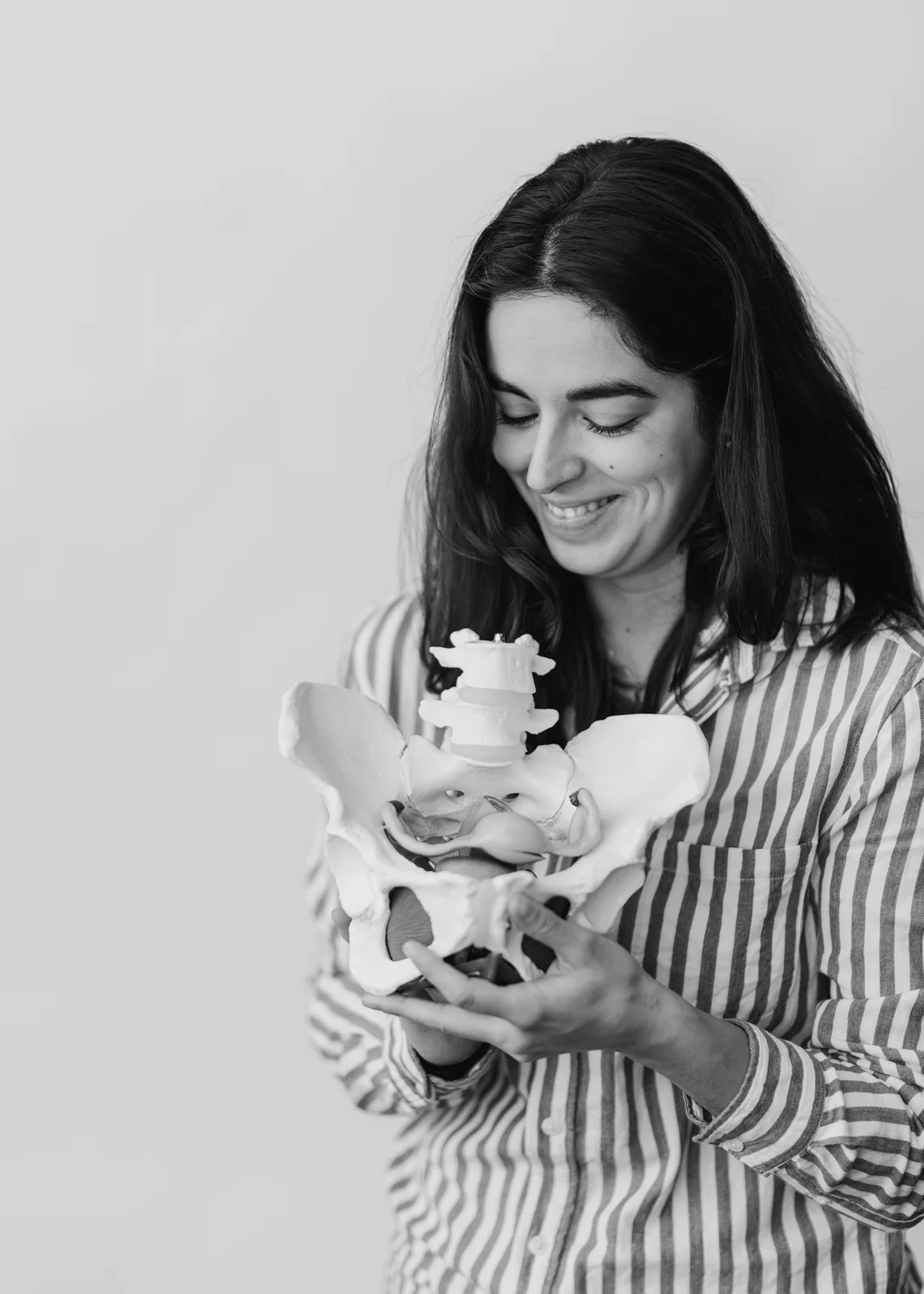
Pelvic floor pain affects both women and men, and its exact prevalence varies widely depending on the studies and definitions used. These issues can affect your quality of life, your intimate relationships, and your daily activities.
Here's the good news: specialized physiotherapy significantly improves 70 to 80% of individuals3. Most conditions do not require surgery. Pain does not necessarily mean tissue damage. The right treatments offer real relief.
This guide explains the anatomy, conditions that cause pain, and common symptoms and causes. You will understand how to get a diagnosis, what treatments work, and what to expect during recovery.
Clinicians recommend pelvic floor physiotherapy as a first-line treatment. This conservative and non-invasive approach addresses the root causes. To better understand how physiotherapy can help you, consult our complete guide.
What is the pelvic floor and what are its functions?
The pelvic floor is a hammock-like group of muscles at the base of your pelvis. It stretches from the pubic bone to the tailbone. Both men and women have this structure.
Its anatomy includes three layers. The deep layer contains the levator ani and coccygeus muscles. These muscles support the bladder, uterus or prostate, and rectum. The second layer includes the urethral and anal sphincters, which control your continence. The third layer contributes to your core stability.
Your pelvic floor performs four essential functions. It supports the pelvic organs and controls continence. It ensures sexual function (arousal, orgasm, comfortable penetration). It also stabilizes your core during movement.
A problematic pelvic floor cannot be corrected with Kegels alone. Sometimes the muscles are too tight rather than weak. This condition requires a relaxation approach, not strengthening. The pelvic floor muscles must be able to contract, but they must also be able to relax. Relaxation is necessary for urination and bowel movements. A healthy pelvic floor is therefore not just a strong one—it’s also one that knows how to relax.
Breathing and the pelvic floor work together. Breathing slowly and deeply into your abdomen helps the pelvic floor muscles relax. It's a simple exercise you can do on your own.
The pelvic floor does not function in isolation. It is part of a system connected to the rest of the body—from the respiratory system all the way down to the feet and the nervous system. That is why pelvic pain is assessed by looking at the body as a whole, not just the pelvic region.
What are the main conditions that affect the pelvic floor?
Six main conditions account for the majority of pain. Understanding your condition is the first step towards effective treatment.
What is chronic pelvic pain syndrome?
Chronic pelvic pain syndrome is persistent pain in the pelvic region lasting more than 3 months. It affects 8 to 10% of men2 and 15 to 20% of women4. The pain can be muscular, nerve-related, or inflammatory without an obvious organic cause.In men (chronic prostatitis), pain affects the perineum, lower abdomen, genitals, or rectum. They also experience urinary symptoms: urgency, frequency, difficulty. In women, the condition often includes pain during sexual intercourse. Contributing factors include excessive muscle tension, nerve sensitization, and stress. To learn more: chronic pelvic pain syndrome.
For chronic pelvic pain in women, international guidelines include education and physical therapy.
In men, the management of chronic pelvic pain syndrome includes education, physical therapy, and the release of myofascial trigger points.
What is proctalgia fugax?
Proctalgia fugax is a sudden, intense spasm of the rectal muscles. It affects 8 to 18% of the population5 and causes brief (seconds to minutes) but severe episodes of rectal pain, often occurring at night. Most episodes resolve spontaneously.These spasms appear without warning, often at night. The pain feels like an intense cramp or a stabbing sensation in the rectum. It lasts from a few seconds to a few minutes. Doctors make this diagnosis of exclusion by ruling out other rectal conditions. More information: proctalgia fugax.
What is coccydynia?
Coccydynia is pain in the tailbone (coccyx). It affects five times more women than men and often results from trauma such as a fall, childbirth, or prolonged sitting. Sitting becomes very painful.Sitting becomes very uncomfortable, especially on hard surfaces. You experience pain when moving from a sitting to a standing position. The tailbone becomes tender to the touch. Causes include direct trauma, difficult childbirth, and prolonged sitting. This condition can become chronic and affect work, driving, and social activities. More information: coccygodynia.
Pain in the tailbone may be caused by a spasm of the pelvic floor muscles. In this case, manual therapy to relax these muscles is one of the treatment options.
What is pudendal neuralgia?
Pudendal neuralgia is a compression or irritation of the pudendal nerve. It causes pain when sitting, often described as feeling like sitting on a marble. The pain follows the nerve's path through the perineum, genitals, and rectum.Affected individuals typically describe this sensation as "sitting on a ball." Sitting worsens the pain, while standing or lying down improves it. Symptoms include numbness, burning, and sexual dysfunction. Causes include intense cycling, prolonged sitting, traumatic childbirth, and pelvic surgeries. More information: pudendal neuralgia.
What is organ prolapse (pelvic prolapse)?
Organ prolapse (pelvic prolapse) occurs when pelvic organs (bladder, uterus, rectum) descend from their normal position. It affects up to 50% of women who have given birth6 and causes a sensation of pressure or a feeling of a mass. The severity varies considerably.The main types include cystocele (bladder), rectocele (rectum), and uterine prolapse (uterus). Symptoms include a feeling of heaviness and the sensation that "something is descending." Symptoms worsen at the end of the day. This condition is not always painful. Risk factors include vaginal childbirth, advanced age, menopause, and chronic straining. Treatment options: organ descent and pelvic prolapse.
What is vulvovaginal pain?
Vulvovaginal pain encompasses several conditions (vulvodynia, vaginismus, dyspareunia) causing pain in the vulva or vagina. It affects 15% of women7 and can make penetration (sexual, tampon, examination) difficult or impossible. The impact on sexual health is significant.This category includes vulvodynia (chronic vulvar pain), vaginismus (involuntary contraction), and dyspareunia (pain during intercourse). Touch can trigger the pain, or it can be constant. Sensations include burning, tingling, and a raw skin feeling. Muscle hypertonicity often plays a central role. This condition has a major impact on intimacy and mental health. More information: vulvovaginal pain.
What are the typical symptoms of pelvic floor disorders?
Symptoms vary depending on the condition. They can be related to pain, function, or both.
Pain symptoms manifest in different locations: perineum, vagina, rectum, tailbone, lower abdomen, groin. The quality varies: sharp, burning, dull, pressure, throbbing. Pain can be constant or occur in episodes. Several factors trigger it: sitting or standing, sexual activity, urination, bowel movements.
Functional symptoms include urinary issues (urgency, increased frequency, hesitation, incomplete emptying). Bowel symptoms include constipation, excessive straining, and incomplete evacuation. Sexual symptoms include pain during penetration, difficulty with arousal, and erectile problems.
The daily impact manifests as sleep disturbances and limited activities. You may experience social isolation, anxiety, and depression. Relationship stress is often an additional factor.
Where do you feel your pain?
The location of your pain is the most important diagnostic clue. The following table helps you identify probable causes based on your pain area.
| Pain location | Possible Conditions |
|---|---|
| Perineum (between anus and genitals) | Chronic pelvic pain syndrome, pudendal neuralgia, muscle hypertonicity |
| Rectum/Anus | Proctalgia fugax, chronic pelvic pain syndrome, overactive levator ani muscles |
| Tailbone/Sacrum | Coccydynia, direct trauma, surrounding muscle tightness |
| Vulva/Vagina (Women) | Vulvodynia, vaginismus, muscle tightness, pudendal neuralgia |
| Lower Abdomen/Suprapubic Region | Chronic pelvic pain syndrome, interstitial cystitis, overactive bladder syndrome |
| Genitals (Men) | Chronic prostatitis/chronic pelvic pain syndrome, pudendal neuralgia |
10 Quick Tips for Understanding Your Pain
The ones that have made the biggest difference in my patients' lives. 1 a day, 2 minutes.
What are the causes and risk factors for pelvic pain?
Pelvic pain rarely stems from a single cause. Several factors often interact to create and maintain the pain.
The main causes include:- Muscle Hypertonicity: The pelvic floor muscles remain too tense and lose their ability to relax
- Trauma: Difficult childbirth, fall onto the buttocks, pelvic surgery, pelvic fracture
- Prolonged postures; Repetitive sitting; Intense cycling
- Chronic Constipation: Repeated straining creates excessive tension
- Referred pain originating in the lower back, hips, or sacroiliac joints
- Nerve Hypersensitivity: The nervous system becomes hyper-reactive, causing more pain than actual tissue damage
- Vaginal childbirth (especially with perineal tearing or instruments)
- Previous pelvic surgery (C-section, hysterectomy, prostate surgery)
- Direct trauma (fall, accident)
- Repetitive activities (cycling, rowing, horseback riding)
- Chronic constipation or diarrhea
- Emotional stress (anxiety, depression)
- History of emotional or sexual trauma
Psychological stress amplifies pelvic pain. People suffering from anxiety or depression report more symptoms. This relationship works both ways: chronic pain increases stress, which intensifies pain.
Lower back and pelvic pain often go hand in hand with pelvic floor dysfunction. Among women who sought medical care for lumbopelvic pain, signs of pelvic floor dysfunction were common.
When should you consult a healthcare professional?
Some symptoms require urgent medical evaluation. Others can wait for a regular consultation.
Seek emergency care (call 911 or go to the emergency room immediately) if you experience:- Sudden loss of bladder AND bowel control (cauda equina syndrome)
- Saddle numbness (perineum, genitals)
- Progressive leg weakness
- Pain with fever, chills, or abnormal bleeding
- Severe pain that worsens quickly
- Inability to urinate despite the urge
- New or growing mass
- Persistent pain that does not improve despite rest and standard treatments
- Pain that limits your daily activities
- New urinary or bowel symptoms
- Pain during sexual intercourse
- Impact on your mental health or relationships
The following table summarizes red flags and required actions:
| Warning symptom (red flag) | Possible cause | Action required |
|---|---|---|
| Sudden loss of bladder AND bowel control | Cauda equina syndrome (nerve compression) | Medical emergency: Call 911 |
| Numbness in the perineum/genitals (saddle numbness) | Severe nerve compression | Urgent medical consultation (same day) |
| Pain with fever, chills, abnormal bleeding | Infection, inflammatory condition | Urgent medical consultation (same day) |
| New or growing mass or lump | Severe prolapse, tumor (rare) | Medical consultation this week |
| Intense non-mechanical nighttime pain + weight loss | Systemic disease (rare) | Medical consultation this week |
Remember: these red flags are rare. Most pelvic pain is benign and treatable. Don't let anxiety paralyze you, but don't minimize your symptoms either.
How do professionals diagnose pelvic floor disorders?
Diagnosis primarily relies on your medical history and a physical examination. Imaging tests rarely play a central role.
Medical history is essential: Your description of symptoms is the most important diagnostic tool. The professional will ask about: symptom onset, aggravating and relieving factors, obstetric history, previous surgeries, and impact on functions (urination, bowel movements, sexual activity). The physical examination includes two parts: The external examination assesses posture, movement, abdominal tension, and breathing. The internal (pelvic) examination assesses muscle tone at rest, the ability to contract and relax, tender points or trigger points, and muscle coordination.This examination is conducted with respect and your consent. You can stop at any time. The professional will explain each step. Physiotherapists specializing in perineal rehabilitation are trained to perform this examination.
The evaluation is tailored to your comfort level. An internal exam is helpful, but it is never mandatory. If a patient is uncomfortable, an abdominal ultrasound can visualize the pelvic floor without any internal contact.
It is difficult to contract the pelvic floor muscles properly. Many people with pelvic floor dysfunction cannot do this on their own. A thorough evaluation allows us to develop a program tailored to each individual.
Need professional advice?
Our physical therapists can assess your condition and provide you with a personalized treatment plan.
Make an appointmentHow does physiotherapy help with pelvic floor disorders?
Pelvic floor physiotherapy is the first-line treatment recommended by clinical guidelines.
Physical therapy can lead to significant improvement. This conservative, non-invasive approach targets the underlying causes, not just the symptoms. For more information: pelvic floor physical therapy.
Treatment varies depending on your condition:- For a hypertonic (overly tense) pelvic floor: Relaxation exercises, diaphragmatic breathing, gentle stretching, and internal manual therapy (myofascial release)
- For a hypotonic (weak) pelvic floor: Progressive strengthening exercises and coordination training
- For Pain and Sensitization: Education on the science of pain, desensitization techniques, and gradual exposure to activities
Biofeedback helps you visualize muscle activity and learn proper contraction and relaxation. Treatment components also include manual therapy (internal and external techniques to release tension), customized exercises, education (understanding pain, self-management), and behavioral modifications (toilet habits, breathing, posture).
After giving birth, doing pelvic floor exercises every day helps reduce the risk of urinary incontinence. Learning the proper technique from a pelvic health physical therapist helps you get the most benefit from them.
What to expect: Improvement occurs gradually over several weeks to months. Conditions that have developed recently generally respond more quickly to treatment. Conditions that have been present for a long time require more time and patience. Your active participation is essential. More information: pelvic floor physiotherapy.What are common myths about pelvic floor disorders?
Several misconceptions surround pelvic floor disorders. These myths delay treatment and create unnecessary distress.
The following table compares myths with reality:
| Myth | Reality |
|---|---|
| "It's normal to have pain after childbirth" | Pain that persists after childbirth and does not improve over time is not normal. It can be treated with physical therapy. Don't suffer in silence. |
| "You always have to do Kegel exercises (strengthening)" | False. An overly tense (hypertonic) pelvic floor requires RELAXATION exercises, not strengthening. Kegels can worsen pain if the muscles are already too tight. |
| "Only women have pelvic floor problems" | False. 8-10% of men suffer from chronic pelvic pain (chronic prostatitis/CPPS). Men also have a pelvic floor that can dysfunction. |
| "Surgery is the only solution for serious problems" | False. Physical therapy alone can lead to significant improvement, without surgery. |
| "If I have pain, it means there is tissue damage" | False. Chronic pain often results from the nervous system becoming oversensitive, not from tissue damage. Pain does not equal damage. This is why imaging often shows nothing abnormal. |
| "It's all in my head" or "It's psychological" | Both false and true. Pain is REAL (not imaginary). However, the nervous system and emotions play a role in ALL pain. A biopsychosocial approach is necessary, not a purely biomedical or psychological one. |
These myths create barriers to care. Understanding the truth allows you to make informed decisions and seek appropriate help.
What is the prognosis for pelvic floor disorders?
The prognosis is generally favorable with appropriate treatment.
70 to 80% of people experience significant improvement with physical therapy. “Recovery” means different things: pain reduction—without necessarily completely eliminating symptoms—functional restoration (returning to activities), and management strategies for persistent symptoms.
The timeframe varies: Les conditions aiguës (<3 mois) répondent en 4 à 8 semaines typiquement. L'intervention précoce augmente le succès. Les conditions présentes depuis longtemps demandent généralement plus de temps, parfois plusieurs mois. L'amélioration est graduelle. La patience et la constance sont requises. Factors that improve the prognosis: Early intervention (shorter symptom duration), active participation in treatment, managing contributing factors (stress, posture), and support from your surroundings. Understanding the science of pain reduces fear. Factors that complicate recovery: Long duration of symptoms (chronicity), multiple co-existing conditions, unaddressed psychosocial stress, low adherence to treatment, and avoidance behaviors due to fear.Most people improve. Complete healing is not always realistic, but restoring a good quality of life certainly is. Functional goals are achieved by the majority. You are not destined to suffer indefinitely.
What should you remember and what should you do?
Key points to remember:- Your pain is real and treatable: physical therapy can help improve your condition.
- The pelvic floor may be too tight OR too weak. The evaluation determines the approach (relaxation vs. strengthening).
- Pain does not necessarily mean there is damage. Sensitization of the nervous system is often the cause.
- You are not alone. 25% of women and 10–16% of men are affected. Help is available.
- Check for warning signs. Seek medical attention immediately if you experience any warning symptoms.
- Consult a professional —such as a family doctor or a physical therapist specializing in pelvic floor rehabilitation
- Prepare for your appointment. Write down your symptoms (location, severity, triggers) and any questions you want to ask.
- In the meantime, practice diaphragmatic breathing, avoid positions that make the pain worse, and don't strain.
To learn more about available treatments, consult our guide on pelvic floor physiotherapy.
Ready for a consultation? Discover our treatment services for pain and stiffness.
You deserve specialized care. Your symptoms are valid. Help is available.
Sources
- Coyne KS, et al. The prevalence of lower urinary tract symptoms in women: results from the Boston Area Community Health (BACH) survey. Eur Urol. 2009;55(3):761-7.
- Krieger JN, et al. Epidemiology of prostatitis. Int J Antimicrob Agents. 2008;31 Suppl 1:S85-90.
- Faubion SS, et al. Recognition and management of nonrelaxing pelvic floor dysfunction. Mayo Clin Proc. 2012;87(2):187-93.
- Hoffman D. Understanding multidimensional aspects of pelvic floor disorders. Nurs Womens Health. 2017;21(2):134-143.
- Jeyarajah S, et al. Proctalgia fugax, an evidence-based management pathway. Int J Colorectal Dis. 2010;25(9):1037-46.
- Wu JM, et al. Prevalence and trends of symptomatic pelvic floor disorders in U.S. women. Obstet Gynecol. 2014;123(1):141-8.
- Reed BD, et al. Prevalence and demographic characteristics of vulvodynia in a population-based sample. Am J Obstet Gynecol. 2012;206(2):170.e1-9.
- Berghmans B. Physiotherapy for pelvic pain and female sexual dysfunction: an untapped resource. Int Urogynecol J. 2018;29(5):631-638.
- Shelly J, et al. Pelvic floor physiotherapy: a systematic review on efficacy and comparison with conservative treatments for pelvic floor dysfunction. J Womens Health (Larchmt). 2020;29(5):624-634.
- Anderson RU, et al. Integration of myofascial trigger point release and paradoxical relaxation training treatment of chronic pelvic pain in men. J Urol. 2005;174(1):155-60.
- Morin M, et al. Pelvic floor physical therapy in the treatment of vulvodynia: a review. J Sex Marital Ther. 2014;40(4):277-93.
- Fall M, et al. EAU guidelines on chronic pelvic pain. Eur Urol. 2010;57(1):35-48.
Videos in this category
Other conditions

Hip osteoarthritis is the normal wear and tear of the hip joint. It is often said that osteoarthritis is the wear and tear of the cartilage between our bones. That is true, but it involves more than just the cartilage. Cartilage is a tissue that acts as a cushion between the surfaces of our bones and allows our joints to glide smoothly and move fluidly.
This is normal wear and tear of the knee joint. It’s often said that osteoarthritis is the wearing down of the cartilage between our bones. That’s true, but it’s more than just the cartilage. Cartilage is a tissue that acts as a cushion between the surfaces of our bones and allows our joints to glide smoothly and move fluidly.
It is an inflammation of the subacromial bursa in the shoulder joint.
A bursa is a small, thin sac filled with fluid that is found in many of the body's joints. This small sac acts as a cushion within the joint and lubricates the structures that are subject to increased friction.
It is a tissue that surrounds the shoulder and helps keep the shoulder bone in place within the joint. The capsule helps keep the joint stable.
Neck pain is a general term used to describe pain in the neck that has no specific cause, such as an accident or a sudden awkward movement. Neck pain is therefore synonymous with “my neck hurts, and nothing in particular happened.”
In both types of injury, pain is felt in the neck and then radiates into the arm, or vice versa.
Make an appointment now
We offer a three-pronged quality assurance approach: optimized treatment time, a second opinion from a physical therapist, and ongoing expertise to ensure effective care tailored to your needs.
Customer satisfaction is our top priority
At Physioactif, excellence guides everything we do, but our patients are the best ones to tell you about it. Take a look at their verified reviews to get a real sense of their experience.










Discover our physical therapy clinics
We have locations in several areas to better serve you.
Blainville
190 Bas-de-Sainte-Thérèse Road, Suite 110,
Blainville, Quebec
J7B 1A7
Located in Blainville, near Rosemère, the Physioactif clinic is easily accessible to residents of the area and the surrounding communities
Laval
3224 Jean-Béraud Ave., Suite 220, Laval,
QC H7T 2S4
Located in Chomedey, in the heart of Laval, the Physioactif clinic is easily accessible to people in the area
Montreal
8801 Lajeunesse Street,
Montreal,
QC H2M 1R8
Located in Ahuntsic, near Villeray, the Physioactif clinic is easily accessible to residents of both neighborhoods
Saint-Eustache
180 25th Avenue, Suite
201 Saint-Eustache
QC J7P 2V2
Located in Saint-Eustache, the Physioactif clinic is easily accessible to residents of the area and the surrounding communities
Vaudreuil
21 Cité-des-Jeunes Boulevard, Suite 240,
Vaudreuil-Dorion, Quebec
J7V 0N3
Located in Vaudreuil-Dorion, the Physioactif clinic is easily accessible to people in the area
Make an appointment now
