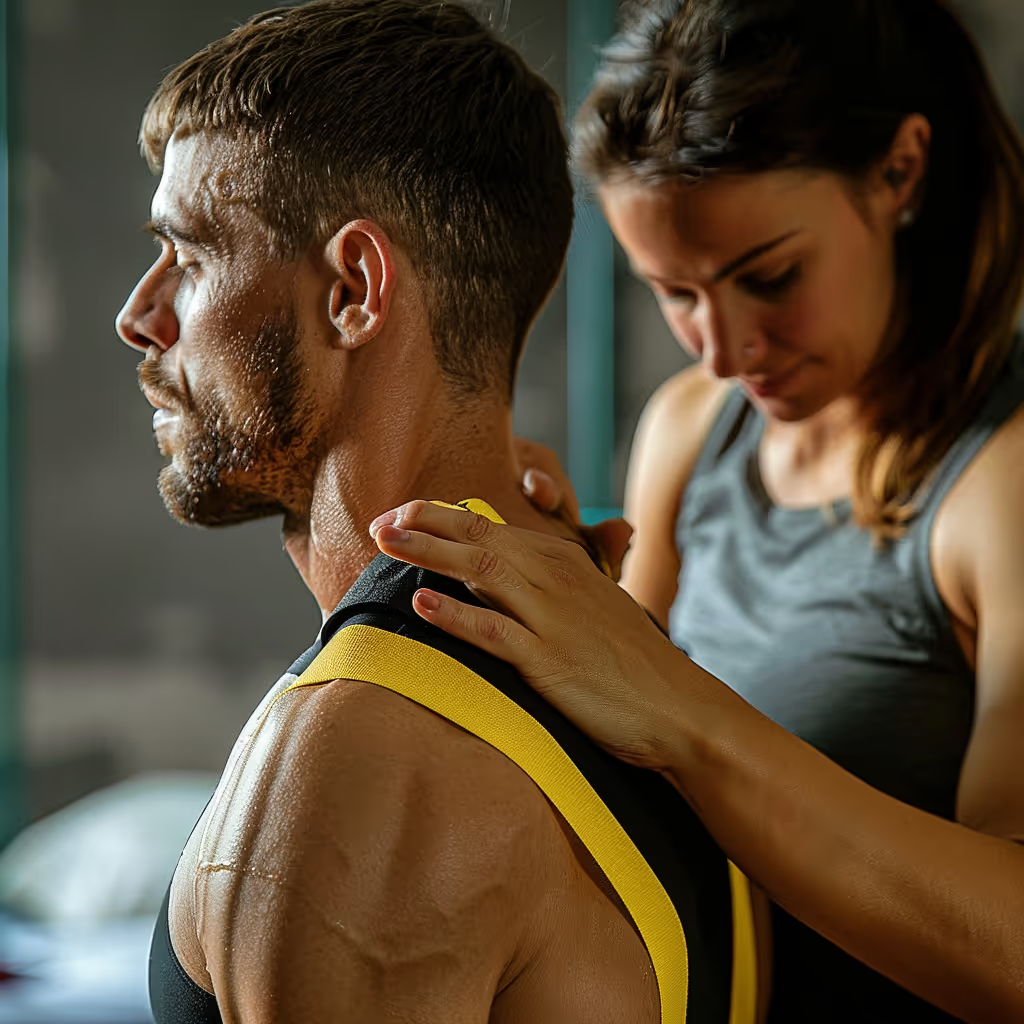
Inflammatory Pain: The Role of Inflammation in Pain
.png)
.png)
.png)


What is inflammatory pain?
Inflammatory pain is pain caused in part by tissue inflammation. Inflammation is a defensive response that can follow an injury, an infection, or certain diseases. It can activate nerve endings and make them moresensitive.¹, ² These nerve endings, called nociceptors, react to situations that can damage tissue.
Nerve signals are not pain itself. Pain is a personal experience involving the brain, the condition of the tissues, emotions, and context (definitions from the International Association for the Study of Pain). Inflammation can therefore contribute to pain without, on its own, explaining its intensity.
This distinction helps in choosing the right treatment: addressing the cause of the inflammation when necessary, relieving symptoms, and resuming appropriate activities.
Why does your body need inflammation to heal?
Inflammation aids in healing by attracting cells that remove debris and help repair tissue3. The influx of blood and the leakage of fluid from small blood vessels account for the redness, warmth, and swelling (acute inflammatory response). Swelling may limit movement; however, this does not mean that immobilization is necessary for healing. Inflammatory substances also make certain nerve endings morereactive2, 1.
10 Quick Tips to Understand Your Pain
One tip a day for 10 days to help you better understand your pain. About a 2-minute read.
Why Your Body Causes Inflammation
Inflammation is a defensive response. After an injury, the immune system—the collection of cells and reactions that defend the body—triggers several changes:
- Increased blood flow to the area (resulting in redness and warmth)
- Release of chemicals that attract repair cells
- Swelling caused by a buildup of fluid, which can limit movement
- Nerve Sensitivity: Some nerve endings respond more readily
These reactions are part of the body's tissue repair process.
The classic signs of inflammation
Medicine identifies five classic signs of inflammation. Not all of them are always visible, especially when the inflammation is deep within the body (signs of inflammation):
- Flushing (redness), caused by increased blood flow
- Calor (heat), also caused by blood flow
- Tumor (swelling) caused by fluid buildup
- Dolor (pain), because the area becomes much more sensitive
- Functio laesa (loss of function), limited range of motion
Why does a sore spot hurt more?
An inflamed area may hurt more because inflammatory substances make certain nerve endings more sensitive. Movement or pressure can then trigger more nerve signals2. The brain and spinal cord, which transmit and process signals in the spinal column, also play a role in this sensitivity1. However, pain does not depend solely on the number of signals received.
An awareness-raising initiative
Sensitization means that nerve endings react more easily. Inflammation can contribute to this change1. It can also trigger their activity. This does not mean that every nerve signal is translated into perceived pain (pain and nerve signals).
Substances released during inflammation can make nerve endings more responsive2. You may then notice:
- Even light pressure that wouldn't normally hurt becomes painful
- The movements are more uncomfortable
- The area remains tender even at rest
Swelling and Movement
Swelling is caused by a buildup of fluid. Along with pain, it can limit movement (effects on movement). In the carpal tunnel—a narrow passageway in the wrist—inflamed tendons can put pressure on the median nerve. This nerve is involved in sensation and movement of the hand (compression in the carpal tunnel). This condition does not explain all cases of swelling or pain.
The extent of swelling alone is not enough to measure pain or determine treatment. An area that is very swollen or becomes more painful after an injury should be evaluated (signs to watch for after an injury).
What is the difference between acute inflammation and chronic inflammation?
Acute inflammation begins quickly after an injury or infection and usually lasts only a short time, whereas chronic inflammation persists for months or years (acute and chronic forms). The acute phase contributes to tissue repair; excessive or persistent inflammation can also damage tissues4. The duration of inflammation is not the same as the duration of healing. For example, a small skin wound may heal in a few days, while a large skin lesion may take several weeks5. These timeframes apply to the skin and do not provide a general timeline for all injuries.
Acute inflammation: a rapid and temporary response
After an injury, acute inflammation:
- It begins suddenly and usually lasts a few days, depending on the cause
- An integral part of the healing process
- Fades naturally as the tissue heals
- Recent ankle sprain
- Whiplash injury following an accident
- A tendon that has become painful following increased physical activity, possibly accompanied by inflammation. A tendon connects a muscle to a bone.
Chronic Inflammation: A Persistent Response
Sometimes, inflammation persists beyond its useful role:
- It can develop into a chronic inflammation: mild enough that it doesn't look or feel like a recent injury, but it doesn't go away completely
- It can continue to stimulate the nervous system1
- It may contribute to chronic pain
- Osteoarthritis (with variable inflammatory component)
- Rheumatoid arthritis: the immune system attacks joint tissue
- Ankylosing spondylitis (an inflammatory disease of the spine)
- Certain chronic tendinopathies, persistent tendon problems
- Inflammatory bowel diseases
What are some common conditions associated with inflammatory pain?
Osteoarthritis, tendinopathies, and conditions such as rheumatoid arthritis can be accompanied by pain caused in part by inflammation. The extent to which inflammation contributes to the pain varies depending on the condition and the individual.
Osteoarthritis
Osteoarthritis affects several tissues in the joint, including the cartilage that covers the bone surfaces. It may be accompanied by mild, persistent inflammation6. Imaging studies do not fully reflect the symptoms: the changes visible on X-rays do not always correspond to the severity of the pain7. This discrepancy has also been described in osteoarthritis of the hands8. Physical therapy aims to reduce pain and facilitate daily activities, without guaranteeing that symptoms will disappear completely.
Osteoarthritis can affect various areas of the body, including the lower back (lumbar osteoarthritis ) and the neck (cervical osteoarthritis). The link between inflammation and pain has been studied in particular in the knee. A review of 37 studies found weak to moderate associations between certain measures of inflammation and pain. The results vary depending on the measurement method, such as imaging or blood tests9. They do not allow us to infer the intensity of pain based on a single sign of inflammation.
Tendinopathies
Tendinopathy is a tendon condition that can cause pain and limit physical activity. Inflammatory cells and substances may be present even when the condition has persisted for10. Thus, inflammation can occur alongside physical exertion that exceeds one’s current capacity. “Tendinitis” refers to inflammation of the tendon; “tendinopathy” describes the condition without assuming a single underlying mechanism.
For tendinopathy, exercises involving gradually increasing levels of exertion are part of standard treatment10. The 2019 review recommends this progression rather than complete rest11. The program depends on the affected tendon and the target activities.
For patellar tendinopathy, which occurs beneath the kneecap, strengthening exercises are commonly used. Eccentric strengthening involves slowing down a movement as the muscle lengthens, such as by bending the knees to lower oneself into a chair. The 2025 Cochrane review examined seven trials involving 211 athletes. One trial involving 39 athletes found that exercise resulted in less pain than no treatment, but the authors consider this result to be highly uncertain. Differences in performance were also unclear. The studies also make it difficult to determine which is more effective: exercise, injections, or surgery12. These limitations pertain to this specific comparison and this population; they do not apply to the full range of physical therapy interventions.
Autoimmune diseases
In rheumatoid arthritis, the immune system attacks joint tissue and causes ongoing inflammation. Medical treatment may be necessary to manage the disease and protect the joints. Exercise and advice complement this care; they are not a substitute for prescribed treatment.
How can you manage inflammatory pain on a daily basis?
Managing inflammatory pain involves treating its cause, providing appropriate protection after an injury, and gradually resuming activities. During the acute phase, the type of protection required depends on the injury: a fracture may require immobilization. In the longer term, exercise, sleep, diet, and stress management support overall health and can complement medical care.
When should you request a quick assessment?
A painful, warm, and swollen joint requires urgent medical attention. The same applies if the pain is accompanied by a fever, chills, or general malaise. An inability to walk or bear weight, or a dislocated joint, requires evaluation in the emergency room even without a recent injury. After an injury, severe pain, tingling, or loss of sensation around the joint also require evaluation in the emergency room (symptoms described by the UK National Health Service). Call 911 if there is a life-threatening situation or if transportation is unsafe. These symptoms should not be treated as a simple flare-up that can be managed with exercises.
During the acute phase
Relative restAfter an injury, relative rest involves temporarily limiting movements that aggravate symptoms while continuing permitted activities. The lateral ligaments of the ankle are bands of tissue that connect the bones on the outer side. After a sprain of these ligaments, brief immobilization can relieve pain and swelling. The 2018 guidelines then recommend a support band or splint—a device worn around the ankle—along with exercises13. The choice depends on the severity and the diagnosis.
After an ankle sprain, a supervised exercise program helps restore joint stability during activities. The guide recommends this over passive treatments, in which the person does not actively participate13.
IceIce may provide temporary relief, but it does not guarantee a faster recovery. A 2008 review found only six human trials and insufficient evidence regarding recovery from injury14. A 2024 critical review confirms that the effects on tissue repair in humans remain uncertain (review on ice after an injury).
If you use ice for comfort, place a cloth between the ice and your skin, and limit each application to 20 minutes (skin protection tips). Remove the ice if your skin becomes painful or changes color abnormally.
Compression and elevationAfter certain sprains, a compression bandage and elevating the limb on a pillow can help manage swelling and support the area (protection after a sprain). The bandage should not cause pain, tingling, or a change in the color of the fingers or toes.
Anti-inflammatory drugsNonsteroidal anti-inflammatory drugs, or NSAIDs, include ibuprofen and naproxen. They are different from cortisone-based medications. They can reduce pain and swelling, but they carry risks13. A pharmacist or doctor can check whether the product is appropriate for your health and your other medications.
The findings regarding fracture healing are mixed. A 2019 review linked the use of NSAIDs to more cases of delayed healing or fractures in which the bone fragments do not fuse securely, with no clear difference observed in children or for low doses or short durations15. A 2024 review found no clear difference after adjusting for other factors (2024 review). The 2026 review found an association with the lack of secure union of bone fragments, particularly in adults and with higher exposure. However, the quality of the included reviews is low. Use for 14 days or less was not associated with an increased risk (2026 review).
After a fracture, the choice of medication, dosage, and duration of treatment should be discussed with the medical team. Do not stop a prescribed treatment based solely on these results.
In the medium and long term
The right exerciseGradual physical activity helps rebuild the abilities you need for your daily activities. In physical therapy, exercises are selected based on the specific problem and then adjusted according to pain levels and recovery between sessions.
10 Quick Tips to Understand Your Pain
One tip a day for 10 days to help you better understand your pain. About a 2-minute read.
A Mediterranean-style diet emphasizes vegetables, fish, nuts, and olive oil. A systematic review found favorable effects or associations with certain inflammatory markers—substances measured in the blood16. The findings primarily apply to adults with at least one chronic condition. The review does not demonstrate that this diet alone relieves inflammatory pain. A nutritionist can help you adjust your diet.
Body weightAdipose tissue, which stores fat, also produces substances that play a role in immune responses. In obesity, these responses can contribute to mild, persistent inflammation17. However, a person’s weight alone is not a reliable indicator of inflammation or pain. The discussion takes into account health, goals, and preferences.
SleepSleep and inflammation can influence each other in both directions. The cited review describes, in particular, links between sleep and interleukin-6, a substance involved in communication between immune cells18. Maintaining a regular sleep schedule and seeking an evaluation for persistent insomnia can help improve sleep. A better night’s sleep does not guarantee a measurable reduction in inflammation or pain.
Stress ManagementChronic stress can contribute to persistent inflammation, along with other factors such as certain diseases or living conditions4. Taking breaks, doing breathing exercises, and engaging in appropriate physical activity can help manage stress. These measures complement medical care without placing the blame for the illness on the individual.
How does physical therapy help with inflammation?
Physical therapy helps manage symptoms and resume activities during or after an inflammatory condition. The physical therapist assesses movement and difficulties, tailors exercises, and looks for signs that require medical attention. This assessment alone does not measure the full extent of inflammation in the body.
What physical therapy can do
Physical therapy tailors treatment to your diagnosis, symptoms, and goals:
Accurate assessmentThe physical therapist assesses symptoms, range of motion, and limited activities. The physical therapist recommends a medical evaluation if tests or treatment for the condition appear necessary.
Adapted exercisesThe physical therapist will recommend exercises tailored to your injury or condition and your abilities. You may try a shorter or less intense exercise regimen if your symptoms worsen; any unusual signs require a new evaluation.
Short-term reliefJoint mobilizations are movements performed by a healthcare professional on a joint. Some people may experience short-term relief. A 2016 review of spinal mobilizations describes a decrease in pain sensitivity and certain muscular changes19. A 2023 review, however, finds little evidence of a consistent immediate effect on the pressure required to elicit pain, compared to sham treatment or no intervention20.
These sensitivity tests do not indicate an anti-inflammatory effect. Manual therapy may be used as a complementary treatment depending on its effect on your symptoms; exercises and a return to normal activities should be tailored to the specific condition being treated.
EducationThe physical therapist explains the symptoms to watch for and works with you to develop a plan for times when the pain flares up.
What you can do
- Maintain a regular exercise routine that is appropriate for your condition and your abilities
- Recognize the signs of an inflammatory flare-up (heat, redness, increased swelling)
- Adjust your activity level during flare-ups
- Follow the prescribed treatment and work with your healthcare providers to adopt healthy lifestyle habits
What should you do when inflammation isn't the whole story?
Pain that cannot be fully explained by inflammation requires an evaluation of other possible mechanisms, activities, and life circumstances. For example, nerve damage or increased sensitivity of the nervous system may contribute to the symptoms. Several mechanisms may coexist.
Other types of pain
Neuropathic pain is associated with damage to or disease of the nervous system that transmits sensations. Nociceptive pain involves a change in the processing of bodily signals, without tissue damage or nervous system damage sufficiently explaining the pain (definitions of pain mechanisms). These mechanisms may combine and guidetreatment1, 21.
Mixed pain
Several mechanisms can contribute to the same pain. Your back pain or neck pain may involve inflammation, pain associated with certain activities, and increased sensitivity of the nervous system. The examination helps determine the appropriate treatment without assuming that a single mechanism explains everything.
Chronic pain management may take into account tissues, the nervous system, sleep, emotions, and activities. The cited review describes a personalized approach to care, involving multiple professionals when appropriate21. The plan may therefore combine medical treatment, exercise, and support for coping with daily challenges. Interventions are selected based on individual needs, without assuming that any single combination is suitable for everyone.
What are the key points to remember about inflammatory pain?
Inflammation helps with tissue repair and can also contribute to pain; treatment should address the underlying cause and support your daily activities. Rest after an injury, appropriate exercises, and medical treatments all have their place, depending on the situation.
- Inflammation is a healing process; it is beneficial during the acute phase
- Inflammation can contribute to pain by activating certain nerve endings or making them more sensitive
- Chronic inflammation can contribute to persistent pain and requires a long-term approach
- Exercise, diet, sleep, and stress management can support health and complement treatments, with varying effects
- A tailored plan takes into account pain mechanisms, your activities, and the treatments required for the condition
Where can I read more about pain and its mechanisms?
Physioactif's guides on chronic pain, neural mechanisms, and pain management explain these topics in detail. The following list will help you choose a resource based on your questions.
- Understanding Chronic Pain
- Acute pain vs. chronic pain
- Neuropathic pain
- Nociplastic pain
- Pain Management Strategies
- Return to the definition of inflammatory pain
Need professional advice?
Our physical therapists can assess your condition and recommend a tailored treatment plan.
Make an appointmentReferences
Links open in a new tab.
- Lyndon S. Pathophysiology of Chronic Pain. Clin J Pain. 2026;42(6). (Back to sections: 1, 2, 3, 4, 5, 6)
- Schumacher MA. Peripheral Neuroinflammation and Pain: How Acute Pain Becomes Chronic. Curr Neuropharmacol. 2024;22(1):6-14. (Back to sections: 1, 2, 3, 4)
- Eming SA, Martin P, Tomic-Canic M. Wound repair and regeneration: mechanisms, signaling, and translation. Sci Transl Med. 2014;6(265):265sr6. (Back to section: 1)
- Furman D, Campisi J, Verdin E, Carrera-Bastos P, Targ S, Franceschi C, et al. Chronic inflammation in the etiology of disease across the life span. Nat Med. 2019;25(12):1822-1832. (Back to sections: 1, 2)
- Peña OA, Martin P. Cellular and molecular mechanisms of skin wound healing. Nat Rev Mol Cell Biol. 2024;25(8):599-616. (Back to section: 1)
- De Roover A, Escribano-Núñez A, Monteagudo S, Lories R. Fundamentals of Osteoarthritis: Inflammatory Mediators in Osteoarthritis. Osteoarthritis Cartilage. 2023;31(10):1303-1311. (Back to section: 1)
- O'Neill TW, Felson DT. Mechanisms of Osteoarthritis (OA) Pain. Curr Osteoporos Rep. 2018;16(5):611-616. (Back to section: 1)
- Šenolt L. [Hand Osteoarthritis]. Cas Lek Cesk. 2016;155(6):305-309. (Back to section: 1)
- Dainese P, Wyngaert KV, De Mits S, Wittoek R, Van Ginckel A, Calders P. Association between knee inflammation and knee pain in patients with knee osteoarthritis: a systematic review. Osteoarthritis Cartilage. 2022;30(4):516-534. (Back to section: 1)
- Millar NL, Silbernagel KG, Thorborg K, Kirwan PD, Galatz LM, Abrams GD, et al. Tendinopathy. Nat Rev Dis Primers. 2021;7(1):1. (Back to sections: 1, 2)
- Cardoso TB, Pizzari T, Kinsella R, Hope D, Cook JL. Current trends in the management of tendinopathy. Best Pract Res Clin Rheumatol. 2019;33(1):122-140. (Back to section: 1)
- Lopes AD, Rizzo RR, Hespanhol L, Costa LO, Kamper SJ. Exercise for patellar tendinopathy. Cochrane Database Syst Rev. 2025;5(5):CD013078. (Back to section: 1)
- Vuurberg G, Hoorntje A, Wink LM, van der Doelen BFW, van den Bekerom MP, Dekker R, et al. Diagnosis, treatment, and prevention of ankle sprains: update of an evidence-based clinical guideline. Br J Sports Med. 2018;52(15):956. (Back to sections: 1, 2, 3)
- Collins NC. Is ice right? Does cryotherapy improve outcomes for acute soft tissue injuries? Emerg Med J. 2008;25(2):65-8. (Back to section: 1)
- Wheatley BM, Nappo KE, Christensen DL, Holman AM, Brooks DI, Potter BK. Effect of NSAIDs on Bone Healing Rates: A Meta-analysis. J Am Acad Orthop Surg. 2019;27(7):e330-e336. (Back to section: 1)
- Reyneke GL, Lambert K, Beck EJ. Dietary Patterns Associated With Anti-inflammatory Effects: An Umbrella Review of Systematic Reviews and Meta-analyses. Nutr Rev. 2026;84(6):1167-1192. (Back to section: 1)
- Engin A. Reappraisal of Adipose Tissue Inflammation in Obesity. Adv Exp Med Biol. 2024;1460:297-327. (Back to section: 1)
- Rohleder N, Aringer M, Boentert M. Role of interleukin-6 in stress, sleep, and fatigue. Ann N Y Acad Sci. 2012;1261:88-96. (Back to section: 1)
- Lascurain-Aguirrebeña I, Newham D, Critchley DJ. Mechanism of Action of Spinal Mobilizations: A Systematic Review. Spine (Phila Pa 1976). 2016;41(2):159-72. (Back to section: 1)
- Jung A, Adamczyk WM, Ahmed A, van der Schalk L, Poesl M, Luedtke K, et al. No Sufficient Evidence for an Immediate Hypoalgesic Effect of Spinal Manual Therapy on Pressure Pain Thresholds in Asymptomatic and Chronic Pain Populations: A Systematic Review and Meta-Analysis. Phys Ther. 2023;103(3). (Back to section: 1)
- Guven Kose S, Kose HC, Celikel F, Tulgar S, De Cassai A, Akkaya OT, et al. Chronic Pain: An Update on Clinical Practices and Advances in Chronic Pain Management. Eurasian J Med. 2022;54(Suppl1):57-61. (Back to sections: 1, 2)
Videos in this category
Other conditions

Hip osteoarthritis is the normal wear and tear of the hip joint. It is often said that osteoarthritis is the wear and tear of the cartilage between our bones. That is true, but it involves more than just the cartilage. Cartilage is a tissue that acts as a cushion between the surfaces of our bones and allows our joints to glide smoothly and move fluidly.
This is normal wear and tear of the knee joint. It’s often said that osteoarthritis is the wearing down of the cartilage between our bones. That’s true, but it’s more than just the cartilage. Cartilage is a tissue that acts as a cushion between the surfaces of our bones and allows our joints to glide smoothly and move fluidly.
It is an inflammation of the subacromial bursa in the shoulder joint.
A bursa is a small, thin sac filled with fluid that is found in many of the body's joints. This small sac acts as a cushion within the joint and lubricates the structures that are subject to increased friction.
It is a tissue that surrounds the shoulder and helps keep the shoulder bone in place within the joint. The capsule helps keep the joint stable.
Neck pain is a general term used to describe pain in the neck that has no specific cause, such as an accident or a sudden awkward movement. Neck pain is therefore synonymous with “my neck hurts, and nothing in particular happened.”
In both types of injury, pain is felt in the neck and then radiates into the arm, or vice versa.
Make an appointment now
We offer a three-pronged quality assurance approach: optimized treatment time, a second opinion from a physical therapist, and ongoing expertise to ensure effective care tailored to your needs.

Customer satisfaction is our top priority
At Physioactif, excellence guides everything we do, but our patients are the best ones to tell you about it. Take a look at their verified reviews to get a real sense of their experience.








Discover our physical therapy clinics
We have locations in several areas to better serve you.
Blainville
190 Bas-de-Sainte-Thérèse Road, Suite 110,
Blainville, Quebec
J7B 1A7
Located in Blainville, near Rosemère, the Physioactif clinic is easily accessible to residents of the area and the surrounding communities
Boucherville
690 Rue de Montbrun, Suite S,
Boucherville, Quebec
J4B 8H2
Located in Boucherville, the Physioactif clinic is easily accessible to people in the area
Laval
3224 Jean-Béraud Ave., Suite 220, Laval,
QC H7T 2S4
Located in Chomedey, in the heart of Laval, the Physioactif clinic is easily accessible to people in the area
Montreal
8801 Lajeunesse Street,
Montreal,
QC H2M 1R8
Located in Ahuntsic, near Villeray, the Physioactif clinic is easily accessible to residents of both neighborhoods
Saint-Eustache
180 25th Avenue, Suite
201 Saint-Eustache
QC J7P 2V2
Located in Saint-Eustache, the Physioactif clinic is easily accessible to residents of the area and the surrounding communities
Vaudreuil
21 Cité-des-Jeunes Boulevard, Suite 240,
Vaudreuil-Dorion, Quebec
J7V 0N3
Located in Vaudreuil-Dorion, the Physioactif clinic is easily accessible to people in the area
Make an appointment now