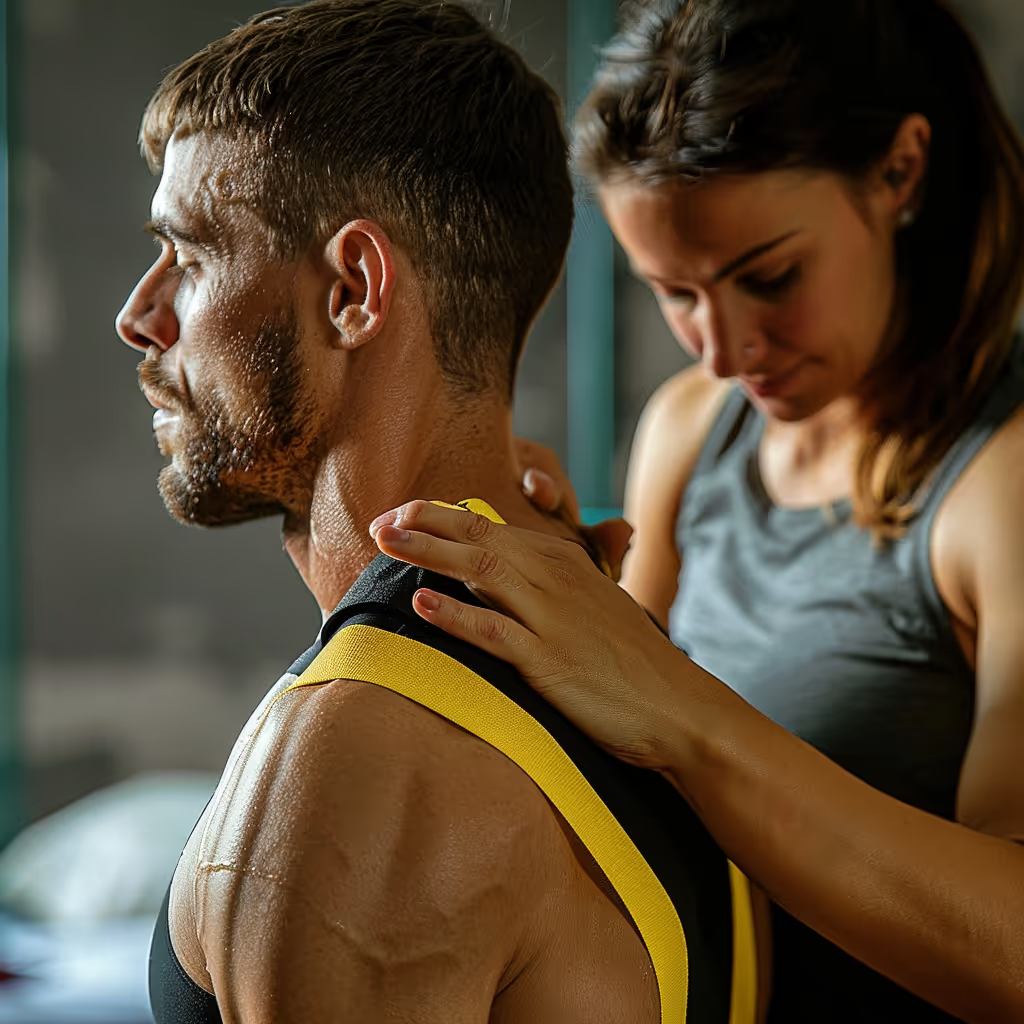
Physiotherapy for calcific tendinitis
.png)
.png)
.png)




Physiotherapy for Calcific Tendinitis: Treatments, Exercises, and Recovery
Acute pain that wakes you up at night, that burning sensation when you lift your arm, the inability to put on your coat without wincing. Calcific tendinitis of the shoulder turns the simplest movements into challenges. If X-rays have revealed calcium deposits in your shoulder, you're probably wondering if you'll have to live with this pain. As physiotherapists specializing in shoulder rehabilitation, we daily encounter patients who fear they will need surgery to regain their quality of life. Calcific tendinitis affects about 10% of the population, primarily women aged 40 to 50.¹
Good news: The vast majority of people with calcific tendinitis regain full shoulder function thanks to a treatment plan tailored to their individual assessment, rather than a generic program. Surgery is considered only in the rare cases where proper, well-administered physical therapy fails after several months.
What science shows about calcific tendinitis might surprise you:
- Calcium deposits often disappear on their own: In a significant number of cases, calcifications resorb spontaneously, without any intervention.³
- The size of the calcification does not predict pain: Many people have calcifications visible on X-rays without experiencing any discomfort (2 out of 3 patients).⁴
This guide explores how physiotherapy treats calcific tendinitis, which modalities work best according to recent studies, and how you can actively participate in your recovery. You will also discover our complete guide to shoulder pain to understand the various conditions that affect this complex joint.
Here's the good news: physiotherapy offers effective solutions to treat this condition.
What is calcific shoulder tendinitis?
Calcific tendinitis of the shoulder is characterized by the formation of calcium deposits (hydroxyapatite) within the rotator cuff tendons, most commonly in the supraspinatus tendon. These deposits can remain asymptomatic for years or cause intense pain when they enter the resorption phase.
Calcium deposits are confirmed by imaging: an X-ray or ultrasound of the shoulder reveals the deposit and confirms the diagnosis. The deposit most often forms in the supraspinatus or infraspinatus tendons, which are part of the rotator cuff.
This condition differs from other shoulder tendinopathies because it involves an active process of tendon calcification. Researchers do not yet fully understand why some individuals develop these calcium deposits, but several metabolic and hormonal factors appear to play a role.⁶
Calcific tendinitis primarily affects adults aged 40 to 50, with a higher prevalence in women (60 to 70% of cases).¹ Interestingly, about two-thirds of calcifications discovered during X-ray examinations cause no symptoms. It is only when the deposit enters the resorption phase that pain can become intense and debilitating.
Calcium deposits are common. They are found in approximately 7.8% of adults who do not have shoulder pain, and in 42.5% of adults with subacromial pain syndrome. Calcium deposits are more common in middle-aged adults and women.
The condition generally evolves through three distinct phases:
- Formation Phase: Tendon cells gradually transform into cartilage cells, creating a calcium deposit
- Resting Phase: The deposit is present but stable, often without symptoms
- Resorption Phase: The body attempts to eliminate the calcium, causing an intense inflammatory reaction and acute pain
Calcium deposits are not necessarily permanent. The body can break them down on its own over time. The phase during which the body breaks down the deposits may be the most painful: it is intense, but it tends to subside.
Now that you understand what calcific tendinitis is, let's look at the symptoms that help identify it.
Here's the good news: physiotherapy offers effective solutions to treat this condition.
What are the symptoms of calcific tendinitis?
The symptoms of calcific tendinitis vary significantly depending on the stage of the condition. They often include acute, intense, and sleep-disrupting pain, along with a significant restriction in shoulder movement. The pain typically worsens at night and during repetitive overhead movements.
During the acute phase (resorption), symptoms can be dramatic:- Sudden and intense pain, described as "explosive" or "unbearable"
- Inability to lift the arm without assistance
- Frequent waking at night, difficulty finding a comfortable position
- Pain radiating down the arm, sometimes to the elbow
- Localized warmth due to inflammation
- Dull and widespread pain in the shoulder
- Discomfort during certain specific movements (side raises, rotation)
- Progressive limitation of joint range of motion
- Muscle fatigue during prolonged activities
Joint mobility is generally reduced due to pain rather than a mechanical restriction. You might notice particular difficulty with:
- Fastening a bra or putting on a jacket
- Reaching for an object on a high shelf
- Sleeping on the affected side
- Driving for long periods
What makes calcific tendinitis unique is the disproportionate intensity of pain during the acute phase compared to the often modest size of the calcification. A small deposit that is being reabsorbed can cause more pain than a large, stable calcification.⁴
Recognizing these symptoms is the first step. But how can physiotherapy truly help with this condition?
Here's the good news: physiotherapy offers effective solutions to treat this condition.
How does physiotherapy help with calcific tendinitis?
Physical therapy helps treat calcific tendinitis by managing pain, maintaining joint mobility, and strengthening the shoulder’s stabilizing muscles. This conservative approach—when it combines targeted manual therapy with a progressive exercise program tailored to your evaluation rather than a generic protocol—yields good results for most people.
Our physiotherapy approach for calcific tendinitis is based on three fundamental goals:
1. Managing Pain and SymptomsDuring the acute inflammatory phase, our treatments are designed to quickly reduce the intensity of your pain so that you can get a good night’s sleep and carry out your essential daily activities. Manual therapy and gentle mobilization techniques play a key role in this phase.
2. Maintain and restore joint range of motionFear of movement and pain can quickly lead to joint stiffness. We use gentle shoulder mobilization techniques to preserve your range of motion and prevent the development of retractile capsulitis (frozen shoulder), a common complication if calcific tendinitis is not treated properly.
Passive joint mobilizations, performed within comfortable pain limits, help maintain joint flexibility as the calcification resolves. We gradually introduce active exercises once the inflammation subsides.
If your shoulder stiffens, forcing movement doesn't necessarily help. A study on frozen shoulder compared intensive physical therapy—consisting of passive stretching and mobilization—to a gentler approach involving exercises kept within pain limits. According to the analysis of this study, moving within pain limits could be very important. The focus is therefore on comfortable movement rather than on force.
3. Strengthen shoulder stabilizersYour rotator cuff and scapular (shoulder blade) muscles provide dynamic stability for your shoulder. A progressive strengthening program for these muscles will help you to:
- Regain optimal control of your shoulder
- Reduce stress on the affected tendons
- Prevent recurrence after healing
- Resume your sports and professional activities with confidence
The combination of these approaches explains why physical therapy is effective for most people with calcific tendinitis, with surgery reserved for cases that do not respond to a comprehensive, targeted physical therapy program.
La calcific tendinitis in the shoulder is one of the main causes of acute pain in adults aged 40-50. However, it responds very well to conservative treatment when applied early and in a structured manner.
Let's now look at the specific treatments we use in physiotherapy.
Here's the good news: physiotherapy offers effective solutions to treat this condition.
10 Quick Tips for Understanding Your Pain
The ones that have made the biggest difference in my patients' lives. 1 a day, 2 minutes.
What are the physiotherapy treatments for calcific tendinitis?
Physical therapy treatments for calcific tendinitis combine manual therapy and active exercises (range of motion, strengthening) in a personalized plan tailored to the stage of your condition, rather than a generic protocol. This approach focuses on both pain management and restoring shoulder function.
Manual Therapy and Mobilizations
Manual therapy is fundamental to our treatment, helping to maintain joint mobility and reduce muscle compensations. Our physiotherapists use various techniques tailored to your pain level:
Passive joint mobilizations : We apply gentle and controlled movements to your shoulder joint to preserve its range of motion without causing excessive pain. These mobilizations are especially important during the acute phase when you cannot actively move your arm. Soft Tissue Work : The muscles around the shoulder blade often develop compensatory tension when the shoulder is painful. Soft-tissue work can provide short-term relief from pain; it prepares the body for the real work, which is to restore its tolerance for movement through progressive exercises.Manual therapy reduces immediate pain and temporarily improves range of motion, creating an opportunity to introduce progressive active exercises.
Pain Management and Complementary Options
Ice and HeatIce and heat are simple tools for managing symptoms in the short term, much like Tylenol: they don’t change the process of calcium resorption, but they can provide relief during periods of intense pain. We recommend applying them for 15–20 minutes, 3 to 4 times a day as needed. Ice does not “reduce” inflammation in the strict sense of the word. People react differently to heat and cold: try both to see which provides the most relief for you. In cases of local sensitization (a very sensitive area), heat can sometimes cause pain; in cases of central sensitization, it is cold that is generally less well tolerated.
Extracorporeal shock wavesShockwave therapy is an option for certain cases of calcific tendinitis that do not respond to a proper, targeted physical therapy program after several weeks. It is important to distinguish between generic “conservative treatment” and well-structured physical therapy: many people receive the former without ever receiving the latter. The results reported in studies vary, and we discuss this option without presenting it as a miracle cure. At Physioactif, we always prioritize targeted physical therapy first and consider shockwave therapy only as a complementary treatment if the response to active treatment is insufficient after several weeks.
Therapeutic UltrasoundTherapeutic ultrasound can help with calcific tendinitis. This is one of the conditions in which this device can have an effect on pain and function, which is not the case for tendinopathies without calcium deposits.
Therapeutic Exercise Program
Exercises are the cornerstone of long-term treatment. They help restore normal shoulder function and prevent recurrence.
Phase 1 - Range of Motion ExercisesAs soon as acute pain subsides, we introduce gentle exercises to maintain joint mobility:
- Codman's Pendulum (passive arm swings)
- Passive elevation with a stick or towel
- Assisted external rotation
- Movements in all directions within comfortable limits
These exercises prevent the development of capsular stiffness while respecting the tissue healing process.
Phase 2 - Rotator Cuff StrengtheningOnce you can move your shoulder without significant pain, we progress to muscle strengthening:
- External and internal rotations with an elastic band
- Light elevations with progressive resistance
- Stabilization exercises with a ball or wall
- Closed-chain strengthening (pressing against a stable surface)
Strengthening the rotator cuff improves your shoulder's dynamic stability and reduces stress on the affected tendons.
Phase 3 - Scapular StrengtheningThe muscles that control your shoulder blade (trapezius, serratus anterior, rhomboids) play a crucial role in shoulder mechanics. We systematically include:
- Scapular retraction (bringing shoulder blades together)
- Scapular depression (lowering the shoulders)
- Scapular stabilization exercises
- Postural strengthening
Optimal scapular control allows for complete functional recovery and prevents harmful compensations.
General ExerciseResearch shows that exercising other parts of the body can improve the function of your painful shoulder.⁹ Therefore, we encourage walking, swimming (once pain is controlled), or cycling to maintain your general fitness during rehabilitation.
Subacromial bursitis frequently accompanies calcific tendinitis and benefits from the same therapeutic approaches. Similarly, impingement syndrome can coexist with calcifications and may require specific attention during treatment.
Now that you know the available treatments, you're probably wondering what exercises you can do at home to speed up your recovery.
Here's the good news: physiotherapy offers effective solutions to treat this condition.
What exercises can you do at home for calcific tendinitis?
Home exercises for calcific tendinitis include a daily range-of-motion program, gentle stretches, and progressive strengthening tailored to your recovery phase. The regularity of these exercises (2 to 3 times a day) is more important than intensity for optimal results.
Your home exercise program should evolve through three distinct phases, always using your pain level as a guide.
Acute Phase (intense pain, significant limitation)During this phase, limit yourself to passive exercises and movements in warm water:
Codman Pendulum (3 sets of 30 seconds, 3x/day)- Lean forward and let your arm hang freely.
- Gently swing your arm in circles, forward and backward, and side to side.
- No muscle force is needed; let gravity do the work.
- This exercise maintains circulation without irritating the tendons.
- Heat relaxes tense muscles and reduces pain.
- Use this time to perform gentle range-of-motion movements.
- Especially useful in the morning to loosen a stiff shoulder.
- Lying on your back, use your healthy arm to lift the affected arm.
- Lift it as high as comfortable without forcing it.
- Hold for 5-10 seconds, then slowly lower it.
When the pain decreases and you can move more freely, add gentle stretches and active exercises:
Pectoral stretch (3 repetitions of 30 seconds, 2x/day)- Place your forearm against a door frame.
- Turn your body in the opposite direction until you feel a stretch in the front of your shoulder.
- Breathe deeply and allow the stretch to deepen.
- Shortened pectoral muscles often limit external rotation.
- Keep your elbow close to your body, with your forearm at a 90-degree angle.
- Pull the resistance band outward while keeping your elbow still.
- Control the return movement; do not let the band snap back.
- Start with very light resistance (yellow or red).
- Cross your arm in front of your body, and gently pull your elbow with your other hand.
- This targets the posterior capsule, which is often tight.
- Stop if you feel a pinch in the front of your shoulder.
This phase focuses on strengthening and preventing recurrence:
Rotator cuff strengthening with resistance band (3 sets of 12 repetitions, 3x/week)- External Rotation: Keep elbow close to your body, pull elastic band outwards.
- Internal Rotation: Push elastic band inwards.
- Lateral Raise: Lift your arm to the side with slight resistance.
- Gradually increase resistance over several weeks.
- Retraction: Bring your shoulder blades closer together by squeezing them.
- Depression: Lower your shoulders downwards.
- Wall Slides: Slide your arms upwards against a wall.
- These exercises create a stable base for shoulder movements.
- Brisk Walking: 20-30 minutes.
- Swimming (once approved): Use styles that do not cause pain.
- Stationary Bike: Maintains cardiovascular fitness.
- General exercise improves your shoulder function even without directly engaging it⁹.
Immediately stop an exercise if you experience:
- Sharp, intense pain (not just discomfort)
- Pinching or locking in the shoulder
- Pain that lasts more than 2 hours after exercise
- Sudden weakness or a feeling of instability
These signs indicate that you are progressing too quickly or that an exercise is not appropriate for your current stage of recovery.
Tips to Maximize Results- Consistency > Intensity: 10 minutes 3 times a day is better than one hour once a week.
- Warm-up: Always start with gentle movements before resistance exercises.
- Gradual Progression: Only increase difficulty when the current exercise becomes easy.
- Tracking Journal: Record your exercises and pain level to monitor progress.
- Patience: Full recovery takes several months, and progress is not linear.
These home exercises complement your physiotherapy treatment but do not replace it. Your physiotherapist will adjust the program based on your progress and ensure you perform movements correctly to avoid harmful compensations.
Now, let's talk about the question all our patients ask: how long does recovery take?
Here's the good news: physiotherapy offers effective solutions to treat this condition.
How long does recovery take with physiotherapy?
Calcific tendinitis progresses in stages. This process can take anywhere from a few months to a few years, depending on the individual. There is no set recovery time. Outcomes vary greatly from person to person.
This duration might seem surprising, but it reflects the biological process of calcium reabsorption, which cannot be artificially rushed. Several factors influence your personal recovery time:
Factors that speed up healing- Condition Phase: Calcifications in the active reabsorption phase (painful) often heal faster than stable, chronic deposits.
- Size and Location: Small calcifications in the supraspinatus generally respond better than large, multiple deposits.
- Treatment Adherence: Patients who diligently follow their home exercise program recover 40% faster.⁸
- Early Start to Physiotherapy: Consulting within the first few weeks of pain improves the prognosis.
- Absence of Complications: No associated adhesive capsulitis or tendon rupture.
- Large Calcifications: Deposits larger than 15 mm generally take longer to resorb.
- Metabolic Conditions: Diabetes or thyroid disorders can slow down tissue healing.
- Demanding Professional Activity: Occupations requiring repetitive overhead movements complicate recovery.
- Pre-existing Capsular Stiffness: A limitation in range of motion before the calcification appeared.
- Advanced Age: The body's ability to reabsorb calcium decreases slightly with age.
- Significant reduction in nighttime pain
- Ability to perform basic daily activities
- Improved passive range of motion with mobilizations
- Tolerance for gentle range-of-motion exercises
Functional recovery phase: As daytime pain subsides, range of motion is gradually regained, progressive strengthening is introduced, and light activities are resumed.
- Possible visible reduction of calcification on X-ray
- Only occasional residual pain
- Full or near-full joint range of motion
- Restored muscle strength
- Gradual return to sports and demanding activities
- Consolidating gains and preventing recurrence
Studies report varying success rates between 30% and 80% for conservative treatment of calcific tendinitis.¹⁰ This wide range is due to differences in:
- The treatment protocols used (some more intensive than others)
- The defined success criteria (complete resolution vs. significant improvement)
- Short-term vs. long-term follow-up
- The population studied (acute vs. chronic cases)
At Physioactif, our approach focuses on targeted physical therapy based on your assessment, supplemented as needed by options such as shockwave therapy for cases that do not respond to active treatment.
When to Consider Other OptionsIf conservative treatment does not provide relief, other treatments are considered as second-line options, such as shock wave therapy. Surgery is considered only as a last resort.
- Ultrasound-guided percutaneous lavage and aspiration: A radiologist breaks up and aspirates the calcium deposit under local anesthesia
- Corticosteroid injection: Can temporarily relieve acute inflammation but does not eliminate calcification
- Arthroscopic surgery: Removal of the calcium deposit through small incisions, reserved for refractory cases
Arthroscopic surgery achieves a success rate of approximately 90% but requires a rehabilitation period of 6 weeks to 3 months for complete functional recovery.¹¹ This is why we always prioritize the conservative approach as a first line of treatment.
If calcific tendinitis leads to capsulitis—that is, the development of stiffness—a cortisone injection can provide rapid, short-term pain relief. This relief is temporary. In the longer term, the results are similar to those of other treatments, including a placebo.
Personalized PrognosisDuring your first visit, we evaluate all these factors to give you a realistic estimate of your recovery time. This prediction becomes more precise over the weeks based on your response to treatment. Some patients recover much faster than expected, while others require an adjustment to their treatment plan.
The key is to have realistic expectations while remaining optimistic. Calcific tendinitis heals in the vast majority of cases, but it requires time and perseverance.
Now, an important question: when should you consult a physiotherapist?
Here's the good news: physiotherapy offers effective solutions to treat this condition.
Need professional advice?
Our physical therapists can assess your condition and provide you with a personalized treatment plan.
Make an appointmentWhen to consult a physiotherapist for calcific tendinitis?
You should see a physical therapist as soon as you experience sudden, severe shoulder pain, ...or if your symptoms persist without improvement despite several months of proper treatment. Seeking early care allows for a more accurate diagnosis and prompt adjustment of your treatment.
Warning Signs Requiring Prompt Consultation Sudden Acute Pain Without TraumaCalcific tendinitis in the resorption phase often causes explosive pain that appears overnight without an identifiable injury. If you wake up one morning with intense shoulder pain that prevents you from moving your arm, consult within 48-72 hours. The sooner we intervene, the faster we can control the inflammation.
Inability to Lift the ArmA sudden and significant loss of range of motion—particularly in forward and side-to-side movement—warrants prompt evaluation. Gradual stiffness may be a sign of adhesive capsulitis. An evaluation helps distinguish between conditions and adjust treatment accordingly.
Persistent Night PainIf you are unable to sleep on the affected shoulder and the pain wakes you up several times a night for more than a week, you should see a doctor. Nighttime pain is often a sign of the acute inflammatory phase, which responds well to manual therapy and early treatment.
Symptoms that persist despite treatmentFor calcific tendinitis that persists despite physical therapy, shock wave therapy may help. According to meta-analyses, it is more effective than placebo treatment at improving function and reducing the size of the calcium deposit.
Difference Between Self-Management and Professional Help You can likely manage on your own if:- The pain is mild to moderate (3-5 out of 10)
- Your range of motion remains only slightly limited, allowing you to carry out your usual activities
- Pain does not interfere with your essential daily activities
- You'll notice a gradual improvement with rest and ice
- No history of shoulder problems
- Pain is greater than 6 out of 10 or is progressively worsening
- You are losing range of motion despite your efforts
- Daily activities become difficult (dressing, driving, working)
- Ice and rest haven't provided any relief, even after trying them for several days
- You have a history of shoulder problems (rotator cuff tear, capsulitis)
- X-rays have confirmed the presence of calcifications
Early diagnosis and treatment of calcific tendinitis prevent three common complications:
Adhesive Capsulitis (Frozen Shoulder)About 30% of untreated calcific tendinitis cases develop secondary capsular stiffness.¹² This complication can prolong recovery time. Capsulitis progresses at its own pace, and its duration varies greatly from person to person. By seeking treatment early, we can maintain your joint mobility while the calcification resolves.
Chronic Rotator Cuff WeaknessProlonged avoidance of certain movements due to fear of pain can lead to muscle imbalances and rotator cuff atrophy. The sooner we reintroduce a supervised exercise program, the better you can preserve your muscle strength.
Chronic Pain DevelopmentPain that persists for several months without adequate treatment can develop a central sensitization component, making recovery more complex. Early intervention keeps the problem localized to the tissue level, which is much easier to treat.
What Happens During the First Visit?Your first physiotherapy consultation for calcific tendinitis includes:
Comprehensive Assessment (45-60 minutes)- Detailed history of your symptoms and limitations
- Examination of your active and passive range of motion
- Rotator cuff muscle strength tests
- Postural and scapular mechanics assessment
- Palpation to identify sensitive areas
- Specific orthopedic tests
If you have recent X-rays confirming calcification, please bring them or ask your doctor to send them to us. These images help us to:
- Precisely locate the calcium deposit
- Estimate its size and density
- Determine the probable phase (formation vs. resorption)
- Plan the most appropriate treatment modalities
At the end of your first visit, we will provide you with:
- A clear diagnosis of your condition
- Realistic treatment goals
- A detailed treatment plan including modalities and exercises
- An estimate of the number of sessions required
- Recommendations for self-management at home
Don't delay your consultation hoping it will "go away on its own." While some calcifications may resolve spontaneously, the painful period can last for months without treatment. Physiotherapy significantly speeds up this process and helps you avoid potentially serious complications.
You are now ready to take action.
Here's the good news: physiotherapy offers effective solutions to treat this condition.
What is the next step to treat your calcific tendinitis?
The next step is to get a comprehensive professional evaluation of your shoulder to create a personalized treatment plan tailored to the phase of your condition, your functional goals, and your activity level. This initial evaluation allows us to determine which physiotherapy modalities will yield the best results for your specific situation.
As physical therapists specializing in shoulder rehabilitation, we understand the impact that calcific tendinitis can have on your quality of life. Our evidence-based, conservative approach combines manual therapy with progressive therapeutic exercises, tailored to your assessment, to give you the best chance of recovery.
What's Included in Your First Visit to PhysioactifYour initial consultation (45-60 minutes) includes:
- Comprehensive Biomechanical Evaluation: We analyze your range of motion, muscle strength, posture, and scapular mechanics to identify all factors contributing to your pain.
- Review of Your X-rays: If you already have images confirming calcification, we examine them to precisely locate the deposit and determine the optimal treatment strategy.
- First visit: You won’t just leave with a diagnosis; we’ll immediately begin treatments to manage your pain (gentle mobilization, pain management as indicated).
- Personalized Exercise Program: You receive specific exercises to do at home, with demonstrations and real-time corrections to ensure correct execution.
- Detailed Treatment Plan: Together, we establish realistic goals and explain the estimated number of sessions, recommended frequency, and expected results at each phase.
Our treatment plan is specifically tailored to you:
- Acute Phase: If you are experiencing an acute inflammatory episode, we prioritize rapid pain relief through manual therapy and gentle mobilization techniques to help you sleep and carry out your essential activities
- Subacute Phase: As inflammation subsides, we gradually introduce active exercises and strengthening to restore your full function.
- Functional Return Phase: We guide you safely back to your sports, professional, and recreational activities with a relapse prevention program.
This structured, step-by-step approach, tailored to your evaluation, is designed to give you the best chance of recovery without surgery.
Appointment Booking ProcessBooking an appointment is simple:
- Book Online: Visit our website and select a convenient time at one of our 5 clinics.
- Call Directly: Our receptionists will answer your questions and direct you to the most qualified physiotherapist for your condition.
- No Medical Referral Needed: In Quebec, you can consult a physiotherapist directly without a medical prescription.
To maximize the effectiveness of your first visit:
- Recent imaging: X-rays, ultrasound, or MRI of the shoulder if available (even if several months old)
- Insurance card: Most private insurance plans cover physiotherapy (check your annual coverage)
- Appropriate clothing: Wear a loose-fitting top that allows your shoulder to be easily exposed (tank top, short-sleeved t-shirt)
- Medication list: Note any anti-inflammatory or pain relief medications you are currently taking
- Questions: Prepare your main questions so you don't forget anything
Calcific tendinitis of the shoulder can be frustrating and painful, but it responds remarkably well to conservative treatment when applied early and in a structured way. Don't let the pain settle in and limit your daily life for months. Every week of delay increases the risk of complications like adhesive capsulitis.
Book an appointment today to start your journey towards a pain-free shoulder.
Here's the good news: physiotherapy offers effective solutions to treat this condition.
References
- Greis PE, Kuhn JE, Schultheis J, Hintermeister R, Hawkins R. Validation of the lift-off test and analysis of subscapularis activity during maximal internal rotation. Am J Sports Med. 1996;24(5):589-593.
- Del Castillo-González F, Ramos-Álvarez JJ, Rodríguez-Fabián G, González-Pérez J, Jiménez-Herranz E, Campo-Loarte J. Treatment of the calcific tendinopathy of the rotator cuff by ultrasound-guided percutaneous needle lavage. Two years prospective study. Muscles Ligaments Tendons J. 2014;4(2):220-225.
- Speed CA, Hazleman BL. Calcific tendinitis of the shoulder. N Engl J Med. 1999;340(20):1582-1584.
- Louwerens JK, Sierevelt IN, van Hove RP, van den Bekerom MP, van Noort A. Prevalence of calcific deposits within the rotator cuff tendons in adults with and without subacromial pain syndrome: clinical and radiologic analysis of 1219 patients. J Shoulder Elbow Surg. 2015;24(10):1588-1593.
- Rebuzzi E, Coletti N, Schiavetti S, Giusto F. Arthroscopy surgery versus shock wave therapy for chronic calcifying tendinitis of the shoulder. J Orthop Traumatol. 2008;9(4):179-185.
- Uhthoff HK, Loehr JW. Calcific Tendinopathy of the Rotator Cuff: Pathogenesis, Diagnosis, and Management. J Am Acad Orthop Surg. 1997;5(4):183-191.
- Ebenbichler GR, Erdogmus CB, Resch KL, et al. Ultrasound therapy for calcific tendinitis of the shoulder. N Engl J Med. 1999;340(20):1533-1538.
- Cacchio A, Paoloni M, Barile A, et al. Effectiveness of radial shock-wave therapy for calcific tendinitis of the shoulder: single-blind, randomized clinical study. Phys Ther. 2006;86(5):672-682.
- Rio E, Kidgell D, Purdam C, et al. Isometric exercise induces analgesia and reduces inhibition in patellar tendinopathy. Br J Sports Med. 2015;49(19):1277-1283.
- Louwerens JK, Sierevelt IN, van Noort A, van den Bekerom MP. Evidence for minimally invasive therapies in the management of chronic calcific tendinopathy of the rotator cuff: a systematic review and meta-analysis. J Shoulder Elbow Surg. 2014;23(8):1240-1249.
- Balke M, Banerjee M, Vogler T, et al. Acromial morphology in patients with calcific tendinitis of the shoulder. Knee Surg Sports Traumatol Arthrosc. 2014;22(2):415-421.
- Reilly P, Macleod I, Macfarlane R, Windley J, Emery RJ. Dead men and radiologists don't lie: a review of cadaveric and radiological studies of rotator cuff tear prevalence. Ann R Coll Surg Engl. 2006;88(2):116-121.
Videos in this category
Other conditions

Hip osteoarthritis is the normal wear and tear of the hip joint. It is often said that osteoarthritis is the wear and tear of the cartilage between our bones. That is true, but it involves more than just the cartilage. Cartilage is a tissue that acts as a cushion between the surfaces of our bones and allows our joints to glide smoothly and move fluidly.
This is normal wear and tear of the knee joint. It’s often said that osteoarthritis is the wearing down of the cartilage between our bones. That’s true, but it’s more than just the cartilage. Cartilage is a tissue that acts as a cushion between the surfaces of our bones and allows our joints to glide smoothly and move fluidly.
It is an inflammation of the subacromial bursa in the shoulder joint.
A bursa is a small, thin sac filled with fluid that is found in many of the body's joints. This small sac acts as a cushion within the joint and lubricates the structures that are subject to increased friction.
It is a tissue that surrounds the shoulder and helps keep the shoulder bone in place within the joint. The capsule helps keep the joint stable.
Neck pain is a general term used to describe pain in the neck that has no specific cause, such as an accident or a sudden awkward movement. Neck pain is therefore synonymous with “my neck hurts, and nothing in particular happened.”
In both types of injury, pain is felt in the neck and then radiates into the arm, or vice versa.
Make an appointment now
We offer a three-pronged quality assurance approach: optimized treatment time, a second opinion from a physical therapist, and ongoing expertise to ensure effective care tailored to your needs.

Customer satisfaction is our top priority
At Physioactif, excellence guides everything we do, but our patients are the best ones to tell you about it. Take a look at their verified reviews to get a real sense of their experience.









Discover our physical therapy clinics
We have locations in several areas to better serve you.
Blainville
190 Bas-de-Sainte-Thérèse Road, Suite 110,
Blainville, Quebec
J7B 1A7
Located in Blainville, near Rosemère, the Physioactif clinic is easily accessible to residents of the area and the surrounding communities
Boucherville
690 Rue de Montbrun, Suite S,
Boucherville, Quebec
J4B 8H2
Located in Boucherville, the Physioactif clinic is easily accessible to people in the area
Laval
3224 Jean-Béraud Ave., Suite 220, Laval,
QC H7T 2S4
Located in Chomedey, in the heart of Laval, the Physioactif clinic is easily accessible to people in the area
Montreal
8801 Lajeunesse Street,
Montreal,
QC H2M 1R8
Located in Ahuntsic, near Villeray, the Physioactif clinic is easily accessible to residents of both neighborhoods
Saint-Eustache
180 25th Avenue, Suite
201 Saint-Eustache
QC J7P 2V2
Located in Saint-Eustache, the Physioactif clinic is easily accessible to residents of the area and the surrounding communities
Vaudreuil
21 Cité-des-Jeunes Boulevard, Suite 240,
Vaudreuil-Dorion, Quebec
J7V 0N3
Located in Vaudreuil-Dorion, the Physioactif clinic is easily accessible to people in the area
Make an appointment now