Shoulder Impingement Syndrome
This occurs when certain shoulder structures (a tendon or the subacromial bursa) get trapped or pinched during shoulder movements. These structures then become irritated and painful. This pinching happens in the area of the shoulder known as the subacromial space.
.png)
.png)
.png)



Rotator cuff pain is a common reason for seeking medical attention for shoulder problems. If raising your arm causes pain, an evaluation can help determine what is limiting your range of motion.
Progressive exercises can improve shoulder pain and function. A review of clinical trials reports small benefits from movement-control programs on short- and medium-term function, compared to more general exercises. This review does not identify an ideal regimen for everyone1.
This guide describes the symptoms, evaluation, and possible treatments for this pain.
What is Shoulder Impingement Syndrome?
"Impingement syndrome" is an older term used to describe a range of shoulder pain conditions often related to the rotator cuff. This name does not prove that a tendon or bursa is actually getting pinched2.
10 Quick Tips to Understand Your Pain
One tip a day for 10 days to help you better understand your pain. About a 2-minute read.
The tendons connect the rotator cuff muscles to the bones. A bursa—a small sac of fluid—helps these structures glide smoothly over one another in the shoulder.
The rotator cuff consists of four muscles that stabilize and move the shoulder. The subacromial bursa is located between the rotator cuff tendons and the acromion, the part of the shoulder blade that forms the top of the shoulder.
This pain can affect adults of various ages. Age and the appearance of the tissues alone are not sufficient to make a diagnosis.
How to differentiate shoulder impingement syndrome from other shoulder problems?
Healthcare professionals distinguish between different shoulder problems by comparing the history of symptoms, range of motion, and strength. Pain related to the rotator cuff, bursitis, and rotator cuff tendinopathy can all produce similar symptoms. A physical examination does not always allow for the identification of a single structure responsible for the problem.
Subacromial bursitis refers to inflammation of the bursa that may be associated with shoulder pain. A single symptom is not sufficient to determine the extent to which the bursa contributes to this pain.
A case of capsulitis usually severely limits movement, even when someone else moves your arm. Pain related to the rotator cuff often makes certain movements difficult, but these problems can be similar.
The healthcare professional selects the appropriate treatment based on your symptoms, your abilities, and the results of the examination.
What are the symptoms of shoulder impingement syndrome?
Impingement syndrome can cause pain in the front or side of the shoulder, especially when you raise your arm. The pain may also wake you up at night or make certain movements difficult. These symptoms alone are not enough to make a diagnosis.
Pain during part of the movement
Pain may occur during part of the movement when you raise your arm. Healthcare professionals refer to this phenomenon as a "pain arc." This sign is part of the examination, but it does not, on its own, identify the affected tissue.
Location and type of pain
The pain may be located at the front or side of the shoulder and may sometimes radiate down the arm. Some people describe a pinching sensation during movement. At rest, the pain may be absent, intermittent, or more pronounced, depending on the person and the time of day.
Night Pain
Some people experience more pain at night or when sleeping in certain positions.
Problematic activities
The following activities may cause pain:
-
Washing or drying hair
-
Reach behind your back (to fasten a bra, take out a wallet)
-
Storing Items Up High
-
Putting on a coat
-
Playing sports that involve raising your arms, such as tennis, volleyball, or swimming
Symptoms may develop gradually or following a specific event. After a trauma, an acute rotator cuff tear is one possible cause; significant loss of strength or an inability to use the arm warrants prompt evaluation.
An assessment takes these symptoms and their impact on your daily activities into account.
What factors can contribute to frozen shoulder?
Pain related to the rotator cuff can depend on several factors, including activities and the shoulder's ability to tolerate exertion. The evaluation assesses strength, range of motion, arm-raising movements, and comfortable positions, including posture. Their importance varies from person to person.
The term “impingement” refers to friction between the acromion, the bursa, and the tendons. However, it does not prove that this friction is the cause of your pain, and it is not sufficient grounds for choosing a treatment.2 The healthcare professional interprets the shape of your bones in light of your symptoms, your functional abilities, and the results of the physical examination.
Early studies examined the relationship between the shape of the acromion androtator cuff injuries.³, ⁴ These findings do not allow us to attribute your pain solely to this shape. The evaluation also takes into account your abilities and activities.
Movement of the Shoulder Blade
The movement of the shoulder blade varies depending on the task and the person5. When certain movements or loads are difficult, control and strength exercises can be tried and then adjusted based on their effectiveness.
Muscle strength
The strength of the neck and shoulder blade muscles can be assessed when they limit movements that are important to you. The program then focuses on the skills you need to develop.
Range of motion in the posterior shoulder region
A study found stiffness in the back of the shoulder among people with this type of pain6. This association does not prove that stiffness causes the pain. If it interferes with your movements, a physical therapist can recommend mobility exercises and assess their effectiveness.
Positions and Tolerance
A study conducted on pain-free individuals found that shoulder blade movements varied depending on the position of their head and shoulders7. These results do not prove that a particular posture causes pain. At work, you can vary your positions, take breaks, and adjust your workstation for your comfort.
Anatomical factors
The shape of the acromion varies from person to person. The shape alone is not enough to determine who will experience pain or to explain the symptoms.
What This Means for You
A bone abnormality visible on an image does not necessarily require surgery. A physical therapist can help you build strength, improve mobility, and enhance your ability to perform daily activities, based on your individual needs.
Pain doesn't automatically mean your shoulder is injured. It's still possible to improve your strength and range of motion.
How is shoulder impingement syndrome diagnosed?
The physical therapist assesses your symptoms, range of motion, and strength to make a physical therapy diagnosis. In Quebec, you can see a physical therapist directly at a private clinic. If the examination reveals a finding that requires medical evaluation, the physical therapist will refer you to the appropriate provider.
Symptom history
The physical therapist will ask you about when your symptoms began and how they have progressed, whether you experience pain at night, and which activities trigger or relieve the pain. They will also ask you about your work and leisure activities.
Physical examination
The physical therapist may use certain tests to replicate your symptoms and guide the evaluation:
-
Neer Test: The healthcare professional raises your arm while you keep it relaxed, with your shoulder turned inward.
-
Hawkins-Kennedy Test: The healthcare professional places your arm in front of you with your elbow bent, then gently rotates your shoulder inward.
-
Painful Arc Test: You raise your arm, and the healthcare professional identifies the part of the movement that causes pain.
The physical therapist also assesses the strength, range of motion, and movement of the shoulder blade. None of these tests alone is sufficient to confirm the diagnosis.
Imaging Tests: Useful If They Can Help Determine the Appropriate Treatment
In the absence of trauma or any concerning signs, the patient’s history and physical examination usually guide initial care. The healthcare professional will discuss the possibility of an imaging study if the results could change the course of treatment, particularly following certain types of trauma, a significant decline in function, or an unexpected change in the patient’s condition.
A study used magnetic resonance imaging (MRI) to compare the two shoulders of people with pain on only one side. Several tissue changes were also common in the pain-free shoulder. However, this finding did not apply to all lesions. The healthcare professional therefore interprets the image in light of your symptoms and the examination.8
The results of the evaluation help you choose a treatment that is right for you.
What is the physiotherapy treatment for impingement syndrome?
Physical therapy for impingement syndrome typically involves progressive exercises, educational guidance, and adjustments to daily activities. The therapist tailors the program to your specific situation; non-surgical treatment is usually recommended first.
For a complete guide, consult our article on physiotherapy for shoulder pain.
The Goals
-
Relieve pain and make everyday movements more bearable
-
Restore the range of motion necessary for the targeted activities
-
Develop the capabilities needed for the targeted activities
-
Improve movement control, specifically the coordination between the arm and the shoulder blade
-
Change the postures or habits that make certain tasks less tolerable
-
Prepare for a gradual return to activities and know how to adjust your workload if symptoms return
Manual therapy
The physical therapist may gently mobilize your shoulder or use other manual techniques if certain movements are difficult.
Their effectiveness is reassessed along with that of the exercises; these techniques are retained only if they produce a beneficial and tolerable change.
Progressive Exercise Program
Starting point: making certain movements more manageable
Pendulum-like movements, gentle stretches, or exercises targeting the shoulder blades can be tried; movements that are very painful are temporarily modified.
Progression: Build strength in the trapezius and shoulder blade muscles according to your tolerance
Exercises targeting the rotator cuff, the shoulder blade muscles, and movement control may be recommended, depending on the specific skills to be developed.
Functional Progression: Gradually prepare for the movements and loads specific to your activities
You'll practice movements and exercises with weights to prepare you for your activities. The physical therapist will adjust the progression of these exercises based on your response.
Education
Education may focus on temporarily adjusting activities, work and sleeping positions, and pacing efforts based on their effects.
Treatment Duration
The duration of follow-up varies depending on symptoms, function, target activities, and response to the program.
The follow-up takes into account your ability to complete the program, the activities that are important to you, and any obstacles to your progress.
When to Consider Other Treatments
If the program does not produce the expected results, a reevaluation will allow us to review the diagnosis, treatment plan, and other options with you. Among the adults studied who had subacromial pain without a complete rotator cuff tear, decompression surgery did not result in a significant improvement in pain or function compared to sham surgery (without decompression) up to one year after the procedure. This finding does not apply to all shoulder surgeries.9 The term “snapping” is not sufficient to explain the pain or to determine a course of treatment.2 The decision to continue non-surgical management or to discuss another option depends on the course of the condition, goals, risks, and patient preferences.
The program is designed in collaboration with you and can be adjusted if the exercises, schedule, or results aren't working out.
Our physical therapists can assess your condition and provide you with a personalized treatment plan.
What exercises can be done at home for impingement syndrome?
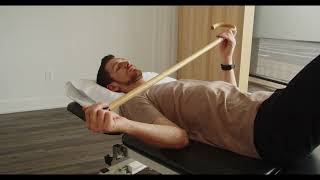
Home exercises may include pendulum movements, gentle stretches, and strength exercises using a resistance band. The physical therapist selects the exercises based on your needs and adjusts the intensity, range of motion, and frequency. Our guide to therapeutic exercises explains this progression.
Mobility Exercises
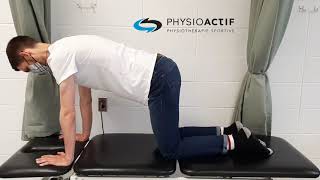
1. Pendulum Exercises (Codman)
Lean forward and place your less painful hand on a table. Let your painful arm hang freely. Make small movements within a comfortable range of motion. The number of repetitions and the frequency should be adjusted based on how you feel during and after the exercise.
2. Front Shoulder Stretch
Place your forearm against a doorframe with your elbow bent. Step one foot slightly forward and turn your body in the opposite direction. Aim for a comfortable level of tension, without straining. Adjust the duration and frequency based on how your shoulder responds.
3. Back-of-the-Shoulder Stretch
Lie on the side of the shoulder you want to stretch, with your upper arm in front of you, your elbow bent at a right angle, and your hand facing the ceiling. With your other hand, gently push your forearm toward the floor, without putting pressure on your wrist. Stop at the first comfortable stretch; stop if the position causes pain. The physical therapist will determine whether this exercise is appropriate for your range of motion and adjust the duration accordingly.
Strengthening Exercises
4. External rotation with a resistance band
Attach the resistance band to a stable anchor point at elbow height. Keep your elbow bent at a right angle close to your body and your forearm horizontal. Move your hand away from your abdomen by rotating your shoulder outward, without lifting your elbow off your side. Choose a resistance level that allows for a controlled movement. The number of sets, repetitions, and rest days can be adjusted based on how your body responds.
5. Pulling with an elastic band
Attach the resistance band in front of you to a stable anchor point at chest height. Pull your elbows back and gently bring your shoulder blades together. The physical therapist will adjust the resistance, number of repetitions, and frequency based on your ability and the results after the session.
10 Quick Tips to Understand Your Pain
One tip a day for 10 days to help you better understand your pain. About a 2-minute read.
6. Sliding Arms Against the Wall
Stand facing the wall with your forearms against it and your elbows bent. Slide your forearms upward through a comfortable range of motion. The physical therapist will adjust the range of motion, number of repetitions, and frequency based on your response.
Key Principles
Gradual Progression : Mobility and strength training can progress together or separately, depending on your needs.
Acceptable pain: Pain during and after exercise helps you adjust your range of motion, intensity, and recovery. The pain threshold is determined in consultation with you.
Consistency: Work with your physical therapist to choose a realistic frequency and adjust it based on your response.
Patience: Changes in pain, strength, and function may progress at different rates. The program adapts to what you observe.
A physical therapist can help you choose a starting point and then adjust the exercises based on their effectiveness and your goals.
Can you treat a frozen shoulder on your own?
If your symptoms are mild and do not raise any red flags, you can temporarily adjust your activities and monitor how things progress. General advice may be appropriate for some people. An evaluation is recommended if symptoms persist, if your function declines, or if you are unsure how to adjust your exercises.
A physical therapist can help you improve your strength, mobility, and tolerance for movements that are difficult for you. An evaluation helps clarify assumptions, identify signs that require a medical referral, and choose an appropriate progression plan. The program takes into account your abilities, your daily activities, and your response to the exercises.
Assessment can help you choose exercises and then adjust them based on their effectiveness and your goals.
How can you manage activities that are hard on your shoulder?
You can manage strenuous activities by adjusting their duration, intensity, and your posture based on how your shoulder responds. Gradually preparing for arm-raising movements can also be part of the program. These measures do not guarantee that symptoms will not occur.
Develop the skills you need for your business
Strength-building and mobility exercises are selected based on the activities to be prepared for and the skills to be developed. The frequency of these exercises is tailored to each individual.
Vary Your Positions
At work, you can try out different postures, screen heights, support options, and breaks, and then stick with them only if they make the task more bearable.
General posture: If it feels comfortable, try straightening your torso, tucking your chin in slightly, and letting your shoulder blades drop. This is just one option among many; adjust it if it doesn't feel comfortable.
Modify movement techniques
For overhead movements or sports, gradually increase the load and duration, then adjust based on how your shoulder responds.
Sleep Management
Try different positions and use a pillow if it makes you more comfortable. There is no required position.
Workload Assessment and Management
Gradually resume activity after a break. Monitor how the activity affects your shoulder. You may experience mild stiffness after starting a new activity; keep track of how it progresses. If symptoms worsen after the activity or further impair function, adjust the intensity and monitor the response before your next session.
Maintaining Mobility
Upper-back movements, such as gentle rotations or extensions, can be included in the program depending on your needs. After your follow-up appointment, you can continue doing the exercises that are still helpful for your activities, at an appropriate frequency.
How does frozen shoulder develop?
The progression of adhesive capsulitis varies from person to person; improvement in pain and activity levels is still possible. The non-surgical treatment plan is tailored to your response and your goals.
Response to Treatment Pain, function, and important activities are monitored throughout the program; individual responses vary.
Recovery Time
The duration of your symptoms helps the healthcare professional understand your situation, but it is not enough to predict your recovery.
Possible developments
Symptoms may persist, fluctuate, or improve. In a study of people with a rotator cuff tear, the size of the tear was not associated with pain intensity or functional limitations at the time of evaluation10. This observation does not predict how a tendon will progress.
Seek medical attention based on the severity of your symptoms and their impact on your daily activities, without assuming that waiting will automatically lead to permanent damage.
Risk of Recurrence
Some people continue to experience symptoms or find that they return. A reassessment can then evaluate their activities, schedule, goals, and other relevant factors without attributing the situation to a lack of effort.
Certain exercises may be continued if they remain relevant to the person's activities and goals.
Recovery Goals
Non-surgical treatment can help. The program is developed in consultation with you and then adjusted based on your pain, function, activities, and any challenges you face.
There is still room for improvement. Goals are set based on the activities you wish to resume and the progress you’ve made.
When to consult for shoulder impingement syndrome?
Persistent shoulder pain that wakes you up or limits your activities is a reason to see a physical therapist. A severe injury, sudden loss of strength, or fever requires prompt medical attention. In Quebec, you can see a physical therapist directly at a private clinic for shoulder and arm pain.
When to Consult a Physiotherapist
See a physical therapist in the following situations:
-
Your pain persists despite adjustments to your activities.
-
Raising your arm continues to cause pain that limits your activities.
-
The pain wakes you up regularly.
-
The pain interferes with your daily activities.
Some insurance plans require a prescription to cover the cost of treatment. Access to the public healthcare system also depends on the facility's policies.
When to Consult a Doctor
Seek medical attention immediately in the following situations:
Warning Signs:
-
If your shoulder pain is accompanied by chest pain or shortness of breath, call 911.
-
Your pain begins after a major injury, or your shoulder is deformed.
-
You suddenly lose a lot of strength in your shoulder or can no longer use your arm.
-
You continue to experience numbness in your arm or hand.
-
Your pain is accompanied by a fever, chills, redness, or significant warmth.
-
You have a history of cancer and are experiencing new, unexplained pain or symptoms such as unintentional weight loss.
Lack of Response to Treatment:
-
Your symptoms are changing in unexpected ways or are not changing despite an adjusted treatment plan.
-
Your pain or difficulties are getting worse despite treatment.
If you're concerned about how things are progressing or if a new symptom appears, seek professional advice.
To explore all treatment options, consult our complete guide to shoulder pain.
Need professional advice?
Our physical therapists can assess your condition and provide you with a personalized treatment plan.
Make an appointmentReferences
The following references discuss research on the proposed causes, assessment, and treatments of shoulder pain.
Links open in a new tab.
- Lafrance S, Charron M, Dubé MO, Desmeules F, Roy JS, Juul-Kristensen B, et al. The Efficacy of Exercise Therapy for Rotator Cuff-Related Shoulder Pain According to the FITT Principle: A Systematic Review With Meta-analyses. J Orthop Sports Phys Ther. 2024;54(8):499-512. (Back to section: 1)
- Lewis J, Mintken PE, McDevitt AW. What's in a Name? The Case for Using "Rotator Cuff-Related Shoulder Pain" in Clinical Practice. J Orthop Sports Phys Ther. 2025;55(7):1-3. (Back to sections: 1, 2, 3)
- Bigliani LU, Morrison DS, April EW. The morphology of the acromion and its relationship to rotator cuff tears. Orthop Trans. 1986;10:228. (Back to section: 1)
- Michener LA, McClure PW, Karduna AR. Anatomical and biomechanical mechanisms of subacromial impingement syndrome. Clinical Biomechanics. 2003;18(5):369-379. (Back to section: 1)
- Ludewig PM, Reynolds JF. The Association of Scapular Kinematics and Glenohumeral Joint Pathologies. Journal of Orthopaedic & Sports Physical Therapy. 2009;39(2):90-104. (Back to section: 1)
- Tyler TF, Nicholas SJ, Roy T, Gleim GW. Quantification of Posterior Capsule Tightness and Loss of Range of Motion in Patients with Shoulder Impingement. The American Journal of Sports Medicine. 2000;28(5):668-673. (Back to section: 1)
- Thigpen CA, Padua DA, Michener LA, Guskiewicz K, Giuliani C, Keener JD, et al. Head and shoulder posture affect scapular mechanics and muscle activity in overhead tasks. Journal of Electromyography and Kinesiology. 2010;20(4):701-709. (Back to section: 1)
- Barreto RPG, Braman JP, Ludewig PM, Ribeiro LP, Camargo PR. Bilateral magnetic resonance imaging findings in individuals with unilateral shoulder pain. J Shoulder Elbow Surg. 2019;28(9):1699-1706. (Back to section: 1)
- Karjalainen TV, Jain NB, Page CM, Lähdeoja TA, Johnston RV, Salamh P, et al. Subacromial decompression surgery for rotator cuff disease. Cochrane Database Syst Rev. 2019;1(1):CD005619. (Back to section: 1)
- Curry EJ, Matzkin EE, Dong Y, Higgins LD, Katz JN, Jain NB. Structural Characteristics Are Not Associated With Pain and Function in Rotator Cuff Tears: The ROW Cohort Study. Orthop J Sports Med. 2015;3(5):2325967115584596. (Back to section: 1)
Other conditions

Hip osteoarthritis is the normal wear and tear of the hip joint. It is often said that osteoarthritis is the wear and tear of the cartilage between our bones. That is true, but it involves more than just the cartilage. Cartilage is a tissue that acts as a cushion between the surfaces of our bones and allows our joints to glide smoothly and move fluidly.
This is normal wear and tear of the knee joint. It’s often said that osteoarthritis is the wearing down of the cartilage between our bones. That’s true, but it’s more than just the cartilage. Cartilage is a tissue that acts as a cushion between the surfaces of our bones and allows our joints to glide smoothly and move fluidly.
It is an inflammation of the subacromial bursa in the shoulder joint.
A bursa is a small, thin sac filled with fluid that is found in many of the body's joints. This small sac acts as a cushion within the joint and lubricates the structures that are subject to increased friction.
It is a tissue that surrounds the shoulder and helps keep the shoulder bone in place within the joint. The capsule helps keep the joint stable.
Neck pain is a general term used to describe pain in the neck that has no specific cause, such as an accident or a sudden awkward movement. Neck pain is therefore synonymous with “my neck hurts, and nothing in particular happened.”
In both types of injury, pain is felt in the neck and then radiates into the arm, or vice versa.
Make an appointment now
We offer a three-pronged quality assurance approach: optimized treatment time, a second opinion from a physical therapist, and ongoing expertise to ensure effective care tailored to your needs.

Customer satisfaction is our top priority
At Physioactif, excellence guides everything we do, but our patients are the best ones to tell you about it. Take a look at their verified reviews to get a real sense of their experience.










Discover our physical therapy clinics
We have locations in several areas to better serve you.
Blainville
190 Bas-de-Sainte-Thérèse Road, Suite 110,
Blainville, Quebec
J7B 1A7
Located in Blainville, near Rosemère, the Physioactif clinic is easily accessible to residents of the area and the surrounding communities
Boucherville
690 Rue de Montbrun, Suite S,
Boucherville, Quebec
J4B 8H2
Located in Boucherville, the Physioactif clinic is easily accessible to people in the area
Laval
3224 Jean-Béraud Ave., Suite 220, Laval,
QC H7T 2S4
Located in Chomedey, in the heart of Laval, the Physioactif clinic is easily accessible to people in the area
Montreal
8801 Lajeunesse Street,
Montreal,
QC H2M 1R8
Located in Ahuntsic, near Villeray, the Physioactif clinic is easily accessible to residents of both neighborhoods
Saint-Eustache
180 25th Avenue, Suite
201 Saint-Eustache
QC J7P 2V2
Located in Saint-Eustache, the Physioactif clinic is easily accessible to residents of the area and the surrounding communities
Vaudreuil
21 Cité-des-Jeunes Boulevard, Suite 240,
Vaudreuil-Dorion, Quebec
J7V 0N3
Located in Vaudreuil-Dorion, the Physioactif clinic is easily accessible to people in the area
Make an appointment now