Physiotherapy for Calf Pain
.png)
.png)
.png)




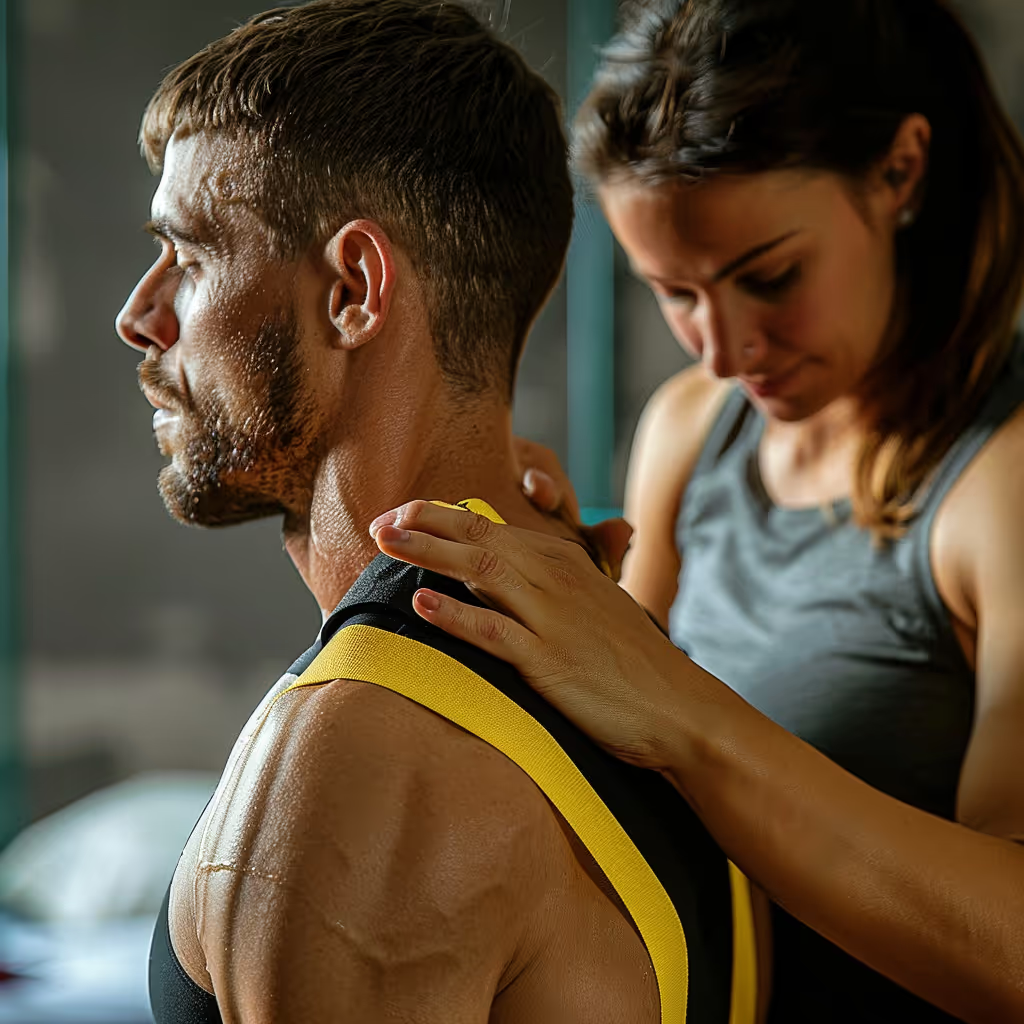
Physical therapy is the first-line treatment for most calf pain. Returning to sports while the muscle is still tender to the touch increases the risk of recurrence, even if it no longer hurts during activity. In a study of athletes who had suffered a hamstring strain, those who were still tender to the touch at the time of their return to play were about four times more likely to re-injure themselves. Whether you have a muscle strain, Achilles tendinopathy, or chronic tightness, this active approach offers lasting results.
This guide explains how physiotherapy works for calf problems. You will learn which conditions are treated, what techniques are used, and what to expect during your treatment. If you first want to understand the different causes of calf pain, consult our complete guide to calf pain.
What is Physiotherapy for Calf Pain?
Calf physiotherapy is a treatment approach that combines assessment, therapeutic exercises, manual techniques, and education. It aims to reduce your pain, restore muscle function, and get you back to your normal activities as quickly and safely as possible.
Unlike passive approaches such as medication or injections, physiotherapy places you at the heart of your recovery. You learn to understand your condition and manage your symptoms. This active involvement explains why the results last longer.
Calf rehabilitation generally follows progressive phases. It begins by controlling pain and restoring movement. Then, weakened muscles are strengthened. Finally, you are prepared to resume your sports or professional activities. Each phase builds on the previous one.
An important point: physiotherapy is not a passive solution where you receive treatment without effort. It is an active partnership between you and your therapist. Your commitment to home exercises is essential for achieving the best results. Rest assured, we will support you every step of the way.
Now that you understand the general approach, let's look at which calf conditions can be treated.
What Calf Conditions Does Physiotherapy Treat?
Physiotherapy effectively treats gastrocnemius and soleus muscle strains, Achilles tendinopathy, shin splints, and chronic tension. It also helps with post-surgical rehabilitation and the prevention of recurrent injuries.
Calf Muscle Strains
Gastrocnemius and soleus muscle strains are among the most common injuries treated in physical therapy. Rehabilitation is essential for a full recovery and to prevent recurrence. As soon as a strain occurs, soft-tissue first aid should begin promptly, following a modern approach called “PEACE and LOVE.” In short, the injury is protected during the first few days, and then a gradual return to movement is encouraged rather than complete rest.
Gastrocnemius Strain : This is the most common calf muscle injury, often called "tennis leg". The medial (inner) head is most often affected. Physiotherapy reduces the time to return to sport and decreases the risk of re-injury. A progressive and eccentric strengthening program is particularly effective. Soleus Strain : This injury affects the deep calf muscle. It is common among long-distance runners. Rehabilitation specifically targets this muscle with knee-bent exercises.Achilles tendon tendinopathy
Achilles tendinopathy responds very well to physical therapy. Treatment is based on gradually increasing the load on the tendon, not on rest. This is one of the conditions for which physical therapy has the most evidence of effectiveness. For Achilles tendinopathy, eccentric calf strengthening—such as slowly lowering the heel below the level of a step—has long been considered the gold standard of treatment.
Mid-portion Tendinopathy : This affects the part of the tendon located 2 to 6 cm above the heel. Eccentric exercises performed on a step are particularly effective for this condition. Insertional Tendinopathy : This affects the tendon's attachment to the heel bone (calcaneus). Treatment is slightly different, involving less dorsiflexion range of motion during exercises.Shin Splints (Medial Tibial Stress Syndrome)
Shin splints often involve the calf muscles, particularly the soleus and tibialis posterior. Physiotherapy addresses the biomechanical factors that contribute to overload.
Muscle Tension and Contractures
Chronic calf muscle tension is common, especially in people who stand for long periods or exercise without adequate stretching. Physiotherapy addresses underlying muscle imbalances and flexibility issues.
Chronic Compartment Syndrome
This condition causes pain during exercise due to excessive pressure in the muscle compartments. Physiotherapy can help modify biomechanical factors and running technique, although some cases may require surgery.
Post-Operative Rehabilitation
After calf or Achilles tendon surgery (e.g., rupture repair), physiotherapy is essential for restoring strength, mobility, and function. Protocols vary depending on the type of surgery.
Now that you know which conditions can be treated, let's see how physiotherapy actively helps you heal.
How Does Physiotherapy Help Heal Calf Pain?
Physiotherapy helps by reducing pain, accelerating tissue healing, restoring strength and flexibility, and correcting factors that contributed to the injury. It also significantly reduces the risk of re-injury, which is particularly important for the calf where recurrences are frequent.
Pain Reduction
Several mechanisms explain how physiotherapy reduces pain:
Controlled Movement : Adapted activity stimulates the production of natural endorphins and reduces the sensitivity of the nervous system. Moving within comfortable ranges helps to "desensitize" the painful area. Manual techniques : Soft tissue and joint mobilization can provide immediate pain relief by reducing muscle tension and improving circulation. Education : Understanding your condition reduces anxiety and fear of movement. This can significantly decrease the experience of pain. Knowing that your calf is not "fragile" allows you to move with more confidence.Accelerated Healing
Controlled movement promotes healing:
- It increases blood circulation to injured tissues
- It stimulates the production of collagen (a repair protein)
- It guides the alignment of new muscle and tendon fibers
- It prevents the formation of dysfunctional scar tissue
Research shows that early and controlled movement leads to better results than prolonged rest. This is why you're no longer simply told to "ice it and wait".
Restoring Strength
Injuries always cause a loss of strength. Even a minor strain leads to a reflexive muscle inhibition. Progressive strengthening exercises are essential for:
- Rebuilding strength in the injured muscle
- Strengthening surrounding muscles that compensate
- Preparing the limb to handle normal loads
- Allowing a safe return to sports or work
For the calf, strength must be restored in both main muscles (gastrocnemius and soleus) as well as throughout the entire posterior chain.
Improved Flexibility
Calf flexibility is essential for many activities, from walking to running. A stiff calf can contribute to several problems:
- Achilles Tendinopathy
- Plantar fasciitis
- Shin splints
- Knee problems
Physiotherapy gradually restores flexibility while respecting tissue healing.
Preventing Recurrence
Recurrence is common after calf injuries. Rest assured: a comprehensive rehabilitation program significantly reduces this risk. A good program allows for:
- To identify and correct risk factors
- Completely restoring strength before returning to sports
- Learning prevention strategies
- Gradually preparing for the intensity of target activities
Calf strains often recur. In Australian football, a recurrence rate of about 16% has been reported. This is a good reason to complete the entire rehabilitation process, rather than returning to sports as soon as the pain goes away.
You're probably wondering what happens during your first visit. Let's look at the evaluation process in detail.
10 Quick Tips for Understanding Your Pain
The ones that have made the biggest difference in my patients' lives. 1 a day, 2 minutes.
What happens during a physiotherapy evaluation?
The assessment includes a detailed interview about your symptoms, a complete physical examination, and specific tests to identify the cause of your pain. This assessment helps create a personalized treatment plan tailored to your condition and goals.
The Interview
Your physiotherapist will ask you several questions:
- Injury History: How and when did the pain start? Was there a specific event like a sprint or a jump?
- Pain Characteristics: Where exactly is it located? What makes it worse or better?
- Functional Impact: Can you walk normally? Climb stairs? Run?
- Medical History: Have you had similar injuries before? Any issues with your Achilles tendon?
- Goals: What do you want to be able to do again? Return to running? Walk without pain?
Physical examination
The examination includes several components:
Observation : Your therapist observes your posture, your way of walking, and the appearance of your calf (swelling, bruising, muscle atrophy). You may be asked to stand on your tiptoes to assess function. Palpation : Touching the muscles, Achilles tendon, and other structures helps identify sensitive areas. This precisely locates where the problem is. Range of Motion Tests : We measure the dorsiflexion of your ankle (foot towards the shin). A restriction may indicate a stiff calf or a joint problem. Strength tests : Specific tests evaluate the strength of your calf muscles. The most important is the ability to perform single-leg calf raises. We count how many you can do and compare it with the other leg. Special Tests Based on your symptoms, specific tests help confirm the diagnosis. The Thompson test checks the integrity of the Achilles tendon. The squeeze test specifically evaluates the soleus muscle. Functional Assessment For athletes, functional tests such as jumping, hopping (single-leg jumps), or sport-specific movements can be assessed.The treatment plan
After the assessment, your physiotherapist will explain:
- What is likely causing your pain
- The recommended treatment plan
- Short-term and long-term goals
- The anticipated number of sessions
- What you can do at home
You don't have to understand everything right away. That's why we take the time to explain things thoroughly and answer your questions. Let's now look at the techniques that will be used for your treatment.
What treatment techniques are used?
Techniques include therapeutic exercises (the cornerstone of treatment), manual therapy, education about your condition, and sometimes modalities like ice, heat, or taping. The choice of techniques depends on your specific condition and the healing phase.
Therapeutic Exercises
Exercise is the most important component of treatment. For the calf, several types of exercises are used:
Isometric Exercises Muscle contractions without movement. These are useful at the beginning of treatment when movement is painful. For example, push your forefoot against the floor without moving your ankle. Isotonic Exercises Contractions with movement. These include concentric work (when the muscle shortens) and eccentric work (when the muscle lengthens under tension). Eccentric exercises These are particularly important for Achilles tendinopathies and preventing recurrent muscle strains. The muscle works by lengthening under load. Calf raises followed by a slow descent are a classic example. Calf Raises This is the fundamental calf strengthening exercise. It can be modified in many ways to suit your needs: two legs, one leg, knee straight (gastrocnemius), knee bent (soleus), on a step, or with weights. Flexibility exercises Stretches to restore calf flexibility. Progression is important to avoid irritating healing tissues. Stretches with the knee straight and the knee bent are used to target both muscles. Functional exercises Movements that mimic daily activities or sports, such as walking, jogging, jumping, and changing direction.Manual therapy
Manual techniques complement exercises:
Soft Tissue Massage and Mobilization Helps release tight muscles, reduce adhesions, and improve circulation. Calf massage can be particularly beneficial for chronic tension. Joint mobilization If the ankle is stiff, gentle techniques can improve movement. A mobile ankle is essential for a functional calf. Myofascial Techniques Work on the fascia (connective tissue surrounding muscles) to improve gliding between structures. Trigger points Treatment of painful muscle knots that can contribute to calf pain.Education
Education is an essential part of your treatment:
- Understanding your condition and its natural progression
- Learning to manage load (when to push, when to slow down)
- Modifying activities to allow healing while staying active
- Preventing future injuries
- Recognizing signs of overload
- Choosing the right footwear for your activities
Additional Treatment Options
Depending on your condition, other treatments may be used:
Ice Useful in the first few days after an acute injury to control swelling. Heat Therapy Helps release tight muscles and improve circulation in chronic conditions. Taping Can support the calf or Achilles tendon during the recovery phase. Shockwave Therapy Can help with certain Achilles tendinopathies that are resistant to standard treatment.You might be wondering what exercises will be prescribed for you. Let's look at the different phases of rehabilitation.
What exercises are prescribed for calf rehabilitation?
The exercises prescribed depend on your specific condition, but generally include progressive strengthening with calf raises, stretching, motor control exercises, and functional exercises. The progression follows well-defined phases.
Phase 1: Pain Control and Muscle Activation (Days 1-7)
Goals Reduce pain, protect healing tissue, maintain muscle activation. Typical Exercises:- Gentle isometric contractions (pushing the forefoot against the floor without moving)
- Active ankle movements within a pain-free range
- Assisted walking if necessary (crutches for severe strains)
- Light isometric contraction while seated, 10 seconds x 5 repetitions, 3 times a day
- Gentle ankle movements in all directions
- Walking on a flat surface with normal steps if tolerated
Phase 2: Restoring Range of Motion and Beginning Strengthening (Weeks 1-3)
Goals : Restore full range of motion, begin progressive strengthening. Typical Exercises:- Two-leg calf raises
- Progressive calf stretches
- Ankle stability exercises
- Calf raises, feet flat on the floor, 15 repetitions x 3 sets
- Gastrocnemius stretch (knee straight) against a wall, 30 seconds x 3
- Soleus stretch (knee bent) against a wall, 30 seconds x 3
- Single-leg balance, 30 seconds x 3 each side
Phase 3: Intensive Strengthening (Weeks 3-8)
Goals : Develop muscle strength and endurance, prepare for functional activities. Typical Exercises:- Single-leg calf raises
- Eccentric exercises on a step
- Exercises with added weight
- Single-leg calf raises on a step, knee straight
- Lower slowly over 3 seconds (eccentric phase)
- 15 repetitions x 3 sets, once a day
- Seated calf raises with weight on knees
- Or standing calf raises with knee bent at 20-30 degrees
- 15 repetitions x 3 sets, once a day
- Alfredson Protocol: 3 sets of 15 repetitions, twice a day
- First with knee straight, then with knee bent
- Gradually increase the load with a weighted backpack
Phase 4: Return to Activity (Weeks 6-12+)
Goals : Prepare for return to sport or normal activities, maintain gains. Typical Exercises:- Plyometric exercises (jumps)
- Progressive running
- Sport-specific exercises
- Brisk walking without pain
- Light jogging on flat ground (start with 1-2 minutes)
- There is no universal rule for safely increasing your running volume. The well-known “10% per week” rule is not supported by research: it’s too simplistic to work for everyone. Instead, increase your volume based on your tolerance and the absence of pain, and let your physical therapist adjust your progression.
- Introduction of intervals (jogging/running)
- Sprints are reintroduced in stages, starting at a reduced speed and gradually increasing to maximum speed. You should only move on to the next stage if the previous one does not cause pain.
- Changes of direction
No single training metric can predict the risk of running injuries on its own. Current data does not consistently link running injuries to any specific training parameter, so caution is advised when recommending training volume or progression. Adjusting your training based on your own response is better than relying on a one-size-fits-all formula.
Criteria for advancing to the next level:- No pain during activity
- No increase in pain within 24 hours after
- Before returning to sports, the strength of the injured calf should be as close as possible to that of the healthy side. Your physical therapist will measure this to help guide the decision.
Summary of phases
| Phase | Typical duration | Main focus |
|---|---|---|
| Phase 1 | Days 1-7 | Protection, pain control, activation |
| Phase 2 | Weeks 1-3 | Range of motion, light strengthening |
| Phase 3 | Weeks 3-8 | Intensive strengthening, eccentric exercises |
| Phase 4 | Weeks 6-12+ | Return to sport, specific exercises |
A question we often get asked: how long will all this take? Let's look at the typical rehabilitation timelines.
Need professional advice?
Our physical therapists can assess your condition and provide you with a personalized treatment plan.
Make an appointmentHow long does physiotherapy rehabilitation last?
The duration depends on the severity of your injury and your goals. A mild strain usually heals within a few weeks, while a severe strain may take several months. Chronic Achilles tendinopathy often takes several months to resolve as well, because the tendon responds slowly to strengthening exercises. Your physical therapist will base the treatment plan on your actual progress rather than on a fixed timeline.
Estimates by condition
Calf muscle strains:A milder muscle strain generally heals faster than a severe one, but the exact recovery time varies greatly depending on the individual and the actual severity of the tear. A severe strain, involving a significant tear or rupture, can take several months to heal. Rather than relying on a fixed number of weeks per severity level, your physical therapist will assess your actual progress to determine when you can return to sports. A moderate muscle injury requires rehabilitation carried through to completion, just as much as a more severe injury does. Returning to sports as soon as the pain subsides, without completing the full rehabilitation process, increases the risk of a relapse.
Achilles tendinopathy:The duration of Achilles tendinopathy varies greatly from person to person. The tendon responds slowly to strengthening exercises. In fact, a review of exercise programs for Achilles and patellar tendinopathies found that approximately 45% of people did not show significant improvement with these exercise programs.
Shin splints:Tibial periostitis, also known as medial tibial stress syndrome or “shin splints,” is considered a form of bone stress injury. When leg pain stems from a bone stress injury, the time to return to sports depends on the severity. Low-grade, low-risk injuries recover the fastest, in about 8.7 weeks. Higher grades, or injuries in high-risk locations, typically require around 20 weeks. For a bone stress injury, severity determines the prognosis. Classifying and assessing the grade of the injury helps determine when to return to sports. This is yet another reason to follow a professional evaluation rather than a fixed timeline.
Muscle tension and spasms:A simple strain or tightness in the calf—without a tear—usually heals faster than a full-blown calf strain. The recovery time depends too much on the cause to give a specific timeframe.
Factors influencing recovery time
Several factors influence your recovery time:
- Severity of the injury: More severe injuries take longer to heal
- Age: Healing can be slower with age, especially for calf strains (gastrocnemius) which often affect those over 40
- General health: Conditions like diabetes, smoking, and others can slow down healing
- Adherence to treatment: Consistently doing your exercises speeds up results
- Injury history: Recurring injuries may take longer to heal
- Goals: Returning to elite sports takes longer than resuming normal walking
Session frequency
Typical frequency varies depending on the phase:
- Acute phase: 2 to 3 times per week
- Strengthening Phase: 1 to 2 times per week
- Return-to-sport phase: Physical therapy appointments are gradually spaced out as the condition improves.
Home exercises are essential between sessions. Plan for 15 to 30 minutes per day for your exercise program. This might seem like a lot, but it's a worthwhile investment.
What sets Physioactif's approach apart?
At Physioactif, we offer an evidence-based approach, combining clinical expertise with current best practices. Our physiotherapists are trained in the latest techniques for calf rehabilitation.
Our Approach
Comprehensive assessment : We take the time to understand your condition. The initial assessment lasts 45 to 60 minutes to precisely identify the source of your problem. Personalized plan : Each treatment plan is tailored to your specific condition, activity level, and goals. A marathon runner does not have the same needs as someone who simply wants to walk without pain. Guided progression : We follow progression protocols based on objective criteria, not just on elapsed time. You advance to the next phase when you are ready, not according to an arbitrary schedule. Ongoing education : We believe that an informed patient recovers better. You will understand your condition and know what to do to optimize your recovery.Our services
We offer several relevant services for calf issues:
- Assessment and treatment of muscle injuries
- Achilles tendinopathy rehabilitation
- Injury prevention programs
- Supervised return to sport
- Treatment for chronic tension
For more information on our approach to related issues, consult our guide to physiotherapy for the foot and ankle or our guide to foot and ankle pain.
Frequently Asked Questions about Calf Physiotherapy
Does physiotherapy hurt?
Some techniques may cause temporary discomfort, but the treatment itself should not be painful. Mild pain during exercises can be normal, but it should return to your baseline level within 24 hours. If the pain increases significantly or lasts longer, inform your physiotherapist to adjust the treatment.
How many sessions will I need?
It depends on your condition. A mild strain might require 4 to 6 sessions. Chronic Achilles tendinopathy could need 8 to 16. Your physiotherapist will give you an estimate after the initial assessment.
Can I do my exercises alone at home?
Yes, and it's even essential. Home exercises are an important part of the treatment. However, supervision by a physiotherapist, especially at the beginning, ensures you are doing the right exercises with the correct technique. Poor technique can slow down your recovery.
When can I resume running?
Returning to running depends on several objective criteria, not just the time elapsed. You must have regained full strength (ability to do 25+ single-leg calf raises), flexibility, and the ability to jump without pain. Your physiotherapist will guide you through this progression.
Can physiotherapy prevent future calf injuries?
Yes. Research shows that prevention programs, especially calf strengthening exercises, significantly reduce the risk of injury. A maintenance program after recovery is recommended, especially if you are a runner.
Do I need to see a doctor before consulting a physiotherapist?
In Quebec, you can consult a physiotherapist directly without a medical referral. However, if you have warning symptoms (significant swelling on one side, redness, warmth), consult a doctor first to rule out deep vein thrombosis.
Do eccentric exercises hurt?
Eccentric exercises, especially for Achilles tendinopathy, can cause some discomfort at first. This is normal and even expected. The pain should remain within an acceptable range (often rated 4-5 out of 10 maximum) and decrease over the weeks. If the pain progressively increases, inform your therapist.
How to book an appointment?
If you are suffering from calf pain, we can help. Our physiotherapists are trained to assess and treat musculoskeletal conditions of the calf, ankle, and foot.
To book an appointment:
- Online: Visit our website to book directly
- By Phone: Call one of our clinics
- Emergency consultation: Quick appointments are available for recent injuries
We accept most private insurance plans. Please check your coverage before your visit.
Key takeaways about physiotherapy for calf pain
Physiotherapy is an effective and lasting approach to treating calf pain. It combines assessment, active treatment, and prevention to help you return to your activities without pain.
Key points:- Physiotherapy is the first-line treatment for calf muscle strains, Achilles tendinopathies, and muscle tightness.
- Exercise is central to treatment. Calf raises and eccentric exercises are the cornerstones of rehabilitation.
- Each condition requires a specific approach. An acute strain, chronic tendinopathy, and shin splints (periostitis) require different strategies.
- Progression is essential. Following the healing phases prevents recurrence and optimizes results.
- Your participation makes a difference. Home exercises and adherence to the program are essential for success.
- Prevention is possible. A maintenance program significantly reduces the risk of new injury, especially for runners.
Don't wait for your pain to become chronic. An early assessment helps identify the cause and start the appropriate treatment. The sooner you start, the better the results generally are.
Videos in this category
Other conditions

Hip osteoarthritis is the normal wear and tear of the hip joint. It is often said that osteoarthritis is the wear and tear of the cartilage between our bones. That is true, but it involves more than just the cartilage. Cartilage is a tissue that acts as a cushion between the surfaces of our bones and allows our joints to glide smoothly and move fluidly.
This is normal wear and tear of the knee joint. It’s often said that osteoarthritis is the wearing down of the cartilage between our bones. That’s true, but it’s more than just the cartilage. Cartilage is a tissue that acts as a cushion between the surfaces of our bones and allows our joints to glide smoothly and move fluidly.
It is an inflammation of the subacromial bursa in the shoulder joint.
A bursa is a small, thin sac filled with fluid that is found in many of the body's joints. This small sac acts as a cushion within the joint and lubricates the structures that are subject to increased friction.
It is a tissue that surrounds the shoulder and helps keep the shoulder bone in place within the joint. The capsule helps keep the joint stable.
Neck pain is a general term used to describe pain in the neck that has no specific cause, such as an accident or a sudden awkward movement. Neck pain is therefore synonymous with “my neck hurts, and nothing in particular happened.”
In both types of injury, pain is felt in the neck and then radiates into the arm, or vice versa.
Make an appointment now
We offer a three-pronged quality assurance approach: optimized treatment time, a second opinion from a physical therapist, and ongoing expertise to ensure effective care tailored to your needs.
Customer satisfaction is our top priority
At Physioactif, excellence guides everything we do, but our patients are the best ones to tell you about it. Take a look at their verified reviews to get a real sense of their experience.









Discover our physical therapy clinics
We have locations in several areas to better serve you.
Blainville
190 Bas-de-Sainte-Thérèse Road, Suite 110,
Blainville, Quebec
J7B 1A7
Located in Blainville, near Rosemère, the Physioactif clinic is easily accessible to residents of the area and the surrounding communities
Boucherville
690 Rue de Montbrun, Suite S,
Boucherville, Quebec
J4B 8H2
Located in Boucherville, the Physioactif clinic is easily accessible to people in the area
Laval
3224 Jean-Béraud Ave., Suite 220, Laval,
QC H7T 2S4
Located in Chomedey, in the heart of Laval, the Physioactif clinic is easily accessible to people in the area
Montreal
8801 Lajeunesse Street,
Montreal,
QC H2M 1R8
Located in Ahuntsic, near Villeray, the Physioactif clinic is easily accessible to residents of both neighborhoods
Saint-Eustache
180 25th Avenue, Suite
201 Saint-Eustache
QC J7P 2V2
Located in Saint-Eustache, the Physioactif clinic is easily accessible to residents of the area and the surrounding communities
Vaudreuil
21 Cité-des-Jeunes Boulevard, Suite 240,
Vaudreuil-Dorion, Quebec
J7V 0N3
Located in Vaudreuil-Dorion, the Physioactif clinic is easily accessible to people in the area
Make an appointment now