Physiotherapy for Joint Pain: How Physiotherapy Treats Your Joints
.png)
.png)
.png)



Physical therapy helps reduce joint pain and allows you to resume the activities that matter to you. Exercise is one of the first recommended treatments for hip and knee osteoarthritis, a condition that affects the tissues of the joint.1 The treatment plan varies depending on the cause of the pain and the affected area: knee pain, hip pain, shoulder pain, or wrist and hand pain. An infected joint or a fracture requires medical attention first. If you want to understand the different causes of joint pain, check out our comprehensive guide to joint pain.
This guide explains how physical therapy treats joint problems: the conditions treated, the techniques used, and the treatment process.
What is physiotherapy for joint pain?
Physical therapy for joint pain combines an assessment, tailored exercises, advice, and, if necessary, manual techniques. The treatment aims to reduce pain and make it easier to perform activities such as walking, climbing stairs, or using your hands. You’ll also learn how to manage your symptoms on a daily basis.
Physical therapy allows you to take an active role in your care: you’ll learn exercises and ways to adapt your activities. It can be used in conjunction with medications or injections when these treatments are indicated. Long-term results vary depending on the condition and the program. The plan aims to give you the tools you need to continue your activities beyond the sessions.
10 Quick Tips to Understand Your Pain
One tip a day for 10 days to help you better understand your pain. About a 2-minute read.
Exercise is a cornerstone of treatment. It strengthens the muscles that support your joints and helps you practice useful movements. In osteoarthritis, tailored exercise programs can reduce pain and improve your ability to perform daily activities. The role of manual therapy depends on your evaluation.
Treatment relies on working together with your physical therapist. Home exercises complement the sessions at the clinic. If pain, fatigue, cost, or a lack of time make it difficult to follow the program, let us know—the plan needs to take these obstacles into account.
For the fundamentals of physical therapy, see our comprehensive guide on what physical therapy is.
What joint conditions does physiotherapy treat?
Physical therapy supports people with osteoarthritis, inflammatory arthritis, bursitis, sprains, tendinopathy, or post-surgical pain. It helps patients resume their activities after an injury and manage certain types of chronic pain. Each condition requires an evaluation and, in some cases, additional medical treatment. Signs that require prompt medical attention are described in our comprehensive guide to joint pain.
| Condition | Affected Joints |
|---|---|
| Osteoarthritis | Knees, hips, hands, spine |
| Inflammatory arthritis | Multiple joints |
| Bursitis | Shoulder, hip, knee, elbow |
| Sprains | Ankle, knee, wrist |
| Tendinopathies | Shoulder, ankle, knee |
| Post-surgery | Knee, hip, shoulder |
Osteoarthritis
The treatment aims to improve symptoms and functional ability, even though changes in the joint remain visible.
A review of 217 trials, involving 15,684 people with knee osteoarthritis, compares several types of exercise with one another. It also compares them to groups that did not perform the tested exercises: usual activities or care, general health information, a waiting period, or a sham intervention. Aerobic exercise, such as walking or cycling—which increases breathing rate—generally ranks highest in reducing pain and improving daily activities, walking ability, and quality of life. Several comparisons combine results from separate trials rather than comparing two exercises tested in the same trial. Therefore, this ranking does not identify the best exercise for every individual. Only 40 trials report sufficient data on adverse effects: no clear difference from the comparison groups was established, but these data remain unclear.2
Physiotherapy for osteoarthritis includes:
- Strengthening the muscles around the joint
- Exercises to Maintain or Increase Range of Motion
- An activity that builds endurance, depending on your abilities: walking, biking, or swimming
- Tips for Balancing the Duration and Intensity of Activities
For osteoarthritis by region, consult our guides on knee osteoarthritis, hip osteoarthritis, or lumbar osteoarthritis.
Inflammatory arthritis
Physical therapy complements medical treatment for inflammatory arthritis. For rheumatoid arthritis, the recommendations of the American College of Rheumatology—an association of physicians who treat joint diseases—strongly support regular exercise to improve function and reduce pain.3 Disease-modifying medications remain important. Psoriatic arthritis is associated with psoriasis, a condition that can cause plaques to form on the skin. For psoriatic arthritis, disease-specific recommendations4 also support exercise and physical therapy, although the evidence is less conclusive. A trial involving 41 adults5 compared 12 weeks of strength training to standard drug therapy. The exercise group showed greater improvement in their daily activities and certain aspects of their quality of life.
The exercises are tailored to the level of inflammation and the tolerance of each joint. A severe flare-up may require reducing or suspending certain exercises and adjusting medical treatment. The physical therapist will work with you to choose the exercises; a joint that is very painful and swollen should not be forced.
Bursitis
Physical therapy assesses the stresses and pressures that may be contributing to the symptoms. The treatment plan may include adjusting activities, taking breaks, or using a cushion to avoid direct pressure. Muscle weakness may also guide the choice of exercises. However, bursitis is not always caused by mechanical factors: an infection requires medical attention.
Sprains and joint injuries
Sprains affect the ligaments that support the joints. After an ankle sprain, rehabilitation exercises reduce the risk of another sprain compared to standard care alone. A review of seven trials, involving 1,417 people, found this benefit at 7 to 12 months.6 The program also aims to restore range of motion, strength, and functional activities. The exercises and their progression depend on the injury.
Treatment progresses in phases:
- Phase 1: Reducing pain and swelling
- Recovery phase: regaining full range of motion and beginning strength training
- Return-to-activity phase: more demanding strengthening exercises and movements specific to sports or work
Tendinopathies Around the Joints
Tendinopathies can cause pain near a joint. The rotator cuff consists of muscles and tendons that help the shoulder move and remain stable. To learn more about these injuries, see our guide on rotator cuff tears. Pain in the Achilles tendon, behind the ankle, and in the patellar tendon are also among these conditions. Progressive exercise programs7 can help manage symptoms and resume physical activity; the choice and intensity of exercises vary depending on the tendon.
Rehabilitation After Surgery
Physical therapy helps restore mobility and strength after joint surgery. The treatment plan varies depending on the type of surgery: joint replacement, arthroscopy, or ligament repair. Arthroscopy is a surgical procedure performed using a small camera. The surgical team’s instructions regarding weight-bearing, movement, and physical activity determine the patient’s progress.
How does physiotherapy help treat joint pain?
Physical therapy helps treat joint pain by strengthening muscles, working on difficult movements, and teaching you how to adapt your activities. These approaches can improve symptoms and functional abilities without completely reversing all the changes in the joint.
| Method used | How it works | Benefit |
|---|---|---|
| Strengthening | Muscles help support the joint and control movement | Reduced pain, improved function |
| Mobility | Exercises and certain movements help restore mobility | Less stiffness, easier activities |
| Motion tolerance | Gradually resuming movement can help you tolerate certain activities better | Pain that is sometimes less severe during activities |
| Education | Understand your condition, home exercises | Long-term independence |
Muscle Strengthening: Supporting Movement
Muscles help support the joint and control movement. Strength training can make tasks such as getting up from a chair or climbing a step easier. However, pain relief does not depend solely on increased strength.
The quadriceps, the muscles on the front of the thigh, help extend the knee—that is, straighten it. Strengthening them can reduce pain and improve daily activities in people with knee osteoarthritis.8 A review of nine trials reports these benefits from programs that typically last eight to twelve weeks8. Exercises may include knee extensions—which involve straightening the knee—or leg raises, depending on your ability. For patellofemoral pain, located at the front of the knee, a review of 14 trials favors combined hip and knee strengthening over knee strengthening alone for pain relief and functional ability.9 The benefits were not accompanied by a clearly measurable increase in strength in this review. Our physical therapists can recommend appropriate strengthening exercises for you.
Studies of people with knee osteoarthritis or at risk of developing it do not show that the exercise programs studied damage cartilage.10 This finding is reassuring. It does not mean that any type of load, at any intensity, is suitable for an injured joint.
Improved joint mobility
Joint stiffness can make it difficult to perform everyday tasks. In osteoarthritis, it often occurs when starting an activity or upon waking. Prolonged morning stiffness warrants evaluation, as other conditions may be causing it.
Exercises help patients practice the ranges of motion that have become difficult. Mobilization techniques are movements performed by the physical therapist. For hip or knee osteoarthritis, the British NICE guidelines11 recommends considering manual techniques as a complement to exercises. Relief may be temporary, and the effect varies depending on the technique and the individual.
Reducing nervous system sensitivity
Persistent pain may be accompanied by increased sensitivity of the nervous system. Central sensitization refers to an amplification of nerve signals in the brain and spinal cord—the cord that transmits messages between the brain and the body. This sensitivity can make certain types of touch or movement more painful.12 It varies greatly from person to person and cannot be determined based solely on the duration of the pain.
Gradually resuming activities can help reduce pain and restore confidence. Several factors can contribute to this progress; the role of nerve sensitivity varies from person to person. The plan takes into account your tissues, sensitivity, concerns, and the activities you wish to resume. Our program for chronic pain can support you through this process.
Understanding Pain and Managing It in Daily Life
These explanations help you understand the possible causes of your pain, the recommended treatments, and ways to adjust your activities. The physical therapist also explains which symptoms require further evaluation.
Your physiotherapist will teach you:
- Which exercises to do at home
- How to modify your activities to reduce pain
- When to use heat or cold
- How to progress towards your goals
These explanations help you become more independent. You’ll learn how to manage your condition on a daily basis rather than relying solely on clinic-based treatments. Oureducational approachto the condition gives you the tools to understand and manage your pain.
What does a first physiotherapy session for joint pain involve?
The first physical therapy session includes a discussion about your pain, an assessment of your range of motion, and the development of a treatment plan. An evaluation typically lasts 45 to 60 minutes, according to our guide on muscle and joint physical therapy; please confirm the duration when you schedule your appointment. Treatment can often begin during this visit. A comprehensive evaluation helps identify potential issues and determine the appropriate course of care. It may also lead to a referral to a physician if the cause remains unclear or requires further testing.
Before your appointment
Please arrive 10 to 15 minutes early to fill out the forms, as instructed when you made your reservation. Wear clothing that allows access to the area to be examined, such as shorts that end at the knee.
Please bring, if possible:
- Your test results, if you have any: X-rays or magnetic resonance imaging (MRI), a test that produces images of the inside of the body
- Your list of medications
- Information from your doctor, if you had a medical appointment
The initial consultation
Your physiotherapist will ask questions about your pain and condition:
- When and how the pain started
- What makes your pain worse or better
- How it affects your daily activities
- Your goals (return to sport, grocery shopping without pain, etc.)
The better your physiotherapist understands your condition, the better he or she can help you.
Physical examination
Your physical therapist assesses the range and ease of your movements, your strength, joint stability, and the way you move. A tender area alone does not indicate a single cause. The physical therapist interprets the test results in light of your medical history and symptoms.
Mobility tests: Measuring the range of motion and comparing it to the other side. Strength Tests: Measuring the strength of the muscles around your joint. Weakness in these muscles can contribute to pain. Palpation: Your physiotherapist uses their hands to identify sensitive or painful areas. Specific Tests: Tests that guide the evaluation, for example, of the menisci—the two cartilage pads in the knee—or the rotator cuff tendons in the shoulder.Diagnosis and treatment plan
At the end of the assessment, your physiotherapist will explain their findings and what is likely causing your pain. The treatment plan includes:
- The Techniques Used
- The frequency of sessions
- Exercises to do at home
- An estimated recovery time
Treatment often begins during the first session with manual techniques, exercises, or education.
What treatment techniques are used for joint pain?
Techniques used to treat joint pain include exercises, advice, certain mobilization techniques, and sometimes massage or comfort measures such as heat or cold. The physical therapist selects these based on the specific problem and your response to treatment.
Therapeutic Exercises
Exercises play a central role in many physical therapy programs. For hip or knee osteoarthritis, their benefits in terms of pain relief and functional ability support their role as a first-line treatment.
Recommendations for hip and knee osteoarthritis emphasize exercise and education.1 The program must be feasible and tailored to other health issues. Adverse effects must also be monitored; the pain felt during an exercise is used to adjust the intensity.
| Type | Goal | Examples |
|---|---|---|
| Strengthening | Strengthen the muscles that support the joint | Standing up from a chair, lifting the pelvis while lying down, or straightening the knee |
| Range of motion | Maintain or improve mobility | Stretching or gentle swinging of the relaxed arm |
| Aerobics | Improve overall fitness and exercise tolerance | Walking, cycling, swimming |
| Movement Control | Improve control and coordination | Balance, sense of body position (proprioception) |
Joint mobilizations
Joint mobilization techniques are movements performed by a physical therapist. They can help some people reduce pain or stiffness. In osteoarthritis, their role as a complement to exercises is a matter of debate, depending on the evaluation and the observed results.
Mobilizations can target:
- Knee, between the thigh and the lower leg or between the kneecap and the thighbone
- Hip
- Shoulder
- Small joints of the hands and feet
- Small joints at the back of the vertebrae, the bones of the back
The physical therapist reviews the precautions to take before performing these techniques, particularly after an injury or surgery. A suspected fracture or infection requires a medical evaluation. Movements should not be forced on a joint that is very painful. Our guide describes joint mobilizations and manipulations.
Soft tissue therapy
Massage and assisted stretching can be considered for tender muscles around a joint. The choice depends on your preference, your condition, and the results you’ve seen.
Techniques include:
- Therapeutic massage
- Tailored pressure applied to sensitive muscle areas
- Assisted stretches
Myofascial release, a technique that targets the muscle fascia, is not among the recommended treatments here. For general massage, the goal may be to provide temporary relief. The physical therapist will assess whether this approach is actually helping you and will keep exercises and advice at the core of your treatment plan.
The Dutch guideline on osteoarthritis reports a possible small benefit of massage combined with exercise on the functional ability of people with knee osteoarthritis, compared to exercise alone. The evidence is very uncertain, and the guideline does not recommend routine use of massage.1 This finding does not demonstrate a benefit of myofascial release or an effect on hip osteoarthritis.
Education and advice
Your physiotherapist will teach you how to manage your condition daily:
- Pain science (understanding why you have pain)
- Load management (pacing your activities)
- Adapting the Workstation and Daily Tasks
- Ways to Manage Symptoms and Activities at Home
The Dutch guide to hip and knee osteoarthritis includes explanations and advice in each of its four care pathways, along with an exercise program that is more or less supervised depending on individual needs.1
Complementary treatments
Heat: Gentle heat can provide comfort or a sense of relaxation. It does not heal the joint or replace medical treatment. Avoid sources of extreme heat and protect your skin. Seek advice if you have sensitive skin or poor circulation.
Cold: A cold compress wrapped in a cloth can temporarily relieve pain. Choose the method that provides relief, and stop if your skin reacts badly. A swollen, warm joint should be evaluated promptly; a cold compress should not delay this care.
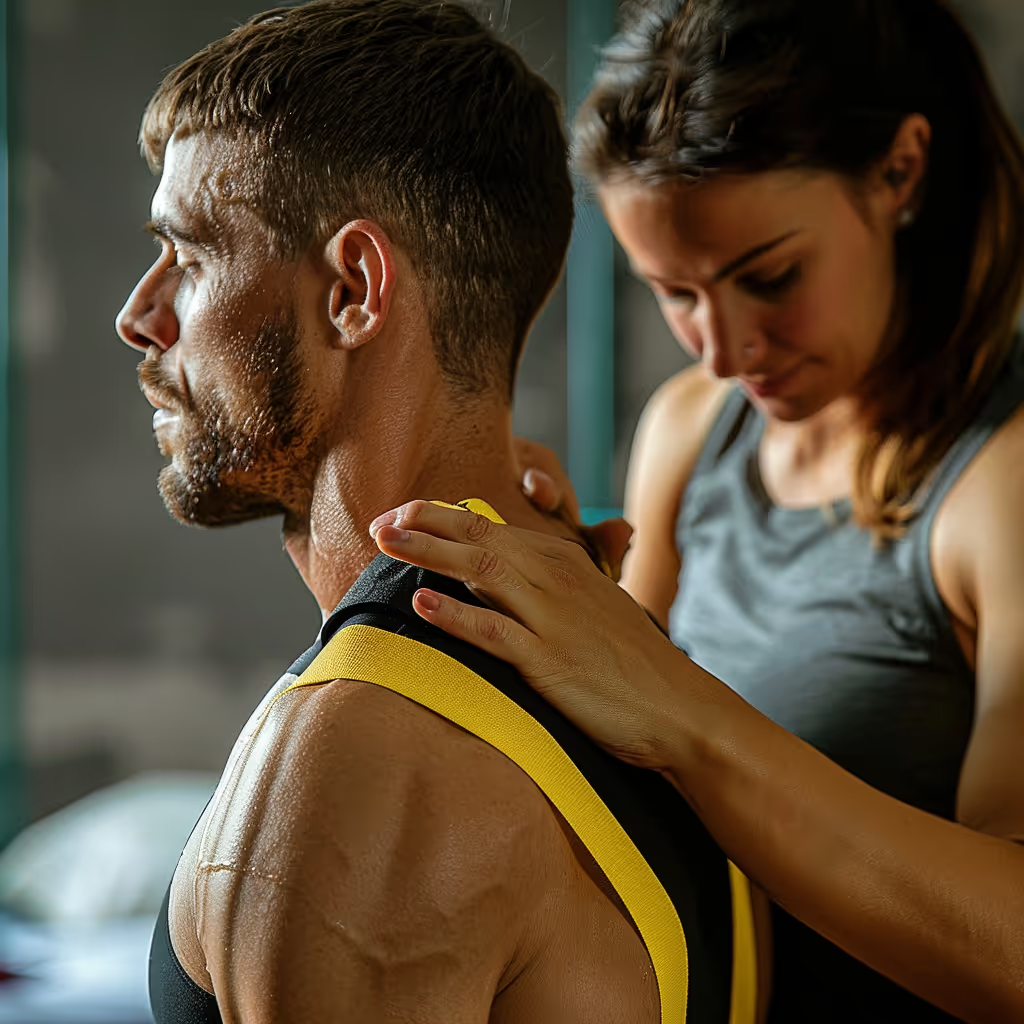
Therapeutic taping: Adhesive strips are applied around the joint. For certain types of pain in the front of the knee, specialized taping around the kneecap13 can reduce pain in the short term when used in conjunction with exercises. This result does not apply to all types of taping or to all types of joint pain.
10 Quick Tips to Understand Your Pain
One tip a day for 10 days to help you better understand your pain. About a 2-minute read.
TENS is a device that delivers an electrical current to the skin through small pads placed on the skin, called electrodes. Reviews and trials have examined its use for knee osteoarthritis.14, 15 This guide does not recommend it as a treatment. At Physioactif, the treatment plan focuses on exercises and advice tailored to your assessment.1
How many sessions does it take to see results?
The number of sessions and the duration of the follow-up are not set in advance; they are adjusted based on your assessment and your progress.
Total treatment duration
The duration depends on:
- The severity of your condition
- How long you've had pain
- Your goals, such as getting back into a sport or a daily activity
- The possibility of doing the exercises at home and the obstacles encountered
When to expect results
Initial changes: Some people feel relief during or after a session. This relief alone is not enough to predict the final outcome.
Progress to monitor: walking farther, climbing stairs more easily, or experiencing less pain throughout the day are signs of positive progress. The physical therapist will reassess these milestones with you and adjust the treatment plan if the expected results are not achieved.
In a review of knee osteoarthritis, exercises performed out of the water improve pain and functional ability compared to no exercise at all. The average benefit is smaller but still present two to six months after the end of the supervised program.16 Follow-up care and guidance help you plan next steps based on your individual needs.1
What exercises are recommended for joint pain?
Recommended exercises for joint pain include strength training, range-of-motion exercises, and endurance activities such as walking, cycling, or swimming. The choice depends on your diagnosis, your abilities, and any precautions you need to take.
General principles
Exercise helps. For many conditions, including osteoarthritis, appropriate exercises can improve symptoms and daily activities. You may experience mild discomfort, but it’s important to follow any restrictions after an injury or surgery.
Progress gradually. Start with a manageable amount. Increase your effort in small steps. A flare-up of pain may require you to temporarily reduce the dose.
Choose a routine that’s realistic for you. The frequency and intensity should be appropriate for your fitness level. A program that you can incorporate into your daily life will help you stay consistent between workouts.
Pay attention to how your body responds. If the pain increases significantly, remains noticeably worse after exercise, or is accompanied by swelling, have the exercise program adjusted. A warm, swollen joint, discomfort, or an inability to bear weight requires immediate medical attention.
Recommended aerobic activities
Walking: a simple and accessible activity; start with a manageable distance and adjust the duration based on how you feel.
Swimming and water aerobics: Water-based activities reduce the weight you have to support and can make it easier to move. Water aerobics refers to exercises performed in water.
Stationary bike: This activity builds endurance and gives your legs a workout without the impact of running. Adjust the seat and resistance to your comfort level.
Adapted yoga: Poses, movements, and breathing can combine flexibility, strength training, balance, and relaxation. Poses should be modified if they cause significant pain.
For overall health, the World Health Organization recommends that adults aim for 150 to 300 minutes of moderate-intensity activity per week, or 75 to 150 minutes of more intense activity, or an equivalent combination.17 At moderate intensity, you breathe faster but can still talk. This goal is built up gradually; it is not a target to be reached immediately, even if it causes discomfort. A little activity is better than no activity at all.
What to avoid or modify
High-impact activities (running, jumping) can be hard on painful joints. They aren’t off-limits, but they may require adjustments or a slower progression. Our guide to sports physical therapy explains how to adapt your workout.
Excessive loads can stress joints. Learn to pace your efforts.
Temporarily reducing your activity level can help during a flare-up. When the required care and restrictions allow, stick to movements you can tolerate and gradually resume your activities. Any prescribed immobilization for a fracture or following surgery must be followed.
What sets Physioactif apart when it comes to treating joint pain?
Physioactif offers an assessment of your challenges, exercises tailored to your daily life, and progress tracking. The plan takes into account research findings, your condition, and your preferences.
A comprehensive assessment
The assessment focuses on the painful joint and other relevant factors: strength, range of motion, activities, sleep, and concerns. The physical therapist looks for clues to guide treatment, without claiming to identify all the causes.
A personalized plan
Each plan is tailored to your condition, goals, and lifestyle. Someone who wants to return to tennis doesn't have the same needs as someone who wants to grocery shop without pain.
Exercises tailored to your specific situation
Prescribed exercises consider your equipment, available time, and preferences. We aim for a realistic and sustainable program.
Tracking your progress
The physical therapist uses specific indicators, such as your pain level, walking distance, or ability to climb stairs. These observations are used to adjust the program, including when progress is insufficient.
Access to complementary services
If necessary, other professionals can assist with your care. Massage therapy can be considered as a way to provide comfort, in addition to the active treatment plan. To understand the role of the prescribed movements, see our guide to therapeutic exercises.
How to book an appointment for an assessment?
You can schedule an appointment for an evaluation online or by calling a Physioactif clinic. In Quebec, direct access to physical therapy18 allows you to see a physical therapist without a doctor’s referral. This does not replace emergency care when warning signs are present.
Our team will help you find the physical therapist best suited to your condition.
If you have questions before booking an appointment, please contact us. We can help you determine if physiotherapy is the right choice for your situation.
To learn about the treatment process and the methods used, see our guide to physical therapy.
Frequently asked questions about physiotherapy for joint pain
Frequently asked questions cover the benefits for osteoarthritis, the safety of the exercises, how long it takes to see improvement, continuing activities, an initial unsuccessful treatment, direct access, surgery, and insurance.
Can physiotherapy really help with osteoarthritis, or is it irreversible?
Physical therapy can help reduce pain and improve activities related to osteoarthritis. This condition is chronic, but its symptoms do not necessarily worsen over time19. Exercise is recommended for hip and knee osteoarthritis. Research is also exploring future treatments for cartilage: one study, conducted primarily in mice, is investigating cells capable of forming cartilage.20 These experimental results do not constitute an available treatment or a reason to delay taking care of your daily activities.
Can exercises further damage my joints?
Exercise programs studied in people with knee osteoarthritis or at risk of developing it do not appear to damage the cartilage.10 This reassuring finding applies to appropriate exercises. After an injury, surgery, or an unusual flare-up, check with a healthcare professional about precautions before increasing your activity level.
How long until I see results?
The rate of improvement depends on the condition and the treatment program. For knee osteoarthritis, clinical trials often compare outcomes after about 4 or 12 weeks. These assessment points do not guarantee improvement by a specific date. Follow-up also focuses on practical activities, such as walking for longer periods or climbing stairs more easily.
Should I stop my activities if my joints hurt?
Not necessarily. For many types of joint pain, adjusting the duration, intensity, or type of activity can allow you to keep moving. However, any urgent symptoms or medical restrictions take precedence over continuing your exercise routine.
Is physiotherapy effective if I've already tried it without success?
If a previous treatment was unsuccessful, it’s worth reevaluating. The diagnosis, the type of exercises, how they’ve progressed, other health issues, and daily challenges can all help guide a new plan. A tailored approach may be helpful, but a lack of progress doesn’t mean you haven’t been trying hard enough.
Do I need a medical referral to consult a physiotherapist?
No. In Quebec, you can see a physical therapist directly without a doctor's referral. If your symptoms require a medical evaluation or further testing, the physical therapist will refer you accordingly. Your insurance provider may have its own reimbursement requirements.
When should I consider surgery instead of physiotherapy?
For hip or knee osteoarthritis, treatment generally includes exercises, advice, and sometimes medication before discussing a joint replacement.1 According to NICE guidelines11, a surgical evaluation may be considered if symptoms significantly impair quality of life and non-surgical treatments are ineffective or unsuitable. Your doctor will assess the situation with you; there is no one-size-fits-all timeframe that applies to all joint conditions.
Exercises continue to be recommended as part of osteoarthritis management, whether or not surgery is planned, depending on the individual’s abilities and precautions.1
Do my insurance plans cover physiotherapy?
Some private insurance plans reimburse a portion of physical therapy costs. The amount, the number of eligible sessions, and whether a prescription is required for reimbursement depend on the policy. Please check these conditions with your insurer. We can provide the necessary receipts.
Need professional advice?
Our physical therapists can assess your condition and provide you with a personalized treatment plan.
Make an appointmentReferences
- van Doormaal MCM, Meerhoff GA, Vliet Vlieland TPM, Peter WF. A clinical practice guideline for physical therapy in patients with hip or knee osteoarthritis. Musculoskeletal Care. 2020;18(4):575-595. ↩ Back to text: 1st, 2nd, 3rd, 4th, 5th, 6th, 7th, 8th citations
- Yan L, Li D, Xing D, Fan Z, Du G, Jiu J, et al. Comparative efficacy and safety of exercise modalities in knee osteoarthritis: systematic review and network meta-analysis. BMJ. 2025;391:e085242. ↩ Back to text
- England BR, Smith BJ, Baker NA, Barton JL, Oatis CA, Guyatt G, et al. 2022 American College of Rheumatology Guideline for Exercise, Rehabilitation, Diet, and Additional Integrative Interventions for Rheumatoid Arthritis. Arthritis Care Res (Hoboken). 2023;75(8):1603-1615. ↩ Back to text
- Singh JA, Guyatt G, Ogdie A, Gladman DD, Deal C, Deodhar A, et al. Special Article: 2018 American College of Rheumatology/National Psoriasis Foundation Guideline for the Treatment of Psoriatic Arthritis. Arthritis Rheumatol. 2019;71(1):5-32. ↩ Back to text
- Roger-Silva D, Natour J, Moreira E, Jennings F. A resistance exercise program improves functional capacity in patients with psoriatic arthritis: a randomized controlled trial. Clin Rheumatol. 2018;37(2):389-395. ↩ Back to text
- Bleakley CM, Taylor JB, Dischiavi SL, Doherty C, Delahunt E. Rehabilitation Exercises Reduce Reinjury Following an Ankle Sprain, But the Content and Parameters of an Optimal Exercise Program Have Yet to Be Established: A Systematic Review and Meta-analysis. Arch Phys Med Rehabil. 2019;100(7):1367-1375. ↩ Back to text
- Millar NL, Silbernagel KG, Thorborg K, Kirwan PD, Galatz LM, Abrams GD, et al. Tendinopathy. Nat Rev Dis Primers. 2021;7(1):1. ↩ Back to text
- Hegde DD, Hadya Ananda K, Vavachan N. Effectiveness of Quadriceps Strength Training in Adults With Knee Osteoarthritis: A Systematic Review. Musculoskeletal Care. 2025;23(2):e70134. ↩ Back to text: 1st, 2nd citations
- Nascimento LR, Teixeira-Salmela LF, Souza RB, Resende RA. Hip and Knee Strengthening Is More Effective Than Knee Strengthening Alone for Reducing Pain and Improving Activity in Individuals With Patellofemoral Pain: A Systematic Review With Meta-analysis. J Orthop Sports Phys Ther. 2018;48(1):19-31. ↩ Back to text
- Bricca A, Juhl CB, Roos EM. Does Exercise Therapy "Wear Down" My Knee Joint: Myth or Reality? J Orthop Sports Phys Ther. 2025;55(7):1-5. ↩ Back to text: 1st, 2nd citations
- National Institute for Health and Care Excellence (NICE). Osteoarthritis in people over 16: diagnosis and management. NICE guideline NG226. 2022. ↩ Back to text: 1st, 2nd citations
- Nijs J, George SZ, Clauw DJ, Fernández-de-Las-Peñas C, Kosek E, Ickmans K, et al. Central sensitization in chronic pain conditions: latest discoveries and their potential for precision medicine. Lancet Rheumatol. 2021;3(5):e383-e392. ↩ Back to text
- Willy RW, Hoglund LT, Barton CJ, Bolgla LA, Scalzitti DA, Logerstedt DS, et al. Patellofemoral Pain. J Orthop Sports Phys Ther. 2019;49(9):CPG1-CPG95. ↩ Back to text
- Wu Y, Zhu F, Chen W, Zhang M. Effects of transcutaneous electrical nerve stimulation (TENS) in people with knee osteoarthritis: A systematic review and meta-analysis. Clin Rehabil. 2022;36(4):472-485. ↩ Back to text
- Reichenbach S, Jüni P, Hincapié CA, Schneider C, Meli DN, Schürch R, et al. Effect of transcutaneous electrical nerve stimulation (TENS) on knee pain and physical function in patients with symptomatic knee osteoarthritis: the ETRELKA randomized clinical trial. Osteoarthritis Cartilage. 2022;30(3):426-435. ↩ Back to text
- Fransen M, McConnell S, Harmer AR, Van der Esch M, Simic M, Bennell KL. Exercise for osteoarthritis of the knee: a Cochrane systematic review. Br J Sports Med. 2015;49(24):1554-7. ↩ Back to text
- Bull FC, Al-Ansari SS, Biddle S, Borodulin K, Buman MP, Cardon G, et al. World Health Organization 2020 guidelines on physical activity and sedentary behavior. Br J Sports Med. 2020;54(24):1451-1462. ↩ Back to text
- Physical Therapy: How Does It Work? Quebec Professional Order of Physical Therapists (OPPQ). ↩ Back to text
- NHS. Osteoarthritis. National Health Service (United Kingdom). ↩ Back to text
- Ng JQ, Jafarov TH, Little CB, Wang T, Ali AM, Ma Y, et al. Loss of Grem1-lineage chondrogenic progenitor cells causes osteoarthritis. Nat Commun. 2023;14(1):6909. ↩ Back to text
Our physical therapists defined the research strategy, plan, and clinical content of this article. An AI tool assisted with the literature review and text editing to ensure consistency in content and writing style.
Videos in this category
Other conditions

Hip osteoarthritis is the normal wear and tear of the hip joint. It is often said that osteoarthritis is the wear and tear of the cartilage between our bones. That is true, but it involves more than just the cartilage. Cartilage is a tissue that acts as a cushion between the surfaces of our bones and allows our joints to glide smoothly and move fluidly.
This is normal wear and tear of the knee joint. It’s often said that osteoarthritis is the wearing down of the cartilage between our bones. That’s true, but it’s more than just the cartilage. Cartilage is a tissue that acts as a cushion between the surfaces of our bones and allows our joints to glide smoothly and move fluidly.
It is an inflammation of the subacromial bursa in the shoulder joint.
A bursa is a small, thin sac filled with fluid that is found in many of the body's joints. This small sac acts as a cushion within the joint and lubricates the structures that are subject to increased friction.
It is a tissue that surrounds the shoulder and helps keep the shoulder bone in place within the joint. The capsule helps keep the joint stable.
In both types of injury, pain is felt in the neck and then radiates into the arm, or vice versa.
It is a severe strain or tear of the muscle fibers in the groin or inner thigh.
Make an appointment now
We offer a three-pronged quality assurance approach: optimized treatment time, a second opinion from a physical therapist, and ongoing expertise to ensure effective care tailored to your needs.

Customer satisfaction is our top priority
At Physioactif, excellence guides everything we do, but our patients are the best ones to tell you about it. Take a look at their verified reviews to get a real sense of their experience.






Discover our physical therapy clinics
We have locations in several areas to better serve you.
Blainville
190 Bas-de-Sainte-Thérèse Road, Suite 110,
Blainville, Quebec
J7B 1A7
Located in Blainville, near Rosemère, the Physioactif clinic is easily accessible to residents of the area and the surrounding communities
Boucherville
690 Rue de Montbrun, Suite S,
Boucherville, Quebec
J4B 8H2
Located in Boucherville, the Physioactif clinic is easily accessible to people in the area
Laval
3224 Jean-Béraud Ave., Suite 220, Laval,
QC H7T 2S4
Located in Chomedey, in the heart of Laval, the Physioactif clinic is easily accessible to people in the area
Montreal
8801 Lajeunesse Street,
Montreal,
QC H2M 1R8
Located in Ahuntsic, near Villeray, the Physioactif clinic is easily accessible to residents of both neighborhoods
Saint-Eustache
180 25th Avenue, Suite
201 Saint-Eustache
QC J7P 2V2
Located in Saint-Eustache, the Physioactif clinic is easily accessible to residents of the area and the surrounding communities
Vaudreuil
21 Cité-des-Jeunes Boulevard, Suite 240,
Vaudreuil-Dorion, Quebec
J7V 0N3
Located in Vaudreuil-Dorion, the Physioactif clinic is easily accessible to people in the area
Make an appointment now