Torticollis
Torticollis is a muscle spasm in the neck that occurs suddenly to protect the neck from another problem in its joints.
.png)
.png)
.png)





Torticollis: How to Recognize and Treat a Stiff Neck?
Torticollis is characterized by sudden pain and severe stiffness in the neck; treatment aims to maintain comfortable movement, relieve pain, and gradually resume normal activities. The neck may feel locked up upon waking or after a movement. This condition is very uncomfortable, but it does not necessarily mean that a structure is seriously injured.
To better understand the different types of neck pain, consult our comprehensive guide on the subject.
What is torticollis?
Acute torticollis is a sudden neck pain that severely limits movement and can cause the head to tilt to one side. The term “acute” describes a rapid onset, often within a few hours or overnight. An emergency department fact sheet also describes this stiffness and tilted position1.
10 Quick Tips to Understand Your Pain
One tip a day for 10 days to help you better understand your pain. About a 2-minute read.
The neck sometimes adopts the position that causes the least pain. The muscles may then appear very tense. This stiffness is striking, but it alone is not enough to conclude that a vertebra, a disc that acts as a cushion between two vertebrae, or a muscle is damaged.
This condition differs from congenital torticollis, which affects newborns and has different causes and treatments.
What are the causes of torticollis?
The causes of acute torticollis are often impossible to pinpoint. A sudden movement, an unusual sleeping position, a minor injury, or physical exertion may precede an episode, but this does not prove that they are the cause. Stress is associated with certain types of neck pain, but this association does not prove that it triggers aspecific case of torticollis.², ³
Sleeping in an unusual position overnight can lead to a stiff neck. A pillow or sleeping position that increases discomfort may also be noticeable upon waking. However, this observation alone is not sufficient to prove that a specific cervical structure is the cause.
A fall or a car accident can also result in a stiff neck. In such cases, a whiplash injury or other neck trauma must be evaluated based on the symptoms and the force of the impact. A stiff neck following a significant trauma should not be treated as a simple case of a stiff neck without proper evaluation.
Stress and fatigue can accompany a period of neck pain and stiffness. Research does not conclusively show that they cause a specific case of torticollis. However, these factors may be worth discussing if they affect sleep, daily activities, or how you cope with pain.
What are the symptoms of torticollis?
Torticollis is characterized primarily by sudden pain, severe stiffness, and difficulty turning or tilting the head. Symptoms may appear upon waking or during an activity.
Pain can develop quickly and persist even at rest. However, symptoms alone do not always confirm a stiff neck, as several neck problems can cause similar pain and stiffness.
Rotation and flexion may be more limited on one side. Movement often stops because it increases pain or stiffness.
The neck muscles may feel tight, stiff, and tender to the touch.
The pain may be constant and prevent you from performing your usual daily activities, such as checking your blind spots while driving. Do not drive if you cannot move your neck enough to do so safely. Leaning forward to pick up an object off the ground may be nearly impossible because of the pain.
It can be very difficult to find a comfortable sleeping position, especially during the first few days. The pain may wake you up when you move. Poor sleep makes the first few days harder to get through.
What are the serious symptoms to watch out for?
Warning signs of a stiff neck include weakness or numbness, difficulty swallowing, fever, and severe pain. The presence of these symptoms does not necessarily indicate a serious illness, but they do warrant medical attention.
Go to the emergency room if any of the following symptoms suddenly appear along with your neck pain:
- Weakness in an arm or leg, numbness in both arms or both legs, or difficulty walking, maintaining balance, or using your hands.
- A change in bladder or bowel control, such as unusual leakage or difficulty urinating.
- Difficulty speaking, chewing, or swallowing; changes in vision; fainting; or dizziness.
- A severe headache, nausea or vomiting, numbness or tingling in the face, or a drooping eyelid.
After a serious accident, also request an urgent evaluation. A fever accompanied by a stiff neck requires immediate medical attention. If you suspect meningitis—an infection of the membranes that protect the brain and the spinal cord—call 911 or go to the emergency room without waiting for all the symptoms to appear. A rash that does not fade when pressed is a particularly urgent sign, even without a fever. Recognize the signs of meningitis.
Also seek medical advice promptly if the pain is severe—even if you haven’t fallen or been in an accident—or if it radiates down an arm or into a hand. Numbness, tingling, or weakness in a hand or foot also warrant a medical evaluation. The sudden symptoms described above require emergency care. See the warning signs of neck pain.
The healthcare professional will check to see if an infection, a nerve problem, or a serious injury could be causing the symptoms. Do not start doing exercises to try to make a warning sign go away before this evaluation.
How is torticollis diagnosed?
The diagnosis of torticollis is based primarily on the patient’s description of symptoms and an examination of the neck and nervous system. The healthcare professional assesses when the symptoms began, whether there was any trauma, any restricted movements, and any signs that might require medical evaluation.
The examination assesses neck movement, strength, sensation, and, if necessary, reflexes—that is, certain automatic muscle responses to stimulation. It is used to describe limitations, identify possible nerve irritation, and determine whether further evaluation is warranted. It does not always allow for the identification of a single structure or cause.
An X-ray or other imaging test is generally not necessary when the medical history and physical examination reveal no significant trauma or red flags3. However, an imaging study may be ordered if the physical exam raises another possibility, if signs of nerve involvement are present—such as weakness or loss of sensation—or if the course of the condition is unusual.
When should you see a physiotherapist for torticollis?
You may want to see a physical therapist if pain and stiffness are limiting your activities or do not begin to subside after a few days. A consultation may also be helpful if you are unsure which movements to resume or if the symptoms recur.
Physical therapy for neck pain aims to reduce limitations and support a return to daily activities. For many types of neck pain, a combination of manual therapy and exercises can reduce pain or difficulties with daily activities in the short term4. Data specific to acute torticollis remain limited5.
You can see a physical therapist directly at a private clinic if you have no warning signs. The physical therapist may refer you to a doctor if your medical history or physical exam indicates that a medical evaluation is recommended.
What physiotherapy treatments are available for torticollis?
Physical therapy may combine tailored movements, exercises, advice, and—depending on the evaluation—manual techniques. The choice depends on your symptoms, your activities, and your tolerance for movement.
The assessment describes limited range of motion, movements that worsen or alleviate symptoms, and activities that have become difficult. It also checks for signs that might indicate nerve irritation or require a medical consultation. An assessment does not always identify a single trigger.
The postures used at work and during daily activities can be observed to see if they affect symptoms. The physical therapist can also assess the quality of movement, strength, and endurance. These observations are used to adjust the treatment plan, without automatically assuming that poor posture is the cause.
Based on the assessment, the physical therapist may recommend joint mobilization, controlled joint movements, or other manual techniques. For many cervical disorders, these approaches—combined with exercises—can reduce pain or difficulties with activities in the short term4. This evidence does not demonstrate a specific effect for each type of acute torticollis5.
Neck and shoulder exercises can support a gradual return to movement and activities. The choice of exercises, the number of repetitions, and how you increase them should be based on what you can tolerate. Some exercise programs reduce new episodes of neck pain, but this effect cannot be attributed solely to the stabilizing muscles nor directly applied to recurrences of torticollis6.
A physical therapist can help you pace your activities, temporarily modify movements that cause pain, and gradually resume movement. The advice should be tailored to your daily activities and the progression of your symptoms.
Improvement may begin within the first few days, but no treatment can guarantee the speed of recovery. The response to treatment varies depending on the initial pain, limitations, and the presence of any other neck problems.
What can I do at home for torticollis?
At home, move your neck in directions that feel comfortable, change positions often, and resume your activities gradually. Heat or cold can help relieve discomfort if your skin can tolerate it.
Temporarily limit activities that significantly increase pain. Continue with activities you can tolerate and gradually reintroduce the others. Prolonged complete rest can increase stiffness and is generally not necessary unless there is an injury that requires it.
Move gently in directions that feel comfortable, without trying to go beyond what your neck can tolerate. A slight, temporary increase in discomfort may be acceptable, but stop any movement that significantly increases pain, causes dizziness, or triggers symptoms in an arm.
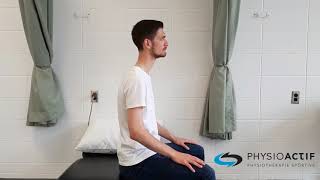
Support your shoulders and shoulder blades—the flat bones behind your shoulders—to reduce strain on your neck muscles. Use a cushion under your armpit when you're sitting. The armrests of a chair or sofa can help. When you're standing, putting your hand in your pants pocket can provide light support.
Change your position regularly while working, reading, or resting. If spending time at the computer makes your symptoms worse, take short breaks and adjust your monitor or chair to make yourself more comfortable.
Choose a sleeping position that supports your neck and is comfortable. Sleeping on your back or side may work, but no single position or pillow is right for everyone. Avoid a particular position only if it wakes you up or makes your pain worse.
Heat and cold can relieve discomfort, but they do not repair tissues, muscles, tendons, or fascia—the layers of tissue that surround and connect other tissues. Protect your skin with a cloth, use a comfortable temperature, and stop if pain or irritation increases. Choose the option that provides you with relief, as no single option works for everyone.
Seek medical attention if your symptoms worsen, do not begin to improve after a few days, or continue to limit your activities. A warning sign requires immediate medical evaluation, even if the pain has just begun.
How long does a stiff neck last?
Acute simple torticollis often begins to improve after a few days, but the duration varies from person to person. 1 More generally, acute neck pain may decrease over the course of several weeks without always disappearingcompletely7, 3. Physical therapy can help reduce certain limitations, though it does not guarantee a full recovery.
More severe pain and greater difficulty with daily activities at the outset are associated with a less favorable outcome for certain types of neck pain8. This association does not reliably predict a person’s recovery. The role of stress, posture, and adherence to recommendations regarding the precise duration of a stiff neck remains unclear2.
To reduce the risk of another episode, discuss the activities and situations that preceded your symptoms—without assuming they are the cause. You may want to try temporarily adjusting your posture at work, changing your position, or doing regular exercises, depending on your needs. Some exercise programs can help reduce the occurrence of new episodes of neck pain9, but there is no evidence to suggest that any single factor—such as posture, a pillow, or stress management—can prevent a stiff neck on its own.
What other problems can accompany a stiff neck?
A stiff neck can accompany cervical osteoarthritis, a herniated disc, irritation of a nerve in the neck, or certain types of headaches. These conditions are not the cause of every stiff neck.
Cervical osteoarthritis refers to changes in the joints that become more common with age. These changes are often visible on imaging studies in peoplewho are pain-free.¹⁰, ¹¹ A cervical disc herniation, in which part of a disc protrudes beyond its normal outline, may also be present without symptoms12. Therefore, an imaging result alone is not sufficient to explain a stiff neck.
Cervicobrachialgia refers to pain that originates in the neck and radiates down one arm. Pain, numbness, or weakness in the arm requires a more thorough examination. New or rapidly worsening weakness requires immediate medical evaluation.
Headaches may accompany a stiff neck. A cervicogenic headache is a headache determined to be caused by the neck following an evaluation. Neck treatments may help some people when this diagnosis is made13.
How can you get help for your stiff neck?
For help, see a physical therapist if the pain is limiting your activities, and see a doctor immediately if you notice any warning signs. The evaluation can identify your limitations, check for important signs, and suggest a gradual return to activity tailored to your situation.
A physical therapist can help you choose movements, exercises, and temporary adjustments when torticollis persists or interferes with your activities. The plan should be adjusted based on your symptoms and the activities you’re able to resume.
A sooner appointment does not guarantee a faster recovery. Make an appointment when you need help understanding your symptoms, resuming your activities, or checking to make sure there are no concerning signs.
Need professional advice?
Our physical therapists can assess your condition and recommend a personalized treatment plan.
Make an appointmentSources
Links open in a new tab.
- Royal Berkshire NHS Foundation Trust. Acute torticollis (wry neck). 2024. (Back to sections: 1, 2)
- Ortego G, Villafañe JH, Doménech-García V, Berjano P, Bertozzi L, Herrero P. Is there a relationship between psychological stress or anxiety and chronic nonspecific neck-arm pain in adults? A systematic review and meta-analysis. J Psychosom Res. 2016;90:70-81. (Back to sections: 1, 2)
- Haldeman S, Carroll L, Cassidy JD. Findings from the Bone and Joint Decade 2000–2010 Task Force on Neck Pain and Its Associated Disorders. J Occup Environ Med. 2010;52(4):424–7. (Back to sections: 1, 2, 3)
- Reynolds B, McDevitt A, Kelly J, Mintken P, Clewley D. Manual physical therapy for neck disorders: an umbrella review. J Man Manip Ther. 2025;33(1):18-35. (Back to sections: 1, 2)
- Vernon HT, Humphreys BK, Hagino CA. A systematic review of conservative treatments for acute neck pain not due to whiplash. J Manipulative Physiol Ther. 2005;28(6):443-8. (Back to sections: 1, 2)
- Teichert F, Karner V, Döding R, Saueressig T, Owen PJ, Belavy DL. Effectiveness of Exercise Interventions for Preventing Neck Pain: A Systematic Review with Meta-analysis of Randomized Controlled Trials. J Orthop Sports Phys Ther. 2023;53(10):594–609. (Back to section: 1)
- Hush JM, Lin CC, Michaleff ZA, Verhagen A, Refshauge KM. The prognosis for acute idiopathic neck pain is poor: a systematic review and meta-analysis. Arch Phys Med Rehabil. 2011;92(5):824-9. (Back to section: 1)
- Walton DM, Carroll LJ, Kasch H, Sterling M, Verhagen AP, Macdermid JC, et al. An Overview of Systematic Reviews on Prognostic Factors in Neck Pain: Results from the International Collaboration on Neck Pain (ICON) Project. Open Orthop J. 2013;7:494-505. (Back to section: 1)
- de Campos TF, Maher CG, Steffens D, Fuller JT, Hancock MJ. Exercise programs may be effective in preventing a new episode of neck pain: a systematic review and meta-analysis. J Physiother. 2018;64(3):159-165. (Back to section: 1)
- Banerjee A, Mowforth OD, Nouri A, Budu A, Newcombe V, Kotter MRN, et al. The Prevalence of Degenerative Cervical Myelopathy-Related Pathologies on Magnetic Resonance Imaging in Healthy/Asymptomatic Individuals: A Meta-Analysis of Published Studies and Comparison to a Symptomatic Cohort. J Clin Neurosci. 2022;99:53-61. (Back to section: 1)
- Nakashima H, Yukawa Y, Suda K, Yamagata M, Ueta T, Kato F. Abnormal findings on magnetic resonance images of the cervical spine in 1,211 asymptomatic subjects. Spine (Phila, Pa, 1976). 2015;40(6):392-8. (Back to section: 1)
- Ernst CW, Stadnik TW, Peeters E, Breucq C, Osteaux MJ. Prevalence of annular tears and disc herniations on MRI images of the cervical spine in asymptomatic volunteers. Eur J Radiol. 2005;55(3):409-14. (Back to section: 1)
- Bini P, Hohenschurz-Schmidt D, Masullo V, Pitt D, Draper-Rodi J. The effectiveness of manual and exercise therapy on headache intensity and frequency among patients with cervicogenic headache: a systematic review and meta-analysis. Chiropr Man Therap. 2022;30(1):49. (Back to section: 1)
- Evidence-Based Interventional Pain Medicine. 2011.
- Kjaer P, Kongsted A, Hartvigsen J, Isenberg-Jørgensen A, Schiøttz-Christensen B, Søborg B, et al. National clinical guidelines for the non-surgical treatment of patients with recent-onset neck pain or cervical radiculopathy. Eur Spine J. 2017;26(9):2242-2257.
- Blanpied PR, Gross AR, Elliott JM, Devaney LL, Clewley D, Walton DM, et al. Neck Pain: 2017 Revision. J Orthop Sports Phys Ther. 2017;47(7):A1-A83.
- Childs JD, Cleland JA, Elliott JM, Teyhen DS, Wainner RS, Whitman JM, et al. Neck pain: Clinical practice guidelines linked to the International Classification of Functioning, Disability, and Health from the Orthopedic Section of the American Physical Therapy Association. J Orthop Sports Phys Ther. 2008;38(9):A1-A34.
- Côté P, Wong JJ, Sutton D, Shearer HM, Mior S, Randhawa K, et al. Management of neck pain and associated disorders: A clinical practice guideline from the Ontario Protocol for Traffic Injury Management (OPTIMa) Collaboration. Eur Spine J. 2016;25(7):2000-22.
.jpg)
.jpg)
Other conditions

Hip osteoarthritis is the normal wear and tear of the hip joint. It is often said that osteoarthritis is the wear and tear of the cartilage between our bones. That is true, but it involves more than just the cartilage. Cartilage is a tissue that acts as a cushion between the surfaces of our bones and allows our joints to glide smoothly and move fluidly.
This is normal wear and tear of the knee joint. It’s often said that osteoarthritis is the wearing down of the cartilage between our bones. That’s true, but it’s more than just the cartilage. Cartilage is a tissue that acts as a cushion between the surfaces of our bones and allows our joints to glide smoothly and move fluidly.
It is an inflammation of the subacromial bursa in the shoulder joint.
A bursa is a small, thin sac filled with fluid that is found in many of the body's joints. This small sac acts as a cushion within the joint and lubricates the structures that are subject to increased friction.
It is a tissue that surrounds the shoulder and helps keep the shoulder bone in place within the joint. The capsule helps keep the joint stable.
Neck pain is a general term used to describe pain in the neck that has no specific cause, such as an accident or a sudden awkward movement. Neck pain is therefore synonymous with “my neck hurts, and nothing in particular happened.”
In both types of injury, pain is felt in the neck and then radiates into the arm, or vice versa.
Make an appointment now
We offer a three-pronged quality assurance approach: optimized treatment time, a second opinion from a physical therapist, and ongoing expertise to ensure effective care tailored to your needs.

Customer satisfaction is our top priority
At Physioactif, excellence guides everything we do, but our patients are the best ones to tell you about it. Take a look at their verified reviews to get a real sense of their experience.









Discover our physical therapy clinics
We have locations in several areas to better serve you.
Blainville
190 Bas-de-Sainte-Thérèse Road, Suite 110,
Blainville, Quebec
J7B 1A7
Located in Blainville, near Rosemère, the Physioactif clinic is easily accessible to residents of the area and the surrounding communities
Boucherville
690 Rue de Montbrun, Suite S,
Boucherville, Quebec
J4B 8H2
Located in Boucherville, the Physioactif clinic is easily accessible to people in the area
Laval
3224 Jean-Béraud Ave., Suite 220, Laval,
QC H7T 2S4
Located in Chomedey, in the heart of Laval, the Physioactif clinic is easily accessible to people in the area
Montreal
8801 Lajeunesse Street,
Montreal,
QC H2M 1R8
Located in Ahuntsic, near Villeray, the Physioactif clinic is easily accessible to residents of both neighborhoods
Saint-Eustache
180 25th Avenue, Suite
201 Saint-Eustache
QC J7P 2V2
Located in Saint-Eustache, the Physioactif clinic is easily accessible to residents of the area and the surrounding communities
Vaudreuil
21 Cité-des-Jeunes Boulevard, Suite 240,
Vaudreuil-Dorion, Quebec
J7V 0N3
Located in Vaudreuil-Dorion, the Physioactif clinic is easily accessible to people in the area
Make an appointment now