Physiotherapy for Whiplash
.png)
.png)
.png)




How Physical Therapy Can Help After a Whiplash Injury
Physical therapy can help reduce pain, restore neck movement, and enable a return to normal activities after whiplash. It combines personalized advice and exercises; manual techniques may complement the treatment. The course and duration of recovery vary depending on the injury and the individual.11
After a car accident, neck pain, stiffness, headaches, or dizziness can be very concerning. A thorough evaluation is recommended if symptoms are severe or worsening. Seek medical attention immediately if you experience new weakness, new loss of sensation, double vision, or loss of balance.
Many people improve in the weeks or months following a whiplash injury. A meta-analysis of 38 groups of people followed after a collision found that the greatest improvement occurred primarily in the first three months, followed by smaller average improvements.[28] This does not mean that a person stops recovering after three months. More severe pain, more symptoms, and greater difficulty with daily activities at the outset are associated with a slower recovery.[14] These factors help guide follow-up care; they do not allow for predicting your exact recovery date.
10 Quick Tips to Understand Your Pain
One tip a day for 10 days to help you better understand your pain. About a 2-minute read.
Research provides some useful guidelines, while still leaving significant room for individual assessment:
- An active approach helps patients resume their activities: advice and gradual movements are among the recommendations following uncomplicated whiplash.3 A 2008 international review reported favorable results for educational videos, mobilizations, and exercises compared to usual care or certain physical therapies. Mobilizations are neck movements performed by the patient or guided by a healthcare professional.[41]
- Results vary depending on the treatment and the individual: conservative treatments are non-surgical approaches, such as counseling, exercises, and manual techniques.4 A 2007 Cochrane review identified 23 very different studies, several of which were of low quality. It was not possible to confidently recommend a specific treatment for all Grade I and II whiplash injuries, as defined below.[4] This uncertainty does not mean that all of these treatments are ineffective.
- Symptoms may appear later: pain, stiffness, or tenderness may become noticeable several hours after the collision.5 This delay does not rule out an injury and is not sufficient to determine its severity.[43]
- Certain factors help estimate the risk of persistent difficulties: a rule studied in 2013 combined age, activity limitations, and signs of stress-related hyperarousal following the accident.6 Hyperarousal here refers to being on high alert or startling easily, for example; it is measured using a post-traumatic stress questionnaire.[6] It is distinct from increased sensitivity to pressure or cold and is not sufficient on its own to diagnose a stress disorder. A validation study published in 2015, involving 101 additional participants, supported the usefulness of this rule for predicting two possible outcomes: full recovery or moderate to severe limitations.[20] The rule does not provide certainty for every individual.
The care plan links your symptoms and exam results to the activities you want to resume. To learn about other causes of cervical pain—that is, neck pain—see our comprehensive guide.
The goal is to help you understand your situation, track your progress, and gradually resume the activities that are important to you.
Understanding Whiplash, Also Known as Neck Injury
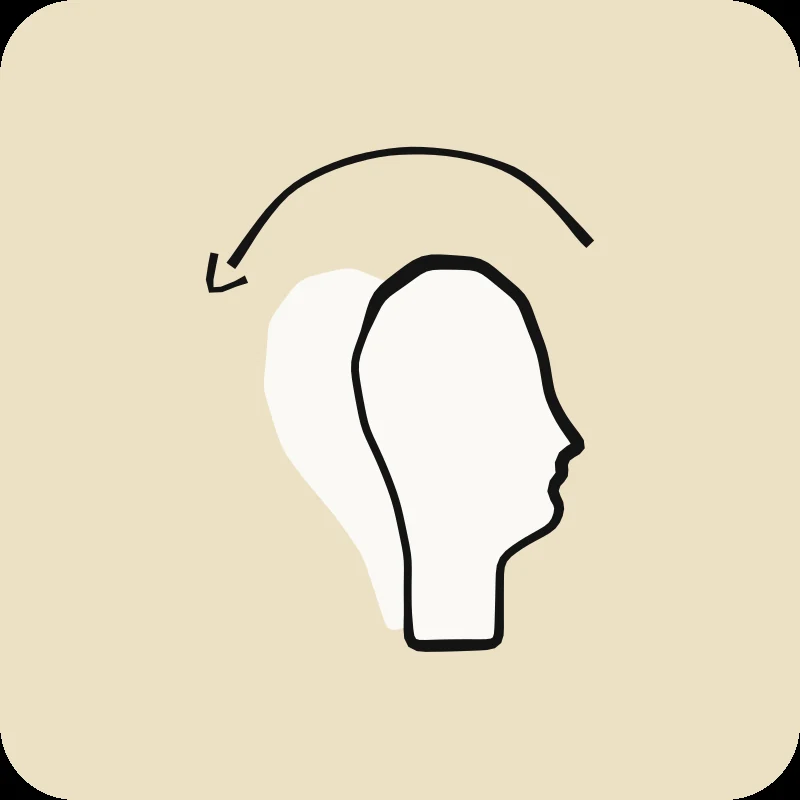
Whiplash is a sudden movement in which the head and neck are first accelerated and then decelerated. During a rear-end collision, the head may be thrown backward and then forward.[43] This mechanism can occur in other types of trauma and cause a neck injury, but it does not, on its own, refer to a specific injury.7
A study compared 419 people with persistent neck pain to 246 people with persistent lower back pain. The former group reported a history of a car accident more often.[39] This comparison of groups, known as a case-control study, shows an association. It does not allow us to attribute all cases of neck pain in the population to a traffic accident.
The medical term is “whiplash-associated disorders.” It describes a set of symptoms and signs following the injury, without automatically identifying a specific structure such as a muscle, a ligament connecting two bones, a disc acting as a cushion between the vertebrae, or a nerve transmitting messages throughout the body. The vertebrae are the bones of the spine.The anatomy of the spine helps in understanding the areas being examined, but it alone does not allow for the identification of the source of the symptoms.
The Quebec Task Force's Classification
The Quebec Task Force describes five grades, numbered from 0 to IV[44]. The name refers to a Quebec working group that classified the sequelae of whiplash in 1995. The scale ranges from the absence of symptoms to a fracture or dislocation—a separation between bones. In between, it describes neck complaints, findings on examination, and neurological signs. Here are the five grades:
- Grade 0: No cervical symptoms and no physical signs observed
- Grade I: neck pain, with no physical signs noted on examination
- Grade II: neck pain or other symptoms accompanied by signs involving the muscles or joints, such as limited range of motion or tenderness when pressure is applied with the fingers
- Grade III: neck pain or other symptoms accompanied by signs of nerve involvement, such as diminished reflexes, weakness, or loss of sensation; reflexes are automatic responses, such as those to a light tap on the tendon
- Grade IV: Neck pain or other symptoms associated with a fracture or dislocation. This condition requires an urgent medical evaluation before beginning exercises.
What symptoms can accompany whiplash?
Whiplash may be accompanied by neck pain and stiffness, headaches, shoulder tension, dizziness or lightheadedness, and fatigue. Dizziness causes a sensation of spinning; lightheadedness can cause a feeling of unsteadiness. Symptoms vary from person to person.
In a trial involving 71 people with persistent neck pain following an accident, two programs were compared over a 10-week period. A random draw determined which program each participant received. Both groups showed improvement, but physical therapy combining multiple approaches reduced pain and functional limitations more effectively than self-management advice and exercises.9 The sensitivity assessed included, in particular, increased pain in response to pressure or cold. A supplementary analysis suggested a smaller improvement with both programs among certain highly sensitive individuals; however, this finding alone is not sufficient to guide treatment selection.
Symptoms to Describe During the Evaluation :Pain and stiffness can limit neck movement, interfere with sleep, driving, or work. Other symptoms and how they progress help determine what should be examined first.
Symptoms may appear immediately or become more noticeable over thenext few hours.¹⁰
Seek medical attention right away if you have any of these symptoms :- New weakness in a hand, arm, or leg
- Recurring loss of balance, difficulty walking or sitting upright
- New-onset loss of bladder or bowel control
- Very severe pain that increases rapidly or is accompanied by significant discomfort
- Persistent or recently developed double vision
- Tingling or numbness on one or both sides of the body
- A sudden sensation of an electric shock in the neck or back, which may also extend to the arms or legs
- Severe pain despite taking the recommended pain medication
The NHS, the British public health service, lists weakness in the limbs, difficulty walking, and tingling sensations as reasons to seek urgent medical advice. Do not drive to get there. If your symptoms do not improve after a week, if the recommended medications are not helping, or if you are concerned, seek medical advice. The urgent symptoms listed above require immediate attention.
What role can physical therapy play after a whiplash injury?
Physical therapy helps restore neck movement and resume activities that have been limited by pain through tailored advice and exercises. The physical therapist first looks for signs of concern and assesses your functional abilities. The Australian SIRA guidelines, intended for professionals treating injuries following an accident, recommend an active approach for whiplash cases without fractures or dislocations.11 An international review also supports care aimed at resuming activities, without identifying a single treatment as superior in all situations.[41]
The MINT trial, published in 2013, compared two stages of care. In the emergency department, an active counseling program did not show any advantage over standard counseling at 12 months. Among 599 people whose symptoms persisted afterward, up to six physical therapy sessions reduced functional limitations slightly more at four months than a single counseling session. This benefit was no longer clearly observed at eight or twelve months.[2] These results compare specific treatments; they do not mean that all physical therapy is ineffective.
Care that promotes movement and activities
A 2015 Cochrane review evaluated exercises for various types of neck pain, with or without headaches or nerve root involvement. A nerve root is the part of a nerve near the spine. For persistent pain, certain strength and endurance programs targeting the neck, shoulders, and arms improved pain and functional ability. The confidence in these results was moderate for several comparisons. No trials focused exclusively on very recent pain; this lack of studies does not prove a lack of benefit.12
A 1986 study of 61 people who had experienced whiplash compared early movement with rest while wearing a soft neck brace. At eight weeks, the participants who began moving early had greater mobility and less pain.[40] The results apply to both of these programs and these participants.
Based on the results of the assessment, the active approach may include:
- Manual therapy as a short-term relief option to facilitate movement, if the evaluation and your preferences indicate that it is appropriate
- Therapeutic exercises selected based on the patient's ability to work, the targeted activities, and the response to the exercises
- Information and advice to help you understand symptoms, monitor their progression, and participate in decision-making
- Gradual resumption of activities based on observed capabilities and the demands of daily life
Non-surgical treatments that support movement and activities are generally preferred over prolonged immobilization without a medical indication.[41] However, the results of such comparisons remain inconsistent. A trial involving 458 participants compared a rigid neck brace followed by movement, advice to continue activities, and an active movement program. At one year, the analyses showed no clear difference between these strategies in terms of pain, functional limitations, or work capacity.[25] This does not prove that all three options yield the same outcome for every person.
Understanding the Risk of Persistent Symptoms
In some people, pain or functional limitations persist after the injury. This possibility warrants appropriate follow-up, although it does not allow for predicting individual outcomes.
The following factors may be associated with a more difficult recovery or may require special attention:
- Significant disability from the outset[45] : The term “disability” here refers to difficulty with everyday activities, not a diagnosis. A meta-review published in 2017, which revisits previously published reviews, links the difficulty experienced in the early days to its persistence
- Severe initial pain[15] : A 2009 review with a meta-analysis lists high levels of neck pain at the onset as one of the factors associated with persistent difficulties. The term “onset” here refers to the very first few days following the collision
- New neurological symptom, new weakness, or new loss of sensation: see a doctor right away
- Prolonged immobilization when not medically necessary
- Fear of movement, which severely limits activities[32] : In clinical settings, a yellow flag indicates a psychological or social factor that may complicate the resumption of activities. A study published in 2009 involving 147 participants links fear of movement to greater discomfort and more depressive symptoms
The plan can be adjusted based on the test results, the targeted activities, and the observed response. The next appointment will help determine whether these adjustments are helping you.
How does a physical therapy evaluation work?
A physical therapy evaluation includes a discussion about the injury and symptoms, followed by an assessment of movement, strength, and sensation. The physical therapist also checks for signs that require medical attention and identifies activities that are difficult for you to perform.The initial physical therapy evaluation is used to determine possible causes and develop a plan with you. No single test can definitively identify the tissue responsible for all of your symptoms.
Understanding Trauma and Its Course
The physical therapist will ask you questions about, among other things:
- The mechanism of injury—including the type of impact and seat belt use—as contextual factors rather than definitive predictors of recovery
- When each symptom first appeared and the changes observed since then
- Symptoms that improve, remain stable, or worsen
- Daily activities—whether work-related or sports-related—that have become difficult
- Medical history that may affect the examination or the precautions to be taken
The Neck Disability Index (NDI) is a ten-item questionnaire about neck pain and its effects, including on daily activities, sleep, and concentration. The score helps compare reported difficulties from one visit to the next. The 1991 study examined the stability of repeated responses and their agreement with other measures.16 The questionnaire complements the interview and physical examination; it does not, on its own, measure recovery or identify the affected tissue.
Assess capabilities and look for warning signs
The examination may include the following, depending on the symptoms:
Measuring neck movement: The physical therapist measures how far you can turn your head, look down or up, and tilt your head to the side. These measurements alone do not confirm the severity of the injury.
Strength and endurance tests: The physical therapist assesses the amount of force the neck and shoulder muscles can generate and sustain. These capabilities guide the selection and progression of exercises.
Examination of tender areas: The physical therapist applies pressure with their fingers to examine the muscles of the neck and shoulders. The reproduction of pain is interpreted in conjunction with other findings; it is not sufficient on its own to determine which tissue is causing the pain.
Nerve examination: The physical therapist checks reflexes, sensation, and strength in the arms to identify possible nerve damage and determine whether a medical evaluation is necessary.
Additional tests: Depending on the symptoms, the physical therapist also assesses joint stability and the precision of head movements. Several test results must be considered together before attributing the symptoms to a joint, disc, or ligament.
Exam Results and Possible Outcomes
After the interview and the exam, the results are used to determine the next steps:
- The physical therapist classifies the symptoms and findings according to the whiplash classification system, when appropriate.
- The physical therapist explains the factors involved in the progression of your condition, without predicting your outcome with certainty.
- The plan links the results of the review to your priorities.
- The frequency of our meetings is determined in consultation with you and adjusted as needed based on your progress.
- The goals describe the important activities you want to resume.
What types of interventions can be included in the plan?
The physical therapy plan may combine exercises, advice, manual techniques, and methods for temporary relief. The choice depends on your symptoms, the results of your examination, your goals, and your response to treatment. The program evolves based on your abilities, rather than following a one-size-fits-all approach.
Manual therapy, if it supports an active goal
Manual therapy involves movements or pressure applied with the hands. It can complement exercises to provide short-term relief or facilitate movement. Results vary depending on the technique and the individual.11 A 2010 review on persistent whiplash found stronger evidence supporting short-term exercise programs than joint manipulation. Joint manipulation—a brief, rapid movement of a joint—was based at that time on a series of case studies without a comparison group.17 This limitation applies to this specific technique and this review; it does not refute all forms of manual therapy.
Guided neck movements: The physical therapist may gently move the joints between the neck vertebrae to facilitate movement or provide temporary relief. The force and range of motion are adjusted based on your response.11 The studies included in a 2007 Cochrane review varied too widely to confidently recommend a single method for everyone.[4]
Another trial, involving 101 people with recent whiplash, compared a tailored program involving multiple professionals to standard care. It did not show a clear benefit in terms of recovery at six or twelve months.18 The number and type of treatments should be selected based on the evaluation.
Manual muscle therapy: Applying pressure or performing movements on the neck and shoulder muscles may provide temporary relief. This response does not prove that a specific muscle is causing the pain and is not a substitute for exercise and a return to normal activities.
Myofascial release refers to an approach that applies pressure or stretching to the tissues surrounding the muscles. Physioactif does not include this approach in its whiplash treatment plan.
Decision Before Neck Treatment: The physical therapist explains your options after the evaluation and asks for your consent. You can ask questions, choose a different option, or refuse a procedure.
Short-Term Relief Measures
Heat or cold: Applying heat or cold to the neck may provide temporary relief for some people. A 2004 review describes their use for muscle and joint pain in general, with possible effects on pain and cramps; it does not establish a specific outcome for all cases of whiplash.19 Protect the skin and stop use if an unusual reaction occurs. Heat and cold can cause burns or skin damage. They are not a substitute for appropriate movement and are not intended to repair or lengthen tissues.
Adhesive tapes on the skin: Therapeutic taping involves applying tapes to a specific area of the body. A 2015 review found a small, very short-term reduction in pain with elastic tapes in some studies on whiplash or neck pain. The quality of the evidence was low; the authors could not draw firm conclusions about their clinical usefulness.[46] The use of tape may be considered for comfort, and its effects should be reevaluated. This review did not establish any tissue-repairing effects.
Information, Expectations, and Shared Decisions
Understanding the test results and the role of the various options helps you make informed decisions about next steps.
In a trial published in 2005, 405 people received either an educational video following a rear-end collision or standard care. At 24 weeks, the median reduction in pain was greater with the video: three points versus two. The proportion of people still experiencing symptoms was also 7.9 percentage points lower, but this difference remained uncertain upon further analysis.[36] The video may therefore help improve certain outcomes without guaranteeing that symptoms will disappear.
The explanations may cover, among other things:
- What the examination helps monitor: understanding why pain does not always indicate a serious injury—without implying that the clinical examination rules out all possible causes
- Gradual resumption of movement: choosing manageable movements and adjusting them based on their effect during and after the activity
- Variability in Recovery: Focus on Personal Milestones Rather Than a Schedule Presented as Set in Stone
- Ways to manage symptoms on a daily basis: adjust your sleep, work, and activities according to your symptoms and limitations, without trying to find the “perfect” position
- Common Misconceptions That Need to Be Clarified: Reasons to Avoid Complete Rest or Prolonged Use of a Neck Brace When There Is No Medical Indication for Them
These explanations can help the person participate in decision-making, interpret their symptoms, and adjust their activities. Their effect on anxiety, program completion, or recovery varies from person to person.
What exercises can be recommended after a whiplash injury?
Exercises after a whiplash injury may include slow neck movements, gentle contractions against a hand, and shoulder control exercises. The physical therapist will select the exercises based on your abilities, daily activities, and response to treatment.
A trial involving 216 people with persistent grade II or III symptoms compared neck exercises—with or without support for managing pain-related behaviors—to a general physical activity prescription. Both neck exercise programs reduced functional limitations more effectively and facilitated daily activities at one year. At two years, each program maintained an advantage on one of these two measures, with no clear difference between the two neck exercise programs.
Among those who continued at least part of their exercise regimen, 61% of the neck exercise group without behavioral intervention reported a reduction in pain of at least half after one year, compared with 26% in the general physical activity group. This difference was no longer evident at two years. Pain scores did not differ significantly between the groups. The results are encouraging, but 43% of participants did not complete the two-year follow-up, which limits the certainty of the findings.21
The PROMISE trial compared 20 exercise sessions to a single counseling session with a physical therapist and telephone support among 172 people who had had Grade I or II whiplash for more than three months but less than five years. The 20 sessions did not result in further pain reduction at 14 weeks, six months, or one year.[13] The comparison group also received active care. A 2007 trial showed small benefits from adding exercises to counseling on pain and activities at six weeks, but no clear difference between the groups at twelve months.[29] This does not mean that each person’s progress had disappeared.
The following examples show exercises to be selected in consultation with your physical therapist after an evaluation. They are not automatically suitable for every injury. The movements should be performed slowly, without straining to the point of pain. The number of repetitions and the resistance are tailored to your specific situation. The exercises in the SIRA guide, Appendix 3, include neck movements, gentle contractions, and shoulder control exercises.
Stop exercising and seek medical advice or consult your physical therapist if you experience dizziness, a feeling of unease, blurred vision, fainting, or disorientation. Do the same if you experience sudden pain in your arm, if neck pain becomes unusually severe, or if the exercise regularly causes persistent headaches. New-onset weakness, numbness, double vision, or loss of balance require immediate medical attention.
To begin with: getting back to a manageable level of activity
Before you begin, sit down or stand in a stable position. Perform each movement slowly and within a comfortable range of motion. Seek medical attention immediately if you experience any new weakness, numbness, double vision, or loss of balance.
Turn your head gently :- Position: sitting or standing, looking straight ahead
- Slowly turn your head to the right as far as you can comfortably go, without straining
- Return to the center in a controlled manner
- Then turn to the left within the same range of motion; stop if the pain becomes sharp
- While sitting or standing, slowly bring your chin toward your chest as far as you can comfortably go, without straining
- Slowly return to the starting position, without straining
- Starting from the center, slowly look upward until you reach a comfortable limit; stop if the pain becomes sharp
- Whether sitting or standing, slowly tilt your head toward your right shoulder without raising your shoulder, as far as is comfortable
- Slowly return to the center, without holding the position or trying to stretch
- Return to the center, then tilt your head toward your left shoulder within the same comfortable range; stop if the pain becomes sharp
Signs that require immediate medical attention: Stop what you are doing and seek immediate medical attention if you experience new weakness, new numbness, double vision, loss of balance, or severe dizziness.
When exercise is better tolerated: strength and endurance
The following exercises focus on strength, endurance, or control related to the activities. The resistance and range of motion are adjusted to maintain a comfortable level of effort.
A slight nod while lying down: this movement is described in the South Tees physical therapy fact sheet.
- Lie on your back with your head comfortably supported and your eyes looking up at the ceiling
- Make a slight “yes” motion by bringing your chin slightly toward your throat. Keep your head resting on the support—do not push against it or lift it up.
- Gently return to the starting position while breathing normally. The movement should remain easy and pain-free.
Position sense allows the head to return to its starting position without relying solely on the eyes for guidance. A 2007 trial involving 64 women with persistent neck pain and difficulties with precision compared two programs over a six-week period. Both programs improved precision, pain levels, and functional activities. The program focused on positional sense performed better only when returning to the center after a rotation to the right.22 This result does not indicate that one exercise is superior for everyone.
Trying to turn your head without moving it :- Sit down and place your right hand against your right cheek
- Gently try to turn your head to the right while your hand resists the movement. Keep the pressure light.
- Stop as soon as your condition worsens or your symptoms increase significantly
- Next, place your hand on the left side only if no new neurological symptoms have appeared; otherwise, seek medical attention immediately
Checking the shoulder blades: The shoulder blades are the flat bones located behind the shoulders.
- Position: standing or sitting, with arms relaxed at your sides
- Whether sitting or standing, gently bring your shoulder blades together without shrugging your shoulders or holding your breath
- Stop before the quality of the movement deteriorates; stop immediately if the pain becomes sharp, and seek medical attention right away if you notice any new neurological symptoms.
Bringing your shoulder blades together is a way to exercise shoulder control. The physical therapist will assess whether this exercise is helpful for your activities.
Later: endurance, coordination, and a return to activities
Progressing through the exercises involves increasing or adjusting the level of difficulty, such as the range of motion, resistance, or duration. The physical therapist will take your response into account before modifying the program. Seek medical attention immediately if you experience any new weakness, numbness, double vision, or loss of balance.
Elastic Band Pull: This exercise targets the muscles behind the shoulders. It is part of the American Academy of Orthopaedic Surgeons’ shoulder conditioning program; your physical therapist will determine whether it is appropriate for you following your neck injury.
- Attach an elastic band to a stable point and hold it upright, with your elbow bent close to your body.
- Keep your arm close to your body and gently pull your elbow backward.
- Bring your shoulder blades together, then slowly return to the starting position.
- Choose a resistance level that is easy to control and pain-free; ask for an adjustment if the exercise causes symptoms.
- Position sense exercises: moving the head toward a target after a movement, using a visual cue to check accuracy.
- One way to coordinate the eyes and head is to look at a target to the side while keeping the head still at first, then gently turning the head toward the target. The North Bristol Physical Therapy Department describes this movement. It should be selected and taught after an evaluation, taking care not to trigger new symptoms.
A balance exercise should be considered only if the evaluation reveals a relevant difficulty. Begin on a stable surface with a support within reach. Seek medical attention immediately if you experience new dizziness, double vision, or loss of balance.
- If your physical therapist thinks it’s appropriate, place one foot in front of the other while keeping one hand on a sturdy counter and looking straight ahead. Then return to a comfortable position. This example is included in the Worcestershire balance exercises. The support and duration are adjusted accordingly; do not continue if you feel unsteady.
- Before getting back behind the wheel, discuss the requirements for rotation, monitoring, and concentration. Do not drive if double vision, new weakness, loss of sensation, or dizziness compromise safety; seek medical attention immediately.
- For work tasks, discuss possible temporary accommodations based on the required actions and the observed abilities
- When returning to sports and recreational activities, discuss the skills you need to re-learn and the abilities required before deciding on the next steps
Thetherapeutic exercise program is tailored to the abilities you need to regain, your preferences, and your response to the program.
How can I monitor my recovery from whiplash?
Follow-up after whiplash involves comparing pain, neck movement, sleep, and functional ability from one visit to the next. Fluctuations are common. In a 2008 meta-analysis, the average improvement was most pronounced during the first three months and then slowed.[28] These averages do not set a limit on your recovery. A longer recovery period does not, by itself, prove a new injury or treatment failure.28
10 Quick Tips to Understand Your Pain
One tip a day for 10 days to help you better understand your pain. About a 2-minute read.
Choose objectives and follow-up measures based on the situation
If pain or disability limits activities :- Possible goal: to understand the symptoms, maintain a level of movement that is tolerable, or resume basic activities
- Frequency: determined in consultation with the individual based on their need for support, safety, and independence
- Possible goal: to adapt movement, strength, or endurance to a chosen activity
- Frequency: revised based on observed changes and the expected value of the next meeting
- Possible goal: to perform a specific task related to work, leisure, or sports
- Frequency: reduced, maintained, or discontinued depending on the individual's autonomy, needs, and agreed-upon goals
The goals, exercises, and frequency of sessions are adjusted based on the changes observed and the individual’s priorities, with no set sequence or expected percentage to be achieved by a specific date.
Decide how often to meet
The frequency of meetings is determined on an individual basis. It may vary depending on the need for guidance, any changes observed, the goals, and the ability to follow the plan independently.
Items to Document During Follow-Up
Observed Changes and Capabilities :- Pain and disability measured at baseline and compared at follow-up
- Associated symptoms noted at the start and compared with those at follow-up
- Psychological distress reported at baseline and compared at follow-up
- Observed ability to resume certain activities without a lasting increase in symptoms
- Results of the neurological examination and any changes observed during follow-up
- High initial pain
- Severe headaches at the start of follow-up
- New numbness or weakness: See a doctor right away
- Longer period of immobilization; this should be interpreted in light of the medical reason
- Severe anxiety or fear of movement that limits activities
- Administrative, professional, or insurance-related circumstances that add to stress or complicate a return to normal activities
A review published in 2016 describes three possible outcomes: rapid improvement, partial improvement, or persistent difficulties. It presents WhipPredict, a tool that estimates the risk of activity limitations following whiplash.26 At that time, three prediction rules had been validated by other research groups, but their impact on clinical decisions and treatment outcomes had not yet been tested. These tools complement the evaluation; they do not provide an individual diagnosis.
Guidelines for Tracking Your Progress
- A decrease in the intensity or impact of pain over time
- Sufficient neck movement to perform more useful tasks
- Exercises that are of higher quality or easier to manage
- Sleep less disrupted by symptoms
- Increased participation in daily activities, even though some symptoms remain
- Headaches that occur less frequently or are less bothersome
If activities remain difficult or if symptoms worsen, the physical therapist reassesses the possible causes, the goals, and the need for a second medical opinion.
How should follow-up care be adjusted when symptoms persist?
The physical therapist tailors exercises, activities, sleep strategies, and the necessary support when symptoms persist. The physical therapist may coordinate care with a doctor or another professional. Managing chronic pain—which lasts more than three months—also takes into account stress, work, and your priorities.
Neck pain can persist for several months after a whiplash injury, with significant variations among individuals and across studies.28 Persistent pain does not necessarily mean that tissue continues to deteriorate. It calls for a reassessment of the factors that limit your activities.
A 2013 review identified signs of central sensitization in people with persistent whiplash. This term describes an increased response of nerve cells in the brain and spinal cord to signals that may indicate tissue damage. The spinal cord is the nerve cord within the spine that transmits messages between the brain and the body. This mechanism may contribute to increased sensitivity, but its exact role remains unclear.[47]
Another study measured blood markers in 40 people who had experienced whiplash and 18 people without an injury. An inflammation marker—a substance measured in the blood to track the body’s response—was higher initially in the injured groups; it remained elevated at three months in the group that continued to experience moderate or severe limitations.[48] This association does not prove that inflammation accounts for all persistent pain, nor does it point to a specific tissue.
Take early action without promising a specific outcome
In Rosenfeld’s trial, 97 participants were assigned to one of two programs, which began either within 96 hours or after two weeks. The active program reduced pain more significantly at six months than the standard program. Among participants in the active program, earlier initiation led to better outcomes in terms of pain and neck flexion.[37] Kongsted’s trial, involving 458 participants recruited within ten days, showed no clear difference at one year between a cervical collar followed by exercises, activity guidance, and active exercises.[25] Active care may help, but these comparisons do not guarantee that an early intervention program will prevent any persistent pain.
Early assessment: The physical therapist looks for signs that require medical evaluation, measures baseline abilities, and describes possible activities. This information is used to determine the appropriate initial treatment.
Getting Back on Track When Fear Limits Your Activities
The fear of moving is understandable after an accident. The fear-avoidance model suggests that a fear of pain can lead to avoiding activities and contribute to functional limitations. A 2009 study of 147 people found a link between fear of movement, worrying thoughts, functional limitations, and depressive symptoms.32 The measurements were taken at the same time: they do not prove that fear causes pain or that it is the only explanation.
Guidelines for Choosing and Adjusting the Movement :- Together with your physical therapist, you can choose an activity you’ve been avoiding to clarify what’s concerning you and what you’d like to resume doing
- The starting level can be adjusted depending on the situation, for example, by reducing the distance of the movement, the effort, or the duration
- Symptoms and possible activities after the trial can be noted to inform the next decision
- The response reported during and after the trial can be used to decide, together with the physical therapist, whether the next trial should be continued, scaled back, or modified.
Seek medical attention immediately if you experience new weakness, numbness, double vision, or loss of balance. If you notice a marked and persistent worsening of symptoms without these signs, stop the activity and discuss an adjustment with your physical therapist.
Minimize downtime when it is not necessary
In this study, 458 participants seen within ten days of sustaining a whiplash injury were divided into three groups. The first group received immobilization with a rigid neck brace followed by mobilization. The second group received advice to continue their usual activities. The third group received active mobilization. At one year, no significant differences were observed between the three groups in terms of pain, disability, orwork capacity.²⁵ A result described as statistically significant meets the threshold chosen for the analysis. This does not rule out chance and does not guarantee a meaningful effect in daily life. The absence of a clear difference does not prove that the three approaches are equally effective for every individual.
Before changing a prescription: If a collar has been prescribed, do not change how it is worn without verifying the reason for the prescription and the instructions from the treating professional.
Factors observed during follow-up
A cohort is a group of people followed over time. One study recruited 765 people following a collision; 480 provided information at all follow-up stages. Five factors were associated with persistent neck pain: psychological distress, widespread pain in the body prior to the collision, vehicle type, the number of symptoms, and initial activity limitations.[42] These associations do not prove that any single factor causes the symptoms.
- Other information collected separately: the person’s thoughts about their recovery and the activities they fear
- Avoided activities: movements, tasks, or situations that are limited due to a fear of worsening the condition
- Reported emotional state: anxiety, mood, or post-traumatic symptoms described during the interview
- Personal context: reported impacts on work, loved ones, daily routines, and important activities
The physical therapist can discuss these factors with you without placing blame and adjust the treatment plan accordingly. Significant or persistent distress may also warrant help from another professional. Support may include the following:
- Reassuring explanations based on the test results, without promising a quick recovery
- The selected exercise can be repeated at the level agreed upon with the physical therapist and then adjusted based on your response
- Recognizing emotions and choosing realistic activities to resume
- Discussion of a consultation with a psychologist or other professional when distress or post-traumatic stress goes beyond the scope of physical therapy
Discuss accommodations for important activities
A 2001 review on the prognosis of whiplash highlighted the link between initial pain or functional limitations and persistent difficulties.35 Regarding a return to work, the SIRA guide recommends staying active while adapting tasks as needed.11 Specific adjustments are chosen based on the nature of the work and your abilities.
Examples of accommodations to discuss for returning to work :- A reduced schedule or a partial return to work may be discussed if the usual work hours remain difficult to manage.
- Adjusting the workstation—such as moving equipment closer or varying tasks—can make certain movements easier.
- A discussion with the employer can clarify what tasks are feasible, any temporary limitations, and what adjustments need to be reviewed.
- You can increase the difficulty one task at a time, based on your abilities and the actual requirements.
The physical therapist can document the observed abilities and limitations. Work accommodations remain options to be discussed based on each person’s tasks, work environment, and responsibilities.
How important is a cervical collar after a whiplash injury?
A cervical collar is not routinely recommended after a whiplash injury without a fracture or dislocation; the SIRA guidelines emphasize appropriate movement and a return to activities.11 However, a cervical collar may still be indicated for certain injuries, depending on the medical evaluation. If one has been prescribed for you, check the reason for it and the instructions before changing how you use it.
A rigid collar designed to restrict movement and a soft collar used temporarily serve different purposes. Therefore, the reason for the prescription must be known before interpreting the results of a test.
Conclusions Based on the Available Studies
In the cited study, a neck brace, continued activity, and active mobilization were compared as three specific strategies. The results do not identify the medical rationale for prescribing a neck brace to a patient.
What the study shows: The study comparing the necklace, continued activities, and active mobilization did not show any benefit from the necklace after one year.[25] Published in 2007, the study involved 458 participants recruited within ten days of their injury. The lack of a benefit from the collar applies to the comparison made, not to a specific medical indication. It does not demonstrate that a specific duration of use is harmful for every individual.
Another study, involving 70 people with a recent Grade II whiplash injury, compared two days of soft collar use with ten days. All participants received medication and began the same physical therapy program after seven days. The analyses showed no clear difference between the two neck brace durations in terms of pain, range of motion, or functional limitations at two or six months.33 This comparison does not address the use of a neck brace prescribed for a fracture.
Issues to Clarify Before Changing How a Collar Is Used
In a 2000 trial involving 97 participants, an active exercise program reduced pain more significantly at the six-month mark than the standard program. Among those following the active program, starting within 96 hours yielded better results in terms of pain and range of motion than starting after two weeks.37 These results do not justify removing a neck brace prescribed for a fracture or other serious injury.
Questions to Consider If a Collar Is Being Considered :- What medical indication justifies the collar, and what injuries were being assessed for?
- What instructions for wearing and removing the device did the prescribing professional provide?
- How can we resume our activities once it is safe to do so?
- When should the need for the collar be reassessed?
- Confirmed or suspected fracture, instability, or other serious injury
- Any weakness, loss of sensation, or other new neurological symptom requires immediate medical attention.
- Specific medical guidelines that have not yet been reevaluated
- Doubts about the reason for the prescription or the safety of discontinuation
Points to document rather than a predetermined protocol
When the evaluation leads to treatment without routine immobilization, record the baseline variables and compare them to the same variables at follow-up:
Variables Documented at the Start :- Direction, distance, and number of repetitions of the movements attempted
- Temporary reaction to heat or cold, including any skin reaction
- Medications previously taken and instructions received from the pharmacist or prescriber
- Sleeping positions that the person finds comfortable
- Need for supervision during observed exercises
- Immediate and delayed responses to manual interventions, when tested
- Changes in possible movements and activities since the previous measurement
- Daily Activities Resumed and Tasks That Remain Challenging
A trial involving 47 people whose symptoms had persisted for several weeks compared supervised, tailored training with a home-based program. At three months, supervised training led to greater improvements in confidence in one’s abilities and more significant reductions in fear of movement and activity limitations.38 Supervised training also led to a greater reduction in the frequency of pain medication use. Some of these improvements were maintained at nine months. The analyses showed no clear difference in pain, physical measures, or sick leave. These results support certain benefits of supervised training without promising an advantage across all aspects.
If you have ever been prescribed a neck brace
If you have been prescribed a neck brace, the following points may help you prepare for your discussion with your healthcare provider:
- Question: What injury or risk still justifies wearing the neck brace?
- Planned Change: What instructions have been given regarding changing or discontinuing the use of masks?
- Movement: Which movements have been authorized, and which ones are still pending?
- Symptoms to Report: What Changes Should Prompt a New Evaluation?
The trials compare specific strategies and follow-up protocols. They do not replace a medical recommendation for a neck brace or an assessment of movement and activity goals. Manual therapy remains a separate option from immobilization.
Would you like to have your symptoms evaluated?
A physical therapist can assess your situation and discuss appropriate options with you.
Make an appointmentReferences
- Sterling M, Hendrikz J, Kenardy J. Similar factors predict disability and PTSD trajectories after whiplash injury. Pain. 2011;152(6):1272-1278. PubMed
- Lamb SE, Gates S, Williams MA, et al. Emergency department treatments and physical therapy for acute whiplash: a pragmatic, two-step, randomized controlled trial. Lancet. 2013;381(9866):546-556. PubMed
- French National Health Authority. Physical Therapy for Common Neck Pain and “Whiplash.” 2003. https://www.has-sante.fr/jcms/c_272262/fr/masso-kinesitherapie-dans-les-cervicalgies-communes-et-dans-le-cadre-du-coup-du-lapin-ou-whiplash
- Verhagen AP, Scholten-Peeters GG, van Wijngaarden S, de Bie RA, Bierma-Zeinstra SM. Conservative treatments for whiplash. Cochrane Database Syst Rev. 2007;(2):CD003338. PubMed
- Spitzer WO, Skovron ML, Salmi LR, et al. Scientific monograph of the Quebec Task Force on Whiplash-Associated Disorders. Spine. 1995;20(8 Suppl):1S-73S. PubMed
- Ritchie C, Hendrikz J, Kenardy J, Sterling M. Derivation of a clinical prediction rule to identify both chronic moderate/severe disability and full recovery following whiplash injury. Pain. 2013;154(10):2198-2206. PubMed
- Yadla S, Ratliff JK, Harrop JS. Whiplash: diagnosis, treatment, and associated injuries. Curr Rev Musculoskelet Med. 2008;1(1):65-68. PubMed
- Sterling M, Kenardy J. The relationship between changes in the sensory and sympathetic nervous systems and posttraumatic stress reaction following whiplash injury. J Psychosom Res. 2006;60(4):387-393. PubMed
- Jull G, Sterling M, Kenardy J, Beller E. Does the presence of sensory hypersensitivity influence outcomes of physical rehabilitation for chronic whiplash? Pain. 2007;129(1-2):28-34. PubMed
- Ferrari R, Russell AS. Epidemiology of whiplash: an international dilemma. Ann Rheum Dis. 1999;58(1):1-5. PubMed
- State Insurance Regulatory Authority (SIRA). Guidelines for the Management of Acute Whiplash-Associated Disorders for Health Professionals. 3rd edition, 2014. https://www.sira.nsw.gov.au/resources-library/motor-accident-resources/publications/for-professionals/whiplash-resources/SIRA08104-Whiplash-Guidelines-1117-396479.pdf
- Gross A, Kay TM, Paquin JP, et al. Exercises for mechanical neck disorders. Cochrane Database of Systematic Reviews. 2015;(1):CD004250. PubMed
- Michaleff ZA, Maher CG, Lin CW, et al. Comprehensive physiotherapy exercise program or advice for chronic whiplash (PROMISE): a pragmatic randomized controlled trial. Lancet. 2014;384(9938):133-141. PubMed
- Carroll LJ, Holm LW, Hogg-Johnson S, et al. Course and prognostic factors for neck pain in whiplash-associated disorders (WAD): results of the Bone and Joint Decade 2000-2010 Task Force on Neck Pain and Its Associated Disorders. J Manipulative Physiol Ther. 2009;32(2 Suppl):S97-S107. PubMed
- Walton DM, Pretty J, MacDermid JC, Teasell RW. Risk factors for persistent problems following whiplash injury: results of a systematic review and meta-analysis. J Orthop Sports Phys Ther. 2009;39(5):334-350. PubMed
- Vernon H, Mior S. The Neck Disability Index: A Study of Reliability and Validity. J Manipulative Physiol Ther. 1991;14(7):409-415. PubMed
- Teasell RW, McClure JA, Walton D, et al. A research synthesis of therapeutic interventions for whiplash-associated disorder (WAD): Part 4—Noninvasive interventions for chronic WAD. Pain Res Manag. 2010;15(5):313-322. PubMed
- Jull G, Kenardy J, Hendrikz J, Cohen ML, Sterling M. Management of acute whiplash: a randomized controlled trial of multidisciplinary stratified treatments. Pain. 2013;154(9):1798-1806. PubMed
- Nadler SF, Weingand K, Kruse RJ. The Physiological Basis and Clinical Applications of Cryotherapy and Thermotherapy for the Pain Practitioner. Pain Physician. 2004;7(3):395-399. PubMed
- Ritchie C, Hendrikz J, Jull G, Elliott J, Sterling M. External validation of a clinical prediction rule to predict full recovery and ongoing moderate/severe disability following acute whiplash injury. J Orthop Sports Phys Ther. 2015;45(4):242-250. PubMed
- Ludvigsson ML, Peterson G, Dedering Å, Peolsson A. One- and two-year follow-up of a randomized trial of neck-specific exercise with or without a behavioral approach compared with a physical activity prescription in chronic whiplash disorder. J Rehabil Med. 2016;48(1):56-64. PubMed
- Jull G, Falla D, Treleaven J, Hodges P, Vicenzino B. Retraining cervical joint position sense: the effect of two exercise regimens. J Orthop Res. 2007;25(3):404-412. PubMed
- Soderlund A, Lindberg P. Cognitive-behavioral components in the physical therapy management of chronic whiplash-associated disorders (WAD)—a randomized group study. G Ital Med Lav Ergon. 2007;29(1 Suppl A):A5-11. PubMed
- Sterling M, Jull G, Vicenzino B, Kenardy J. Sensory hypersensitivity occurs soon after a whiplash injury and is associated with poor recovery. Pain. 2003;104(3):509-517. PubMed
- Kongsted A, Qerama E, Kasch H, et al. Neck collar, "business as usual," or active mobilization for whiplash injury? A randomized parallel-group trial. Spine. 2007;32(6):618-626. PubMed
- Ritchie CR, Sterling M. Recovery Pathways and Prognosis After Whiplash Injury. J Orthop Sports Phys Ther. 2016;46(10):851-861. PubMed
- Williamson E, Williams M, Gates S, Lamb SE. A systematic literature review of psychological factors and the development of late-onset whiplash syndrome. Pain. 2008;135(1-2):20-30. PubMed
- Kamper SJ, Rebbeck TJ, Maher CG, McAuley JH, Sterling M. Course and prognostic factors of whiplash: a systematic review and meta-analysis. Pain. 2008;138(3):617-629. PubMed
- Stewart MJ, Maher CG, Refshauge KM, Herbert RD, Bogduk N, Nicholas M. Randomized controlled trial of exercise for chronic whiplash-associated disorders. Pain. 2007;128(1-2):59-68. PubMed
- Siegmund GP, Winkelstein BA, Ivancic PC, Svensson MY, Vasavada A. The anatomy and biomechanics of acute and chronic whiplash injury. Traffic Inj Prev. 2009;10(2):101-112. PubMed
- Kasch H, Qerama E, Bach FW, Jensen TS. Reduced cold pressor pain tolerance in patients with unresolved whiplash: a 1-year prospective study. Eur J Pain. 2005;9(5):561-569. PubMed
- Nieto R, Miró J, Huguet A. The fear-avoidance model in whiplash injuries. Eur J Pain. 2009;13(5):518-523. PubMed
- Dehner C, Hartwig E, Strobel P, et al. Comparison of the relative benefits of 2 versus 10 days of cervical immobilization with a soft collar following acute whiplash injury. Arch Phys Med Rehabil. 2006;87(11):1423-1427. PubMed
- Sullivan MJ, Adams H, Thibault P, Corbière M, Stanish WD. Initial depression severity and the trajectory of recovery following cognitive-behavioral intervention for work disability. J Occup Rehabil. 2006;16(1):63-74. PubMed
- Côté P, Cassidy JD, Carroll L, Frank JW, Bombardier C. A systematic review of the prognosis of acute whiplash and a new conceptual framework to synthesize the literature. Spine. 2001;26(19):E445-E458. PubMed
- Brison RJ, Hartling L, Dostaler S, et al. A randomized controlled trial of an educational intervention to prevent chronic pain associated with whiplash-related disorders following rear-end motor vehicle collisions. Spine. 2005;30(16):1799-1807. PubMed
- Rosenfeld M, Gunnarsson R, Borenstein P. Early intervention in whiplash-associated disorders: a comparison of two treatment protocols. Spine. 2000;25(14):1782-1787. PubMed
- Bunketorp L, Lindh M, Carlsson J, Stener-Victorin E. The effectiveness of a supervised physical training model tailored to the individual needs of patients with whiplash-associated disorders. Clin Rehabil. 2006;20(3):201-217. PubMed
- Freeman MD, Croft AC, Rossignol AM, Centeno CJ, Elkins WL. Chronic neck pain and whiplash: a case-control study of the relationship between acute whiplash injuries and chronic neck pain. Pain Res Manag. 2006. PubMed
- Mealy K, Brennan H, Fenelon GC. Early mobilization of acute whiplash injuries. BMJ. 1986. PubMed
- Hurwitz EL, Carragee EJ, van der Velde G, et al. Treatment of neck pain: noninvasive interventions: results of the Bone and Joint Decade 2000–2010 Task Force on Neck Pain and Its Associated Disorders. Spine. 2008. PubMed
- Atherton K, Wiles NJ, Lecky FE, et al. Predictors of persistent neck pain after whiplash injury. Emerg Med J. 2006. PubMed
Videos in this category
Other conditions

Hip osteoarthritis is the normal wear and tear of the hip joint. It is often said that osteoarthritis is the wear and tear of the cartilage between our bones. That is true, but it involves more than just the cartilage. Cartilage is a tissue that acts as a cushion between the surfaces of our bones and allows our joints to glide smoothly and move fluidly.
This is normal wear and tear of the knee joint. It’s often said that osteoarthritis is the wearing down of the cartilage between our bones. That’s true, but it’s more than just the cartilage. Cartilage is a tissue that acts as a cushion between the surfaces of our bones and allows our joints to glide smoothly and move fluidly.
It is an inflammation of the subacromial bursa in the shoulder joint.
A bursa is a small, thin sac filled with fluid that is found in many of the body's joints. This small sac acts as a cushion within the joint and lubricates the structures that are subject to increased friction.
It is a tissue that surrounds the shoulder and helps keep the shoulder bone in place within the joint. The capsule helps keep the joint stable.
Neck pain is a general term used to describe pain in the neck that has no specific cause, such as an accident or a sudden awkward movement. Neck pain is therefore synonymous with “my neck hurts, and nothing in particular happened.”
In both types of injury, pain is felt in the neck and then radiates into the arm, or vice versa.
Make an appointment now
We offer a three-pronged quality assurance approach: optimized treatment time, a second opinion from a physical therapist, and ongoing expertise to ensure effective care tailored to your needs.

Customer satisfaction is our top priority
At Physioactif, excellence guides everything we do, but our patients are the best ones to tell you about it. Take a look at their verified reviews to get a real sense of their experience.









Discover our physical therapy clinics
We have locations in several areas to better serve you.
Blainville
190 Bas-de-Sainte-Thérèse Road, Suite 110,
Blainville, Quebec
J7B 1A7
Located in Blainville, near Rosemère, the Physioactif clinic is easily accessible to residents of the area and the surrounding communities
Boucherville
690 Rue de Montbrun, Suite S,
Boucherville, Quebec
J4B 8H2
Located in Boucherville, the Physioactif clinic is easily accessible to people in the area
Laval
3224 Jean-Béraud Ave., Suite 220, Laval,
QC H7T 2S4
Located in Chomedey, in the heart of Laval, the Physioactif clinic is easily accessible to people in the area
Montreal
8801 Lajeunesse Street,
Montreal,
QC H2M 1R8
Located in Ahuntsic, near Villeray, the Physioactif clinic is easily accessible to residents of both neighborhoods
Saint-Eustache
180 25th Avenue, Suite
201 Saint-Eustache
QC J7P 2V2
Located in Saint-Eustache, the Physioactif clinic is easily accessible to residents of the area and the surrounding communities
Vaudreuil
21 Cité-des-Jeunes Boulevard, Suite 240,
Vaudreuil-Dorion, Quebec
J7V 0N3
Located in Vaudreuil-Dorion, the Physioactif clinic is easily accessible to people in the area
Make an appointment now