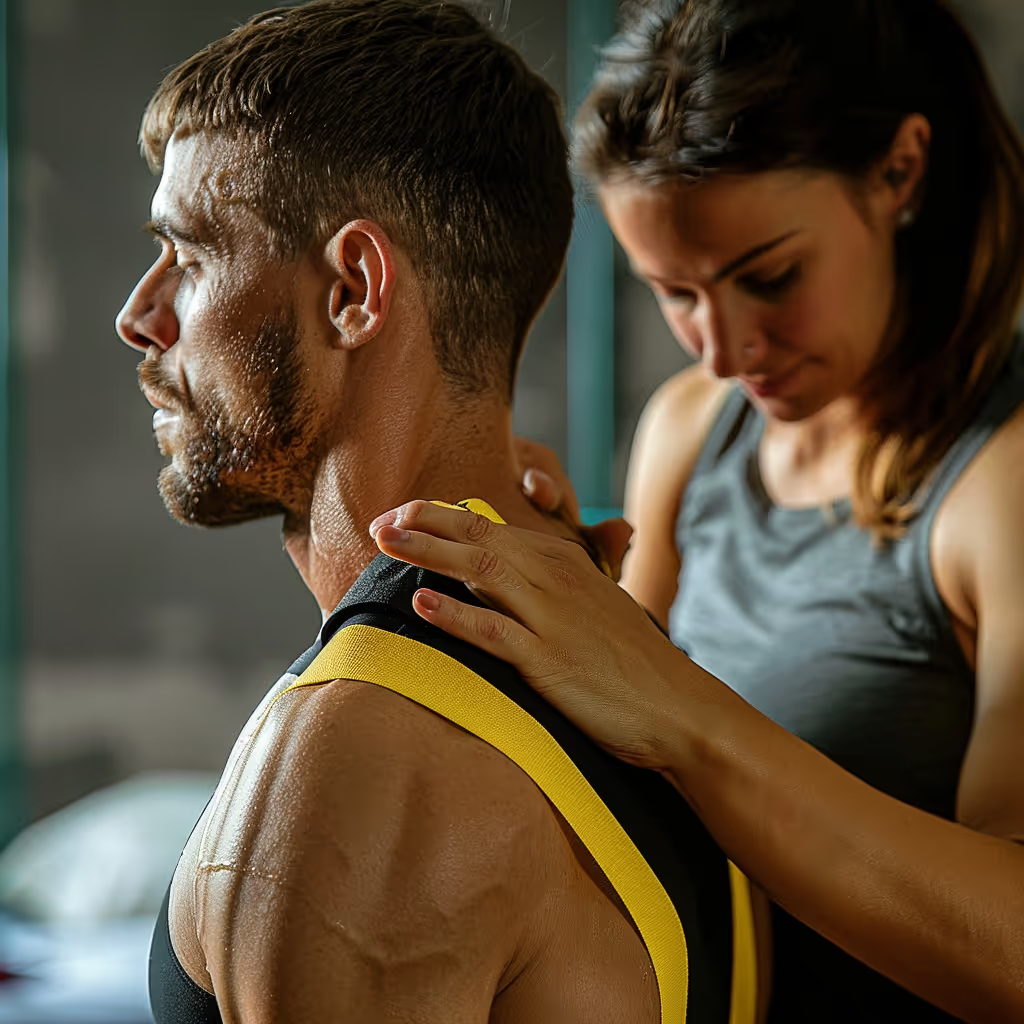
Physiotherapy for Nociceptive Pain: Treatment and Recovery
.png)
.png)
.png)



Physiotherapy for Nociceptive Pain: Treatment and Recovery
Sudden pain after a sprain, a sudden movement, or an injury. That sharp sensation that reminds you with every movement that something is wrong. If you are experiencing this, know that you are not alone: nociceptive pain is the most common type of pain, affecting most adults at some point in their lives.1
As physiotherapists specializing in pain treatment, we understand how unsettling this experience can be. It's normal to wonder if the pain will go away, how long it will take, or if something serious is happening.
Here's the good news: Nociceptive pain generally responds very well to treatment. More than 90% of cases significantly improve in less than 12 weeks.2 Physiotherapy is recommended as a first-line treatment by international clinical guidelines.3 What science shows us:- Prolonged rest often slows down healing, contrary to popular belief.4
- The pain you feel is a protective signal, not necessarily a sign of ongoing damage.
- Progressive and tailored exercise promotes tissue healing rather than hindering it.5
- Physiotherapy targets the specific mechanism of your pain for more effective treatment.
This guide will help you understand what nociceptive pain is, how it is treated, and what you can expect during your recovery. For an overview of physiotherapy, consult our complete guide to physiotherapy.
What is nociceptive pain?
Nociceptive pain is a type of pain that occurs when specialized receptors, called nociceptors, detect tissue damage or a threat of damage. It is the most common type of pain and serves an important protective function for your body.
Nociceptors are nerve endings found in the skin, muscles, joints, and internal organs. They react to three types of stimuli: mechanical (such as impact or pressure), thermal (extreme heat or cold), and chemical (inflammation).1
When you sprain something, for example, damaged tissues release chemicals that activate these nociceptors. These then send a signal to the brain via two types of nerve fibers: A-delta fibers (fast, responsible for the initial sharp pain) and C fibers (slower, responsible for the persistent dull pain).6
This pain plays an essential role: it warns you that an injury has occurred and prompts you to protect the affected area. Without this mechanism, people suffer significant cumulative damage, as observed in rare cases of congenital insensitivity to pain.1
It is important to distinguish nociceptive pain from other types of pain:
- Neuropathic pain: caused by damage or dysfunction of the nervous system itself (as in diabetic neuropathy). To learn more, consult our page on neural pain.
- Nociplastic pain: results from an alteration in pain processing by the central nervous system, without obvious tissue damage (as in fibromyalgia).
What's reassuring about nociceptive pain is that it generally reflects an ongoing healing process and improves as tissues heal.
How to recognize nociceptive pain?It is recognized by its distinctive characteristics: generally well-localized, proportional to the injury, described as sharp or dull, and gradually improves as tissues heal.
Here are the typical signs:
Precise Location: You can usually pinpoint the exact spot where it hurts. The pain matches the injured area. Quality of Pain: It is often described as sharp (in cases of acute injury), dull, throbbing, or as a feeling of pressure. These descriptions differ from the burning or electric sensations typical of neuropathic pain. Proportionality: The intensity of the pain generally matches the extent of the injury. A small cut hurts less than a significant sprain. Predictable Behavior: The pain increases with movement or pressure on the affected area and decreases with rest. It follows a logical pattern related to how the injured region is used. Positive Progression: As tissues heal (typically over 6-12 weeks), the pain gradually decreases.| Characteristic | Nociceptive | Neuropathic | Nociplastic |
|---|---|---|---|
| Location | Clearly defined | Follows a nerve pathway | Diffuse, variable |
| Quality | High-pitched, muffled | Burn, electrical | Variable, often intense |
| Progression | Improves as healing progresses | May last a long time | Fluctuates for no apparent reason |
| Cause | Tissue damage | Nerve injury | Central sensitization |
If your pain does not match the typical profile of nociceptive pain (for example, if it persists well beyond the expected healing time or is accompanied by burning sensations), a thorough evaluation may be necessary. If it persists beyond 12 weeks, consult our page on chronic pain.
What are the common causes of nociceptive pain?
Nociceptive pain results from various tissue injuries: sports injuries, sprains, fractures, surgeries, joint inflammations like arthritis, tendinitis, or simple contusions. The common factor is the activation of nociceptors by actual tissue damage.
Here are the most frequent causes:
Traumas and Accidents- Falls
- Car accidents (whiplash, contusions)
- Sports impacts
- Cuts and lacerations
- Ligament sprains (ankle, knee, wrist)
- Muscle strains (pulls, stretches)
- Bone fractures
- Joint dislocations
Sports injuries are a common cause of nociceptive pain. Our sports physiotherapy service offers specialized care for these situations.
Inflammatory Conditions- Arthritis (osteoarthritis, rheumatoid arthritis)
- Tendinitis and tendinopathy
- Bursitis (shoulder, hip, knee)
- Plantar fasciitis
Inflammatory pain and acute pain are common forms of nociceptive pain.
Post-Surgical Conditions- Incisional pain
- Healing of operated tissues
- Post-intervention rehabilitation
- Repetitive movements at work
- Sports overtraining
- Prolonged postures
Identifying the precise cause of your pain is an important step. This allows your physiotherapist to target treatment based on the underlying mechanism and adapt interventions to your specific situation.
How does physiotherapy treat nociceptive pain?
Physiotherapy treats nociceptive pain by combining manual therapy, therapeutic exercises, and physical modalities. This multimodal approach targets tissue healing, reduces inflammation, and restores function, with a success rate of 68-72%.7
The modern approach to physiotherapy for nociceptive pain is based on understanding the mechanisms of pain. Rather than a one-size-fits-all approach, the physiotherapist first identifies the dominant type of pain and then adapts interventions accordingly.8
The Three Pillars of Treatment: 1. Manual TherapyManual techniques like joint mobilization and soft tissue massage help restore movement, reduce muscle tension, and activate pain inhibition systems.
2. Therapeutic ExercisesProgressive exercise promotes tissue healing, strengthens weakened structures, and prevents chronicity. It is the most effective non-pharmacological intervention according to research.5
3. Physical ModalitiesTENS, heat, ice, and ultrasound can complement treatment by modulating pain signals and promoting circulation.
4. EducationUnderstanding your pain is a key element of treatment. Knowing that nociceptive pain is a protective signal (not permanent damage) helps maintain activity and promote recovery. To better understand how to manage your pain while waiting for a consultation, read our article on how to manage pain at home.
The goals of treatment are:- Reduce pain and inflammation
- Promote optimal tissue healing
- Restore range of motion
- Strengthen weakened structures
- Preventing Recurrence
- Enable you to resume your normal activities
Physiotherapy is recommended as a first-line treatment for most musculoskeletal pain.3
What manual therapy techniques are used?
Manual therapy for nociceptive pain includes joint mobilization, soft tissue massage, and sometimes manipulation. These techniques restore natural movement, reduce muscle tension, and activate pain-inhibiting mechanisms in the nervous system.
Joint mobilizationJoint mobilization uses gentle oscillating movements applied to the joints. These techniques help to:
- Restore lost range of motion
- Release mechanical restrictions (adhesions, stiffness)
- Improve joint lubrication
- Reduce pain by stimulating mechanoreceptors
A recent systematic review has shown the effectiveness of joint mobilization in reducing non-specific neck pain, especially when combined with exercise.9
Soft Tissue MassageSoft tissue work targets muscles, tendons, and fascia. The effects include:
- Reduction of muscle spasms and tension
- Improved local blood circulation
- Release of tissue adhesions
- Decrease in the expression of inflammatory genes10
In certain appropriate cases, manipulation (thrust) techniques may be used. Research shows an immediate reduction in brain activity in areas associated with pain processing after spinal manipulation.11
Mechanisms of actionManual therapy works on several levels:
- Peripheral level: activation of pain-relieving systems (cannabinoid, adenosine)
- Spinal level: inhibition of pain signal transmission
- Central level: modulation of pain-related brain activity
These combined effects explain why manual therapy, when integrated into a multimodal program, offers better results than isolated interventions.12
What role do therapeutic exercises play?
Therapeutic exercises are essential for treating nociceptive pain. They decrease the excitability of nociceptors, promote tissue remodeling, and prevent chronicity. Prolonged rest beyond 48 hours generally slows down healing rather than speeding it up.4
Why is exercise crucial?Research has shown several ways exercise helps treat pain caused by tissue damage:
- Reduced Sensitivity of Pain Receptors: Regular exercise reduces how sensitive your pain receptors are.10
- Tissue Healing and Remodeling: Physical activity stimulates collagen production and improves how fibers are organized in healing tissues.
- Release of Endorphins: Even a single session of exercise boosts your body's natural pain relievers, creating a natural pain-killing effect.5
- Preventing Stiffness and Weakness: Moving early helps avoid complications that can arise from prolonged rest.
The PEACE & LOVE protocol guides the modern approach to rehabilitation:13
- Initial Phase (PEACE): Protection, Elevation, Avoid Anti-inflammatories, Compression, Education
- Later Phase (LOVE): Load (progressive loading), Optimism, Vascularization, Exercise
- Gentle Mobility and Stretches: To maintain your range of motion
- Progressive Strengthening: To rebuild strength and stability
- Functional Exercises: To prepare you to get back to your activities
Prolonged bed rest (more than 48 hours) is known to have harmful effects.4 It leads to muscle weakness, joint stiffness, and can even contribute to the development of chronic pain.
Slight discomfort during exercise is acceptable and often unavoidable. The general rule is that pain should not significantly increase during the activity or persist long afterward.
What physical modalities can help?
Physical modalities such as TENS, heat, ice, and ultrasound can complement the treatment of pain caused by tissue damage. These approaches help manage pain signals, reduce inflammation, and promote blood flow to healing tissues.
TENS (Transcutaneous Electrical Nerve Stimulation)TENS uses low electrical currents applied through electrodes on the skin. Its mechanism of action:
- Activates large nerve fibers (A-beta) which inhibit pain signals (gate control theory)14
- Can be used at home between sessions
- Particularly useful for temporary pain relief
Applying heat offers several benefits:
- Increases blood flow to the treated area
- Relaxes tense muscles
- Reduces joint stiffness
- Heat can block pain signals by affecting thermal receptors15
Heat is generally more appropriate after the acute inflammatory phase (after 48-72 hours).
Cryotherapy (ice)Applying cold is particularly helpful during the acute phase:
- Reduces inflammation and swelling
- Slows nerve conduction (fewer pain signals)
- Suppresses the release of inflammatory neurotransmitters14
The classic rule is to apply ice for the first 48-72 hours, followed by heat. However, listening to your body is important, as some people respond better to one or the other.
Therapeutic ultrasoundUltrasound delivers deep heat to tissues:
- Reaches deep structures that superficial heat cannot access
- Can promote tissue healing
- Often combined with other techniques
10 Quick Tips to Understand Your Pain
The ones that have most changed my patients' lives. 1 per day, 2 min.
How long does recovery take?
Recovery from pain caused by tissue damage follows the phases of tissue healing. The acute phase typically lasts 2-6 weeks, with continuous improvement for up to 12 weeks. More than 90% of cases show significant improvement within this timeframe.2
Phases of tissue healing Inflammatory phase (0-7 days)- Natural response to injury
- Possible swelling, redness, and warmth
- The body cleans damaged tissues
- Relative protection recommended
- Formation of new tissue (collagen)
- Scar tissue develops
- Gradual introduction of movement is important
- Beginning of mobility exercises
- New tissue strengthens and organizes
- Progressive loading improves tissue quality
- Strengthening and functional exercises
- Gradual return to normal activities
| Type of Injury | Typical timeframe |
|---|---|
| Minor injuries (bruises, minor sprains) | 2-4 weeks |
| Moderate injuries (Grade 1–2 sprains) | 4-8 weeks |
| More serious injuries (Grade 3 sprain, tendinopathy) | 8-12 weeks |
| Post-surgery | Varies by procedure |
- Severity of the initial injury
- Age and general health status
- Adherence to the treatment plan
- Activity level maintained during recovery
- Psychological factors (stress, anxiety)
The vast majority of nociceptive pain resolves completely with time and appropriate treatment.
When to consult a physiotherapist?
Consult a physiotherapist if your pain lasts longer than 1-2 weeks, limits your daily activities, or occurs after a significant injury. Early intervention prevents chronic pain and speeds up recovery.
Clear indications for consultation:- Pain that lasts more than 1-2 weeks despite initial rest
- Pain that limits your daily activities (work, hobbies, sleep)
- After a sports injury or an accident
- For post-surgical rehabilitation
- Recurring pain in the same area
- When you don't know what to do to manage your pain
- Prevents it from becoming chronic: The longer the pain lasts, the more likely it is to persist.
- Speeds up recovery: The right interventions at the right time optimize healing.
- Reduces the risk of compensation: Avoid overloading other areas of the body.
- Can avoid medication and surgery: Physiotherapy is often as effective as more invasive interventions.
Certain symptoms warrant a prompt medical evaluation:
- Pain after significant trauma (fall from a height, accident)
- Progressive weakness or numbness
- Intense nocturnal pain that does not improve with rest
- Loss of bladder or bowel control
- Systemic symptoms (unexplained fever, weight loss)
Physiotherapists who are members of the Ordre professionnel de la physiothérapie du Québec (OPPQ) can assess your condition, provide a physiotherapy diagnosis, and develop a tailored treatment plan. To learn what to expect during a first visit, consult our article on what happens during a physiotherapy assessment.
What sets Physioactif's approach apart?
Physioactif uses an approach based on pain mechanisms. Our physiotherapists identify the dominant type of pain (nociceptive, neuropathic, or nociplastic) to precisely tailor the treatment to your situation.
Thorough assessmentDuring your first visit, your physiotherapist performs a comprehensive assessment that includes:
- Classification of pain type (nociceptive, neuropathic, nociplastic, or mixed)
- Identification of contributing factors (mechanical, inflammatory, behavioral)
- Functional assessment: understanding what you can and cannot do right now
- Understanding your personal goals
Based on your pain profile, treatment combines:
- Targeted interventions based on the identified cause
- Optimal balance of manual therapy and exercises
- Pain education tailored to your specific situation
- Self-management strategies to promote independence
To better understand our approach, read our article on the Physioactif secret.
Our expertise- Physiotherapists who are members of the OPPQ
- Ongoing training in modern pain science
- 5 clinics in Greater Montreal
- Evidence-based approach
- Active approach: You are an active participant in your recovery, not a passive recipient of treatments
- Progressive empowerment: The goal is to give you the tools to manage and prevent pain
- Return to activities: Your ability to resume what matters to you guides our interventions
Need Professional Advice?
Our physiotherapists can assess your condition and offer you a personalized treatment plan.
Book an appointmentFrequently Asked Questions about Nociceptive Pain
Does complete rest help nociceptive pain?
No, prolonged rest (more than 48 hours) can slow down healing. Gentle and progressive movements, through adapted activity, promote tissue recovery and prevent the stiffness and muscle weakness that can complicate rehabilitation.
Is heat or cold better for nociceptive pain?
Both can help, depending on the situation. Cold reduces inflammation in the acute phase (the first 48-72 hours after an injury). Heat promotes circulation and relaxes muscles, especially after the acute phase. Listen to your body and use what provides you the most relief.
How many physiotherapy sessions are needed?
The number of sessions varies depending on the severity and type of injury. Mild cases may require 4-6 sessions, while moderate cases might need 8-12 sessions. Your physiotherapist will create a personalized plan and adjust it based on your progress.
Is pain during exercise normal?
A slight discomfort is acceptable and often unavoidable. However, sharp pain that significantly increases during exercise or persists long afterward indicates that the intensity needs to be adjusted. A good rule of thumb is that your pain should not be worse the next day.
What is the difference between nociceptive and neuropathic pain?
Nociceptive pain results from tissue damage (muscle, bone, joint) and is usually well-localized, feeling sharp or dull. Neuropathic pain, on the other hand, comes from nerve damage or dysfunction and often presents as burning, electric shock, or numbness sensations.
Can physical therapy prevent chronic pain?
Yes, early intervention significantly reduces the risk of pain becoming chronic. Physical therapy helps you stay active, avoid behaviors that lead to avoidance, and promotes optimal healing, all of which reduce the risk of chronic pain.
Should I stop playing sports during my recovery?
Not necessarily. Modern approaches encourage maintaining adapted activity. Your physical therapist can help you modify your sports activities during healing instead of stopping completely, which promotes faster recovery and an easier return to sports.
How can I tell if my pain is nociceptive?
Nociceptive pain is typically well-localized, proportional to an identifiable injury, worsens with movement or pressure on the area, and gradually improves over time. If you are unsure, a physical therapist's assessment can clarify the type of pain you are experiencing.
What should you know about physical therapy for nociceptive pain?
Nociceptive pain is your body's natural protective response to tissue injury. While it can be intense and concerning, it generally responds very well to treatment and improves as the tissues heal.
Physical therapy offers an effective, evidence-based approach to treating nociceptive pain. By combining manual therapy, therapeutic exercises, and physical modalities, it promotes optimal healing and helps you return to your activities.
More than 90% of nociceptive pain cases significantly improve in less than 12 weeks. Early intervention, combined with an active approach to your recovery, maximizes your chances of regaining full function.
If you are living with pain that persists or limits your activities, the physical therapists at Physioactif can help. We will assess your situation, identify the type of pain, and create a personalized treatment plan to help you return to an active, pain-free life.
References- IASP (International Association for the Study of Pain). IASP Terminology - Nociceptive pain. [Internet]. [cited 2026 Jan 22]. Available from: https://www.iasp-pain.org/resources/terminology/
- Hartvigsen J, Hancock MJ, Kongsted A, et al. What low back pain is and why we need to pay attention. Lancet. 2018;391(10137):2356-2367.
- Oliveira CB, Maher CG, Pinto RZ, et al. Clinical practice guidelines for the management of non-specific low back pain in primary care: an updated overview. Eur Spine J. 2018;27(11):2791-2803.
- Physio-pedia. Healing Phases and Home Exercise Programmes. [Internet]. [cited 2026 Jan 22]. Available from: https://www.physio-pedia.com/Healing_Phases_and_Home_Exercise_Programmes
- Geneen LJ, Moore RA, Clarke C, et al. Physical activity and exercise for chronic pain in adults: an overview of Cochrane Reviews. Cochrane Database Syst Rev. 2017;4(4):CD011279.
- NCBI Bookshelf. Physiology, Nociception. StatPearls [Internet]. 2023. Available from: https://www.ncbi.nlm.nih.gov/books/NBK551562/
- Sprypt. Is Physical Therapy Effective in 2025? [Internet]. [cited 2026 Jan 22]. Available from: https://www.sprypt.com/blog/does-physical-therapy-work
- Chimenti RL, Frey-Law LA, Sluka KA. A Mechanism-Based Approach to Physical Therapist Management of Pain. Phys Ther. 2018;98(5):302-314.
- Effectiveness of Manual Joint Mobilization Techniques in the Treatment of Nonspecific Neck Pain. J Orthop Sports Phys Ther. 2025;55(1).
- Bialosky JE, Bishop MD, Price DD, et al. The mechanisms of manual therapy in the treatment of musculoskeletal pain: a comprehensive model. Man Ther. 2009;14(5):531-8.
- Gay CW, Robinson ME, George SZ, et al. Immediate changes after manual therapy in resting-state functional connectivity as measured by functional magnetic resonance imaging in participants with induced low back pain. J Manipulative Physiol Ther. 2014;37(9):614-27.
- Louw A, Zimney K, Puentedura EJ, Diener I. The efficacy of pain neuroscience education on musculoskeletal pain: A systematic review of the literature. Physiother Theory Pract. 2016;32(5):332-355.
- Dubois B, Esculier JF. Soft-tissue injuries simply need PEACE and LOVE. Br J Sports Med. 2020;54(2):72-73.
- PMC. Multimodal non-invasive non-pharmacological therapies for chronic pain: mechanisms and progress. [Internet]. 2023. Available from: https://pmc.ncbi.nlm.nih.gov/articles/PMC10542257/
- Physio-pedia. Thermotherapy. [Internet]. [cited 2026 Jan 22]. Available from: https://www.physio-pedia.com/Thermotherapy
Videos in this category
Other conditions

Hip osteoarthritis is a normal wear and tear of the hip joint. Osteoarthritis is often described as the wearing away of cartilage between our bones. While this is true, it involves more than just cartilage. Cartilage is a tissue that acts like a cushion between the surfaces of our bones, allowing our joints to glide smoothly and move with ease.
It is a normal wear and tear of the knee joint. Osteoarthritis is often described as the wearing away of cartilage between our bones. While this is true, it involves more than just cartilage. Cartilage is a tissue that acts like a cushion between the surfaces of our bones, allowing our joints to glide smoothly and move with ease.
It is an inflammation of the subacromial bursa in the shoulder joint.
A bursa is like a small, very thin, fluid-filled sac found in several joints throughout the body. This small sac acts as a cushion in the joint and lubricates structures that are exposed to more friction.
It is a tissue that surrounds the shoulder and allows the shoulder bone to stay in place within the joint. The capsule helps to stabilize the joint.
Cervicalgia is a general term to describe neck pain that does not have a specific cause, such as an accident or sudden movement. Cervicalgia is therefore synonymous with ''I have a pain in my neck and nothing in particular happened''.
In both injuries, there is pain felt in the neck that then radiates into the arm, or vice versa.
It is a significant stretch or tear of the muscle fibers in the groin or inner thigh muscles.
It is a significant stretch or tear of the muscle fibers in the hamstring muscles located at the back of the thigh.
Book an appointment now
We offer a triple quality guarantee: optimized time, double physiotherapy assessment, and ongoing expertise for effective care tailored to your needs.

Our clients' satisfaction is our priority.
At Physioactif, excellence guides everything we do, but our patients' experiences truly speak for themselves. Check out their verified reviews to get a clear picture of what to expect.








Discover our physiotherapy clinics
We have multiple locations to better serve you.
Blainville
190 Chem. du Bas-de-Sainte-Thérèse Bureau 110,
Blainville, Quebec
J7B 1A7
Located in Blainville, near Rosemère, the Physioactif clinic is easily accessible for residents in the area and surrounding communities.
Laval
3224 Jean-Béraud Ave. Suite 220 Laval,
QC H7T 2S4
Located in Chomedey, in the heart of Laval, the Physioactif clinic is easily accessible for those in the vicinity.
Montreal
8801 Lajeunesse Street,
Montreal,
QC H2M 1R8
Located in Ahuntsic, near Villeray, the Physioactif clinic is easily accessible for residents of both neighborhoods.
St-Eustache
180 25th Avenue Suite
201 Saint-Eustache
QC J7P 2V2
Located in Saint-Eustache, the Physioactif clinic is easily accessible for residents in the area and surrounding communities.
Vaudreuil
21 Cité-des-Jeunes Blvd. Suite 240,
Vaudreuil-Dorion, Quebec
J7V 0N3
Located in Vaudreuil-Dorion, Physioactif clinic is easily accessible for people in the area.
Book an appointment now