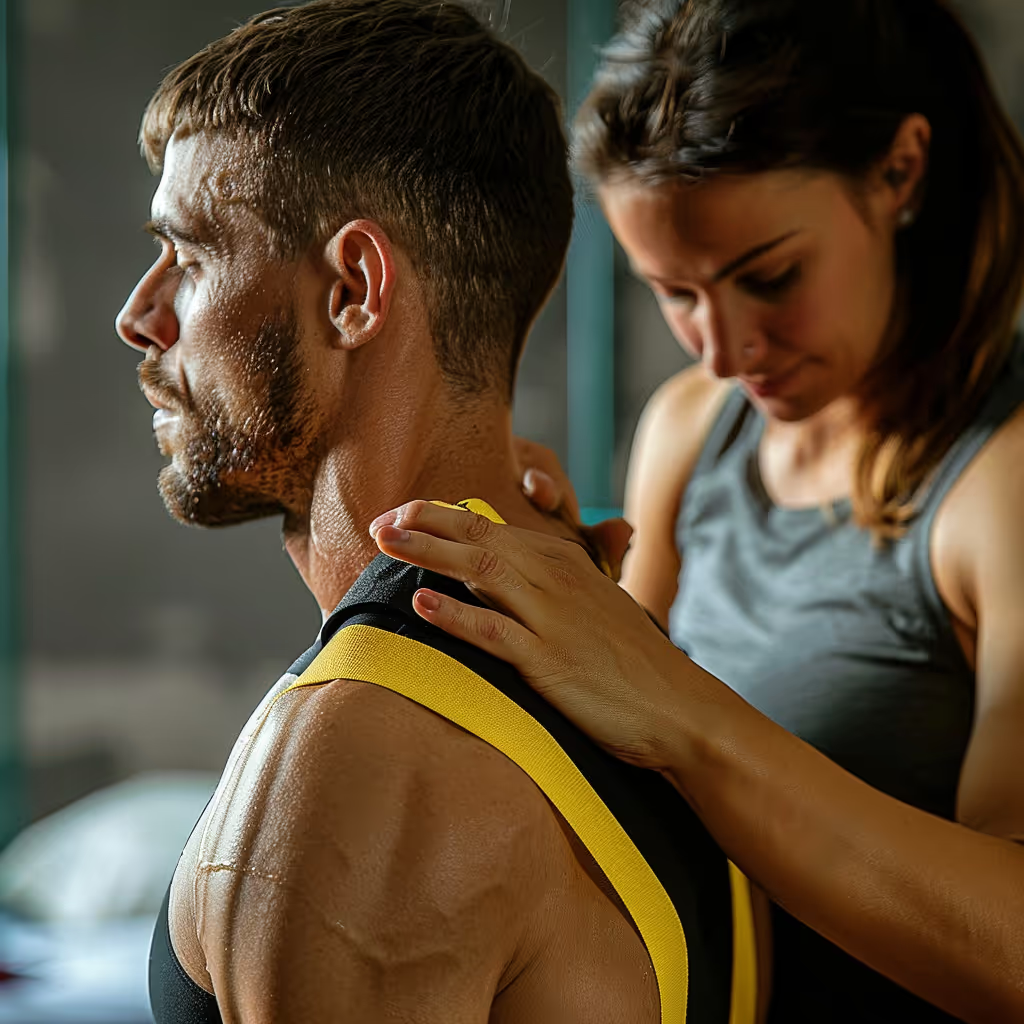
What is Physiotherapy: Definition, Treatments, and When to Seek Help?
.png)
.png)
.png)





Physical therapy helps people who are experiencing pain or have difficulty moving. This health profession aims to improve their physical abilities and independence.
At Physioactif, we believe that knowledge is the first step toward recovery. Understanding your treatment helps you ask questions and work with your physical therapist to choose a plan that fits your situation.
This article provides an overview of physical therapy in Quebec: the conditions it treats, its methods, research findings, and how it differs from other professions.
What is Physiotherapy and How Does It Work?
Physical therapy is a health discipline that helps improve your movement and physical abilities through exercises, hands-on treatments, and education. It addresses pain and difficulties you may experience during daily activities. The choice of treatment depends on your assessment, your goals, and research related to your condition.1
10 Quick Tips to Understand Your Pain
One tip a day for 10 days to help you better understand your pain. About a 2-minute read.
According to the Quebec Professional Order of Physiotherapy (OPPQ), treatment may combine adapted exercises, advice, and hands-on techniques. These techniques include joint mobilization—movements applied to a joint—and massage.2
Physical therapy also aims to help you maintain your independence—for example, your ability to walk, work, or get dressed without assistance.3
Your involvement: You work with your physical therapist to set your goals. Your experience, preferences, and research findings guide the plan. The physical therapist explains the expected benefits and any uncertainties. You let them know about any obstacles that make it difficult to follow the program.
| Main Goal | How physiotherapy achieves this |
|---|---|
| Restore movement | Exercises and movements that target the joints help improve mobility. |
| Reduce pain | Manual techniques and tips can help manage pain. |
| Improve mobility | Stretching and exercises improve range of motion—that is, how far a joint can move. |
| Maintain independence | The at-home program and the adaptation of activities support your independence. |
| Improve well-being | Your care takes into account your activities, your concerns, and your health. |
Physical therapy focuses on the musculoskeletal system, which consists primarily of bones, joints, muscles, and tendons. Tendons connect muscles to bones. It also addresses the nervous system: the brain, nerves, and spinal cord, which transmits messages between the brain and the body. Cardiorespiratory care focuses on the heart and lungs. People of all ages can receive tailored care.3
The physical therapist assesses the factors that may contribute to your problem: physical abilities, activities, habits, and overall health. He or she adjusts the treatment plan based on your response to care. A specific cause cannot always be identified, particularly for certain types of back pain.4
What does a physiotherapist do?
The physical therapist evaluates your movements, makes a physical therapy diagnosis, and works with you to develop a treatment plan. This diagnosis describes your physical problem and how it affects your daily activities. The physical therapist monitors your progress and teaches you strategies to better manage your condition.3
The First Appointment: Comprehensive Assessment
During the first appointment, the physiotherapist conducts a complete assessment of your condition, including a physical examination with specific tests.
| Assessment test | What the physiotherapist measures |
|---|---|
| Joint mobility | Range of motion of the affected joints |
| Muscle strength | Your muscles' ability to generate force |
| Posture and alignment | Your body's position at rest and in motion |
| Gait | How you walk and move |
| Balance and coordination | Stability and movement control |
These exams help the physical therapist make a diagnosis and work with you to set treatment goals. If your condition requires another exam or a referral to another professional, the physical therapist will refer you to the appropriate care.
Follow-up and Progress
The physical therapist reassesses your progress during each session. Together, you discuss the goals you’ve achieved, any remaining challenges, and whether to continue or adjust your treatment.
At the clinic: The physical therapist administers the prescribed treatments and supervises your exercises. He or she may use hands-on techniques and physical agents, such as heat or ice. The therapist then adjusts the treatment plan based on your progress.
At Home: Appropriate exercises can complement clinical care. The program specifies the movements to perform, their frequency, and the signs that indicate a need for adjustment.
The plan takes into account your response to treatment and any changes in your activities or health. If you’re having trouble making progress, a reassessment is needed—without assuming that you’re not trying hard enough.
Education and Counseling: The physical therapist teaches you strategies to prevent injuries and guides you through your at-home exercise program. This education is in line with the philosophy that “knowledge is the first step toward recovery.”
Professional Collaboration: The physical therapist documents your progress. With your consent, he or she can coordinate your care with your doctor, pharmacist, or others involved in helping you return to your activities.
What conditions does physiotherapy treat?
Physical therapy treats conditions such as back pain, sprains, problems related to osteoarthritis, certain movement disorders, incontinence, and chronic pain. It can also support people with neurological, cardiac, or respiratory conditions. Treatment focuses on their physical difficulties, without necessarily curing the underlying condition itself.1
Musculoskeletal problems (the most common)
| Condition | Description | Treatment approach |
|---|---|---|
| Back pain (low back pain) | Lower back pain | Exercises, hand techniques, and tips can help. |
| Sprains | Injury to a ligament, a strong band that connects bones to one another | Appropriate protection, movement, and gradual strengthening support a return to normal activities. |
| Osteoarthritis | A disease that affects several tissues in the joint, including the cartilage that covers the ends of the bones | Exercises and tips help you manage pain and your daily activities.5 |
| Tendinitis or tendinopathy | Tendinopathy refers to a painful tendon with a reduced ability to withstand physical activity. Inflammatory changes may be involved.6 | Activities are modified, and progressive exercises are used. Eccentric exercises work the muscle as it lengthens; they are an option being studied for the patellar tendon, located beneath the kneecap.7 |
| Sports injuries | Physical activity injuries | Progressive rehabilitation, return to sport |
Physical therapy can help with many types of muscle and joint pain. Whether you have chronic back pain, neck pain, shoulder problems, or knee pain, an evaluation is conducted to understand your symptoms and recommend appropriate treatment. Results depend on the specific problem and the chosen treatment.
Neurological Conditions
Neurological physical therapy treats movement difficulties related to the nervous system. It requires skills tailored to these issues. After a stroke, which damages part of the brain due to impaired blood flow, rehabilitation primarily involves repetitive tasks. Neuroplasticity refers to the nervous system’s ability to change how it functions and the connections it makes; it plays a role in recovery, though its limits depend on the nature of the injury.8
| Neurological conditions | Treatment goals |
|---|---|
| Stroke recovery | Restoring motor function and independence |
| Multiple Sclerosis, Parkinson's | These diseases affect the nervous system. Treatment is aimed at improving movement and maintaining the activities that are still possible. |
| Spinal Cord Injuries | The care is designed to develop retained abilities and promote independence. |
| Balance problems, dizziness | Vestibular rehabilitation treats certain disorders of the balance system. |
Other conditions treated
Heart and Lung Problems: Physical therapy can help people with asthma, chronic obstructive pulmonary disease (COPD)—which causes long-term obstruction of airflow—or heart failure, a condition in which the heart does not pump blood efficiently enough. Cardiac rehabilitation helps patients resume physical activity after certain heart problems.1
Urinary and Pelvic Problems: These treatments can addressurinary and fecalincontinence —the involuntary leakage of urine or stool. They can also help with certain pregnancy-related pains and certain disorders of the pelvic floor, the group of muscles at the base of the pelvis.1
For children: Physical therapy can help address delays in motor skill development and certain conditions that limit mobility or play.
Chronic Pain: Physical therapy helps manage certain types of persistent pain, particularly back pain that lasts more than three months. Exercises can reduce pain and improve functional ability, with varying benefits depending on the studies compared.9 Our program for persistent pain takes into account both the physical and personal aspects of pain. It includes explanations of the neuroscience of pain—the study of the nervous system’s role in pain.
What methods and techniques does physiotherapy use?
Physical therapy uses exercises, hands-on techniques, advice, and certain physical agents, such as heat and ice. The physical therapist tailors these approaches to your specific condition, your preferences, and the latest research findings.
| Category | Techniques | Application | Example or clarification |
|---|---|---|---|
| Manual therapy | Joint Exercises and Massage | These techniques can help reduce pain or improve mobility. | The U.S. guidelines on low back pain recommend certain manual techniques, with limited certainty depending on the context.10 |
| Therapeutic exercise | Strength training, stretching, and practicing activities such as walking or standing up | The exercises build strength, flexibility, and physical fitness. | For chronic low back pain, the average benefit in terms of pain relief exceeds that in terms of activity limitations.9 |
| Physical agents | Heat, Ice, and Water Exercises | Heat can help you relax and provide temporary pain relief. Ice can also be used for comfort. | Water exercises are a recommended option for some people with knee osteoarthritis.5 |
| Other methods | Therapeutic adhesive tapes and advice on work postures | The wraps can be tried out to provide support during an activity. The tips help you adapt the tasks. | These methods are chosen based on the problem and the observed response, with no guarantee of prevention. |
Manual therapy: A physical therapist may mobilize a joint through gradual movements or use manipulation—a brief, controlled movement. Massage targets muscles and other soft tissues. These techniques may be used to improve comfort and mobility. At Physioactif, exercises and movement guide the choice of treatment.
Therapeutic exercise: The program may include progressive strength training, stretching, and joint mobility exercises. It may also include balance training, walking, or sports-related movements. The exercises are designed to reduce the difficulty you experience when performing your daily activities.
Physical therapies: Heat can promote relaxation and provide temporary pain relief. Ice can also be used for comfort. Protect your skin with a cloth, and seek advice if you have reduced sensitivity or circulation. Water exercises use buoyancy to make certain movements easier. Their effectiveness depends on the condition being treated.
At Physioactif, we maximize treatment time together and teach you the correct way to use physical agents at home.
Electrotherapy: Physioactif does not use TENS, therapeutic ultrasound, or laser therapy. TENS, or transcutaneous electrical nerve stimulation, applies small electrical currents to the skin. Ultrasound uses inaudible sound waves; laser therapy uses focused light. A 2019 Cochrane review examined the use of TENS for chronic pain.11 A 2022 review examines TENS in adults with acute or chronic pain.12 Another review examines ultrasound for chronic low back pain.13 These publications evaluate devices; they do not describe our care program. At Physioactif, exercises and movement are central to our care.
Personalized Treatment: Your physical therapist works with you to choose the appropriate treatment methods. He or she reassesses their effectiveness based on your pain, activities, and the goals you have set.
What is the difference between physiotherapy and other professions?
Physical therapy differs from other professions in terms of its training, scope of practice, and regulation by the OPPQ. Several other professions also use exercises, advice, or manual techniques. The choice depends on your specific problem and the skills required, rather than on a distinction between active and passive care.3, 14, 15
| Profession | Training | Regulated in Quebec | Primary Field | Approach |
|---|---|---|---|---|
| Physiotherapy | Master’s degree for the current physical therapy program; college diploma (DEC) for the physical therapy technologist program | Yes, through the OPPQ | Physical Abilities, Pain, and Independence | Assessments, exercises, tips, and physical techniques |
| Chiropractic | Professional Doctorate | Yes, by the Order of Chiropractors of Quebec | Muscle, Joint, and Nerve Problems | Manual therapies, including manipulative techniques, and other appropriate treatments |
| Osteopathy | Training programs vary by institution | Integration into an order announced in 2026; still in the works | Assessment and Manual Therapies | Manual techniques selected based on the assessment |
| Massage Therapy | Please verify the person's training with the individual and their organization | There is no professional association specific to massage therapy | Massage, Relaxation, and Comfort | Appropriate Massage Techniques |
| Kinesiology | University-level education in kinesiology | Integration into an order announced in 2026; still in the works | Physical Activity, Prevention, Rehabilitation, and Performance | Movement Assessment and Physical Activity Program |
Key Points:
A physical therapist can assess your condition, make a physical therapy diagnosis, and provide treatment independently.3 Chiropractic care treats, among other things, problems with muscles, joints, and nerves; it is not limited to spinal alignment.14 Kinesiology focuses on prevention, treatment, and rehabilitation through physical activity, without always requiring physical therapy.15 Osteopathy and massage therapy primarily use manual techniques. The practitioner’s credentials and training must be verified.16, 17 In June 2026, Quebec announced plans to integrate osteopaths into the Order of Chiropractors and kinesiologists into the Order of Occupational Therapists. This announcement does not mean that the integration is already complete.18, 19
Physical Therapy and Kinesiology: In Quebec, physical therapy is described by the Quebec Federation of Massage Therapists as a technique that combines massage and movement. It is therefore not automatically equivalent to the profession of physical therapist.16 In France, the term “kinesitherapy” can refer to the profession corresponding to physical therapy. Kinesiology refers to a different field, focused on physical activity.
For a detailed comparison, consult our complete guide: Physiotherapy vs. Chiropractic vs. Osteopathy vs. Massage Therapy vs. Kinesiology.
When should you consult a physiotherapist?
A physical therapy consultation can help you if pain is limiting your activities, if movement has become difficult, or if you’re recovering from an injury or surgery. You can also seek treatment for balance issues after checking for warning signs. In private practice in Quebec, you can generally make an appointment with a physical therapist without a prescription.20
For acute low back pain, staying active is more helpful than bed rest. For acute low back pain, the data show that advising patients to stay active yields better results than advising them to stay in bed.21 In the same vein, at Physioactif, we encourage appropriate movement rather than complete rest. 21
| Category | Signs to watch for | When to seek help |
|---|---|---|
| Pain | Persists for several weeks, interferes with daily life, does not respond to rest | As soon as pain limits your activities |
| Mobility | Limited range of motion, joint stiffness, difficulty moving | When stiffness affects your function |
| Injuries | Recurring, sports-related, work-related | After any significant injury |
| Post-surgery | Joint replacement, ligament reconstruction | As soon as recommended by a surgeon |
| Balance | Vertigo, dizziness, or unsteadiness | Have the cause evaluated; seek immediate medical attention if you notice any of the warning signs listed below. |
Pain: You should see a doctor if the pain persists without improvement, interferes with your daily activities, or does not respond to home care. An evaluation may also be helpful for certain types of headaches; their cause should be determined.
Movement and Activities: An evaluation may be helpful if a joint remains stiff or if you have difficulty performing your usual activities.
Injuries: Injuries that recur or limit your ability to participate in sports should be evaluated. Our approach to sports physical therapy supports your return to activities. Our CNESST program for work-related injuries covers injuries sustained on the job.
Consultation Principles:
Seek Early Treatment: A trial involving 220 adults who had had sciatica for less than 90 days compared an educational session alone with that session followed by four weeks of physical therapy. Sciatica refers to pain that radiates down the leg due to irritation of nerve roots in the lower back. The physical therapy group had fewer functional limitations at six months and one year, as well as less back pain at one year. Overall use of healthcare services and days of work lost did not differ significantly.22 These results support early intervention in this situation; they do not guarantee a shorter course of treatment for all conditions.
Direct Access in Quebec: You can schedule an appointment with a physical therapist without first seeing a doctor. However, some insurance plans or reimbursement programs require a prescription.20
Signs that require urgent care: Call 911 if you think you’re having a stroke—for example, if you experience sudden weakness on one side of your face or body, sudden difficulty speaking, or sudden loss of vision. Dizziness or a fall can also be signs of a stroke. Seek help even if the signs go away; not all of them need to be present.23
If you have back pain, go to the emergency room if you experience loss of sensation around the genitals or anus, new difficulty urinating, new urine or stool leakage, or changes in sexual sensation or function. Pain, tingling, weakness, or numbness in both legs, chest pain, or back pain following a serious accident also require urgent evaluation. Do not drive yourself. If you have back pain accompanied by chills, a sensation of being too hot or too cold, general malaise, or sudden severe pain or pain that is rapidly worsening, seek urgent medical attention.4
What are the benefits of physiotherapy?
Physical therapy can reduce pain, improve movement, and support a return to daily activities. Some programs also reduce falls or sports injuries, and some may prevent or delay surgery. The benefits depend on the condition, the program, and the comparison being studied.24, 9, 25, 26
| Benefit category | Expected results |
|---|---|
| Pain management | Non-pharmacological treatments are among the first-line options for low back pain. For chronic low back pain, medication may be considered if these approaches are insufficient; opioids require a specific assessment of benefits and risks.10 |
| Mobility and function | Improved range of motion, reduced stiffness |
| Strength and Performance | Stronger muscles, better endurance |
| Prevention | Certain strength-training, balance, or combined exercise programs reduce sports injuries; stretching alone did not show this benefit in the review.25 |
| Alternatives to Surgery | May help avoid or delay surgery |
| Balance and Safety | Balance exercises and movements useful in daily life reduce falls among older adults living in the community.24 |
| Overall Well-being | Resuming the activities that matter to you can help boost your confidence and well-being. |
Pain Management: Physical therapy offers exercises and strategies to help you better manage certain types of acute or chronic pain. It provides you with tools to resume your activities without relying solely on medication. Any changes to your medication should be discussed with the healthcare professional who prescribes it.
Mobility and Activities: Tailored exercises and care focus on improving difficult movements, strength, and flexibility. Goals may include climbing stairs, getting up from a seated position, or resuming a sports activity.
Prevention and Recovery: Gradually resuming physical activity helps rebuild the strength and endurance needed for your activities. Some exercise programs reduce sports injuries, but no strategy eliminates all risk.25
Alternatives to Surgery: A trial involving 140 middle-aged adults with degenerative meniscus tears compared 12 weeks of exercise to surgery. The meniscus is a cushion in the knee; a degenerative tear develops gradually. Almost none of these participants had osteoarthritis visible on X-rays. At two years, there was no significant difference between the groups in terms of symptoms and function. Muscle strength was better at three months in the exercise group. Some participants subsequently opted for surgery.27 These results support exercise as an initial option in this situation, without replacing a medical evaluation when surgery is necessary.
Balance and Safety: A review of 108 trials involving people aged 60 and older living in the community found that exercise leads to fewer falls. Balance and functional movement programs—such as standing up or walking in various situations—are particularly beneficial.24
Overall well-being: Rediscovering enjoyable activities and gaining a better understanding of your pain can boost your confidence. Physical activity also has benefits for cardiovascular and mental health; however, these effects do not prove that every physical therapy technique produces the same results.28
What to expect during treatment?
Physical therapy treatment includes an assessment, a treatment plan discussed with you, tailored care, and follow-up evaluations. The therapist will specify the exercises to do at home and how to adjust them. The duration of each visit and the number of sessions will be determined based on the service and your progress.20
| Step | Duration | What Happens |
|---|---|---|
| Initial Assessment | To be confirmed at the time of booking | The physical therapist will take your medical history, examine you, and propose a treatment plan. |
| Follow-up Sessions | To be confirmed based on the appointment | The professional monitors progress, implements the program, and makes adjustments as needed. |
| Complete Program | Reassessed throughout the course of treatment | The number of visits depends on the goals, the response to treatment, and the care that is still needed. |
Initial Evaluation: The physical therapist will discuss your health, symptoms, and concerns. They will perform the necessary physical tests, make a physical therapy diagnosis, and work with you to develop a treatment plan. If appropriate, treatment may begin during this visit.
Follow-up sessions: The physical therapist reviews your progress and any challenges you’re facing. They provide the selected treatments, adapt the exercises, and answer your questions. They also adjust your at-home exercise program.
Three goals that may overlap: Treatment can address comfort, physical abilities, and independence at the same time. The table outlines a possible progression, without imposing three identical phases on everyone.
| Phase | Goal | Typical activities |
|---|---|---|
| Phase 1 | Pain management and mobility | Manual therapy, gentle exercises, education |
| Phase 2 | Build the capacity needed for these activities | Reinforcement, adaptation of techniques, and practice of the targeted activities |
| Phase 3 | Gaining independence and reducing the risk of relapse | Personalized programs and strategies tailored to sports, work, or daily life |
10 Quick Tips to Understand Your Pain
One tip a day for 10 days to help you better understand your pain. About a 2-minute read.
Home Exercise Program: Your physical therapist will specify the exercises, repetitions, intensity, and frequency that are appropriate for your situation. Let them know if you’re having trouble finding the time, experiencing pain, or struggling with motivation so they can adjust the program.
Your active role: Your participation helps put the plan into action. The results also depend on your health, the appropriateness of your care, and any obstacles you encounter; they do not depend solely on your willpower.
For chronic low back pain, the 2010 review did not find any clear superiority of one type of exercise over others.29 Your physical therapist can work with you to choose a program tailored to your needs and preferences. This finding does not mean that all exercise regimens or exercises are suitable for everyone.
Is physiotherapy truly effective?
Physical therapy can help alleviate pain and improve functional ability for a variety of conditions, including chronic low back pain, osteoarthritis, and certain balance disorders. Studies focus on specific treatments and specific populations. Their results are used to guide treatment decisions, but they do not guarantee the same benefits for every individual.24, 9, 5
Available research: PEDro is a database dedicated to physical therapy research. As of February 2, 2026, it includes 50,120 trial reports, 16,304 reviews, and 843 clinical guidelines. In clinical trials, participants are randomly assigned to the treatments being compared. The number of trials alone does not prove that a treatment works. PEDro evaluates their methodology, but some reports were still under review at the time of this update.30
What this research suggests: Some programs reduce pain or make it easier to perform daily activities. To assess their value, it is important to consider the magnitude of the benefit, the comparator treatment, the follow-up period, and the study’s limitations.
A review of six trials, involving a total of 277 people, compared certain orthopedic surgeries with a sham procedure. In these trials, differences in pain and function did not clearly favor the actual surgery.31 This review does not directly compare physical therapy to surgery and does not allow for an assessment of all types of surgery. At Physioactif, we encourage non-surgical options when appropriate. Urgent or clearly necessary surgery should not be delayed.
| Condition | Level of evidence | Proven Benefits |
|---|---|---|
| Chronic low back pain with no identified specific cause | Moderate certainty regarding pain | Compared with no treatment, standard care, or a sham treatment, exercise improves pain. The average benefit in terms of activity limitations is smaller.9 |
| Hip or Knee Osteoarthritis | Recommended exercises as part of a basic care routine | The 2019 guide recommends education and floor exercises.5 In a separate trial of 109 people with hip osteoarthritis, adding exercises to education delayed the need for hip replacement compared to education alone.26 |
| Fall prevention | High certainty for several results | Balance and functional movement programs reduce falls among older adults living in the community.24 |
| Already persistent lower back pain | Profit varies depending on the comparison tool | Compared with other conservative treatments, the average benefit of exercise on pain and function is small. The review examines the treatment of pain lasting more than 12 weeks, without demonstrating that it prevents the pain from becoming chronic.9 |
Discover our specialized program for lower back pain and our complete guide to knee osteoarthritis.
Costs and Benefits: A review of low back pain found a favorable cost-benefit ratio for certain physical therapy interventions in 10 of the 11 included studies. The methods varied, and the results could not be pooled. A favorable cost-benefit ratio does not necessarily mean lower costs for each individual.32
Representation of the profession: World Physiotherapy represents more than 600,000 physical therapists through 129 member organizations. These are the professionals represented; this is not a census of all physical therapists worldwide.33 The Canadian Physiotherapy Association reports that more than 20,000 physical therapists work in Canada.1
Timing of Care: In the recent study on sciatica, a program started early improved activity limitations at six months and one year. It also reduced back pain at one year, with no clear difference in days of work lost or overall use of health care.22 When to seek medical care depends on your symptoms, how they progress, and any warning signs.
How to access physiotherapy in Quebec?
In Quebec, you can generally see a physical therapist in private practice directly, without a doctor's referral. Confirm the rate and duration when you make your appointment. The requirements of your insurance provider, the public health system, the CNESST, or the SAAQ may vary.20
Accessing Physiotherapy in Quebec:
Direct Appointment: You can schedule an appointment with a physical therapist without first seeing a doctor. However, a referral may be required for reimbursement or for a specific program.20
Physical Therapy Technologist: The technologist intervenes following an evaluation by a physical therapist or physician, depending on the information and prerequisites required for the situation. This is a distinct profession, also regulated by the OPPQ.3
| Type of visit | Fees to be confirmed | Duration |
|---|---|---|
| Initial Assessment | Ask for the total price before your visit. | Ask how much time is set aside for the evaluation and initial treatment. |
| Follow-up Session | Please confirm the price of the planned service. | Check the expected duration and details of any remote follow-up, if offered. |
| Coverage source | Type of Condition | Details |
|---|---|---|
| Private Insurance | Covered Services Under the Contract | Private insurance plans often cover physical therapy. Check the coverage amount, limits, and whether a prescription is required.20 |
| CNESST | Work-Related Injury | For the care to which the worker is entitled, the authorized clinic bills the CNESST in accordance with the program’s rules. It may not charge the worker any additional fees for these services.34 |
| SAAQ | Injury resulting from a traffic accident | The care must be medically necessary, prescribed by a doctor or a specialized nurse practitioner, and provided by a member of the OPPQ. The official website states a maximum of $65 per treatment at a private clinic; please check the current rules.35 |
| Public system | Care provided based on programs and needs | Find out about the admission criteria and availability at your institution. The requirements may differ from those in private practice.20 |
Professional Qualifications in Quebec:
Education: The current physical therapy program in Quebec leads to a master’s degree, a graduate-level university degree. Professionals who graduated before the master’s degree requirement was implemented may hold a recognized bachelor’s degree. Equivalency pathways also exist for other educational backgrounds.3
Universities in Quebec: The OPPQ lists six universities that offer this program: Laval University, McGill University, the University of Montreal, the University of Quebec at Chicoutimi, the University of Quebec at Trois-Rivières, and the University of Sherbrooke.3
Licensing and Regulations: Professionals must obtain a license and be members of the OPPQ to practice. The process for new graduates in Quebec does not require an additional national exam; admission requirements vary depending on the educational path.36
Two professions: The physical therapist assesses the patient, makes a physical therapy diagnosis, and organizes the care plan. The physical therapy technician typically holds a college diploma (DEC) in physical therapy technology. After completing the required prerequisites, the technician contributes to the treatment plan, implements it, and monitors progress. The technician’s role is not limited to working under constant supervision.3
What is your role as a patient?
Your role as a patient is to work with the physical therapist to set your goals, follow through with the program, and share your progress or any challenges you may face. The physical therapist shares responsibility for the treatment plan with you. He or she tailors the treatment to your health and limitations, without attributing all the results to your commitment.
Your participation matters
The OPPQ presents the treatment as a process in which you participate in decision-making and exercises.20 This collaborative approach allows you to share what is helping you, what concerns you, and what needs to be adjusted.
| Responsibility | What you need to do | Impact on your results |
|---|---|---|
| Set your goals | Communicate your priorities and expectations to the physiotherapist | Treatment plan aligned with your needs |
| Home exercises | Follow the agreed-upon schedule and frequency; report any difficulties. | Your feedback helps us tailor the exercises to what you can actually do. |
| Adjusting Habits | Try the task and position adjustments we discussed together. | The goal is to make your work easier and reduce certain constraints. |
| Communication | Report progress, challenges, and concerns | Optimal plan adjustments |
Home Exercises: Regular practice can support your progress, depending on the program you choose. The frequency should be tailored to your specific issue and how you respond to the exercises. If the exercises are too difficult or impossible to fit into your day, let us know so we can adjust the plan.
Physioactif Philosophy: “Knowledge is the first step towards recovery.”
Education helps you understand your care and participate in decision-making. We explain the purpose of each exercise or treatment, its limitations, and any reactions to watch for. You can ask for further explanation or discuss other options.
Collaboration: Your physical therapist helps you develop a realistic plan. You keep them informed about any changes in your pain and daily activities. Any obstacles to treatment are discussed together; they are not your fault.
A study of 253 workers with injury-related low back pain found that recovery expectations and perceptions of health helped predict a return to work. It does not demonstrate that positive thinking causes recovery.37 At Physioactif, understanding your concerns and providing you with tailored explanations are part of our care.
How to start your physiotherapy journey?
Your physical therapy journey begins by scheduling an appointment and preparing a list of your symptoms, medical history, and questions. You’ll then work with your physical therapist to set your goals. Before your visit, check your insurance coverage and be aware of symptoms that may require urgent care.
| Step | Action | Details |
|---|---|---|
| 1. Direct Access | Contact a physical therapist. | A referral is generally not required for a private consultation; however, one may be required for reimbursement. |
| 2. Contact | By phone or online | Choose a clinic based on your needs |
| 3. Preparation | List symptoms and questions | Medical history, personal goals |
| 4. Assessment | Take part in the physical assessment. | The physical therapist will discuss the physical therapy diagnosis and treatment plan with you. |
| 5. Commitment | Active participation | Home exercises, regular communication |
Physioactif: Your Next Steps
Our clinics in the Greater Montreal area offer physical therapy for muscle and joint problems. Our approach is based on research, assessment, and education. Please contact us to find out which service best suits your needs.
Our approach— “Knowledge is the first step toward recovery”—captures our philosophy. We explain your treatment and work with you to develop a clear plan. The program is designed to help you take action in your daily life, taking your preferences into account.
Your next step: If pain or difficulty moving is preventing you from carrying out your daily activities, please schedule an appointment for an evaluation. We can discuss your needs and treatment options.
Need professional advice?
Our physical therapists can assess your condition and recommend a personalized treatment plan.
Make an appointmentReferences
Links open in a new tab.
- Canadian Physiotherapy Association. About the Profession - Canadian Physiotherapy Association. (Back to sections: 1, 2, 3, 4, 5)
- OPPQ. Physical Therapy. (Back to section: 1)
- OPPQ. The Two Professions. (Back to sections: 1, 2, 3, 4, 5, 6, 7, 8, 9)
- nhs.uk. Back pain. 2017. (Back to sections: 1, 2)
- Bannuru RR, Osani MC, Vaysbrot EE, Arden NK, Bennell K, Bierma-Zeinstra SMA, et al. OARSI guidelines for the non-surgical management of knee, hip, and polyarticular osteoarthritis. Osteoarthritis Cartilage. 2019;27(11):1578-1589. (Back to sections: 1, 2, 3, 4)
- Millar NL, Silbernagel KG, Thorborg K, Kirwan PD, Galatz LM, Abrams GD, et al. Tendinopathy. Nat Rev Dis Primers. 2021;7(1):1. (Back to section: 1)
- Figueroa D, Figueroa F, Calvo R. Patellar Tendinopathy: Diagnosis and Treatment. J Am Acad Orthop Surg. 2016;24(12):e184-e192. (Back to section: 1)
- Dimyan MA, Cohen LG. Neuroplasticity in the context of motor rehabilitation after stroke. Nat Rev Neurol. 2011;7(2):76-85. (Back to section: 1)
- Hayden JA, Ellis J, Ogilvie R, Malmivaara A, van Tulder MW. Exercise therapy for chronic low back pain. Cochrane Database Syst Rev. 2021;9(9):CD009790. (Back to sections: 1, 2, 3, 4, 5, 6)
- Qaseem A, Wilt TJ, McLean RM, Forciea MA, Clinical Guidelines Committee of the American College of Physicians, Denberg TD, et al. Noninvasive Treatments for Acute, Subacute, and Chronic Low Back Pain: A Clinical Practice Guideline From the American College of Physicians. Ann Intern Med. 2017;166(7):514-530. (Back to sections: 1, 2)
- Gibson W, Wand BM, Meads C, Catley MJ, O'Connell NE. Transcutaneous electrical nerve stimulation (TENS) for chronic pain—an overview of Cochrane Reviews. Cochrane Database Syst Rev. 2019;4(4):CD011890. (Back to section: 1)
- Johnson MI, Paley CA, Jones G, Mulvey MR, Wittkopf PG. Efficacy and safety of transcutaneous electrical nerve stimulation (TENS) for acute and chronic pain in adults: a systematic review and meta-analysis of 381 studies (the meta-TENS study). BMJ Open. 2022;12(2):e051073. (Back to section: 1)
- Ebadi S, Henschke N, Forogh B, Nakhostin Ansari N, van Tulder MW, Babaei-Ghazani A, et al. Therapeutic ultrasound for chronic low back pain. Cochrane Database Syst Rev. 2020;7(7):CD009169. (Back to section 1)
- Quebec Order of Chiropractors. What Is Chiropractic? - Quebec Order of Chiropractors. (Back to sections: 1, 2)
- Quebec Federation of Kinesiologists. THE KINESIOLOGIST. (Back to sections: 1, 2)
- Quebec Federation of Certified Massage Therapists (FQM). Physical Therapy. (Back to sections: 1, 2)
- Osteopathy Quebec. FAQ: Regulation of the Profession. (Back to section: 1)
- Government of Quebec. Professional Regulation—The government takes a new step toward better recognizing healthcare skills. (Back to section: 1)
- Quebec Federation of Kinesiologists. CODE OF ETHICS. (Back to section: 1)
- OPPQ. How does it work? (Back to sections: 1, 2, 3, 4, 5, 6, 7, 8)
- Hagen KB, Jamtvedt G, Hilde G, Winnem MF. The updated Cochrane review of bed rest for low back pain and sciatica. Spine (Phila Pa 1976). 2005;30(5):542-6. (Back to sections: 1, 2)
- Fritz JM, Lane E, McFadden M, Brennan G, Magel JS, Thackeray A, et al. Physical Therapy Referral From Primary Care for Acute Back Pain With Sciatica: A Randomized Controlled Trial. Ann Intern Med. 2021;174(1):8-17. (Back to sections: 1, 2)
- nhs.uk. Symptoms of a stroke. 2024. (Back to section: 1)
- Sherrington C, Fairhall NJ, Wallbank GK, Tiedemann A, Michaleff ZA, Howard K, et al. Exercise for preventing falls in older people living in the community. Cochrane Database Syst Rev. 2019;1(1):CD012424. (Back to sections: 1, 2, 3, 4, 5)
- Lauersen JB, Bertelsen DM, Andersen LB. The effectiveness of exercise interventions to prevent sports injuries: a systematic review and meta-analysis of randomized controlled trials. Br J Sports Med. 2014;48(11):871-7. (Back to sections: 1, 2, 3)
- Svege I, Nordsletten L, Fernandes L, Risberg MA. Exercise therapy may delay total hip replacement surgery in patients with hip osteoarthritis: a long-term follow-up of a randomized trial. Ann Rheum Dis. 2015;74(1):164-9. (Back to sections: 1, 2)
- Kise NJ, Risberg MA, Stensrud S, Ranstam J, Engebretsen L, Roos EM. Exercise therapy versus arthroscopic partial meniscectomy for degenerative meniscal tears in middle-aged patients: a randomized controlled trial with a two-year follow-up. BMJ. 2016;354:i3740. (Back to section: 1)
- Bull FC, Al-Ansari SS, Biddle S, Borodulin K, Buman MP, Cardon G, et al. World Health Organization 2020 guidelines on physical activity and sedentary behavior. Br J Sports Med. 2020;54(24):1451-1462. (Back to section: 1)
- van Middelkoop M, Rubinstein SM, Verhagen AP, Ostelo RW, Koes BW, van Tulder MW. Exercise therapy for chronic nonspecific low-back pain. Best Pract Res Clin Rheumatol. 2010;24(2):193-204. (Back to section: 1)
- PEDro. PEDro statistics - PEDro. (Back to section: 1)
- Louw A, Diener I, Fernández-de-Las-Peñas C, Puentedura EJ. Sham Surgery in Orthopedics: A Systematic Review of the Literature. Pain Med. 2017;18(4):736-750. (Back to section: 1)
- Fatoye F, Wright JM, Gebrye T. Cost-effectiveness of physiotherapy interventions for low back pain: a systematic review. Physiotherapy. 2020;108:98-107. (Back to section: 1)
- World Physiotherapy. About Us. (Back to section: 1)
- Pricing and Billing for Physical Therapy and Occupational Therapy. (Back to section 1)
- SAAQ. Reimbursement for physical therapy. (Back to section 1)
- OPPQ. Candidates from Quebec/Canada. (Back to section: 1)
- Schultz IZ, Crook J, Meloche GR, Berkowitz J, Milner R, Zuberbier OA, et al. Psychosocial factors predictive of occupational low back disability: toward the development of a return-to-work model. Pain. 2004;107(1-2):77-85. (Back to section: 1)
Videos in this category
Other conditions

Hip osteoarthritis is the normal wear and tear of the hip joint. It is often said that osteoarthritis is the wear and tear of the cartilage between our bones. That is true, but it involves more than just the cartilage. Cartilage is a tissue that acts as a cushion between the surfaces of our bones and allows our joints to glide smoothly and move fluidly.
This is normal wear and tear of the knee joint. It’s often said that osteoarthritis is the wearing down of the cartilage between our bones. That’s true, but it’s more than just the cartilage. Cartilage is a tissue that acts as a cushion between the surfaces of our bones and allows our joints to glide smoothly and move fluidly.
It is an inflammation of the subacromial bursa in the shoulder joint.
A bursa is a small, thin sac filled with fluid that is found in many of the body's joints. This small sac acts as a cushion within the joint and lubricates the structures that are subject to increased friction.
It is a tissue that surrounds the shoulder and helps keep the shoulder bone in place within the joint. The capsule helps keep the joint stable.
Neck pain is a general term used to describe pain in the neck that has no specific cause, such as an accident or a sudden awkward movement. Neck pain is therefore synonymous with “my neck hurts, and nothing in particular happened.”
In both types of injury, pain is felt in the neck and then radiates into the arm, or vice versa.
Make an appointment now
We offer a three-pronged quality assurance approach: optimized treatment time, a second opinion from a physical therapist, and ongoing expertise to ensure effective care tailored to your needs.

Customer satisfaction is our top priority
At Physioactif, excellence guides everything we do, but our patients are the best ones to tell you about it. Take a look at their verified reviews to get a real sense of their experience.









Discover our physical therapy clinics
We have locations in several areas to better serve you.
Blainville
190 Bas-de-Sainte-Thérèse Road, Suite 110,
Blainville, Quebec
J7B 1A7
Located in Blainville, near Rosemère, the Physioactif clinic is easily accessible to residents of the area and the surrounding communities
Boucherville
690 Rue de Montbrun, Suite S,
Boucherville, Quebec
J4B 8H2
Located in Boucherville, the Physioactif clinic is easily accessible to people in the area
Laval
3224 Jean-Béraud Ave., Suite 220, Laval,
QC H7T 2S4
Located in Chomedey, in the heart of Laval, the Physioactif clinic is easily accessible to people in the area
Montreal
8801 Lajeunesse Street,
Montreal,
QC H2M 1R8
Located in Ahuntsic, near Villeray, the Physioactif clinic is easily accessible to residents of both neighborhoods
Saint-Eustache
180 25th Avenue, Suite
201 Saint-Eustache
QC J7P 2V2
Located in Saint-Eustache, the Physioactif clinic is easily accessible to residents of the area and the surrounding communities
Vaudreuil
21 Cité-des-Jeunes Boulevard, Suite 240,
Vaudreuil-Dorion, Quebec
J7V 0N3
Located in Vaudreuil-Dorion, the Physioactif clinic is easily accessible to people in the area
Make an appointment now