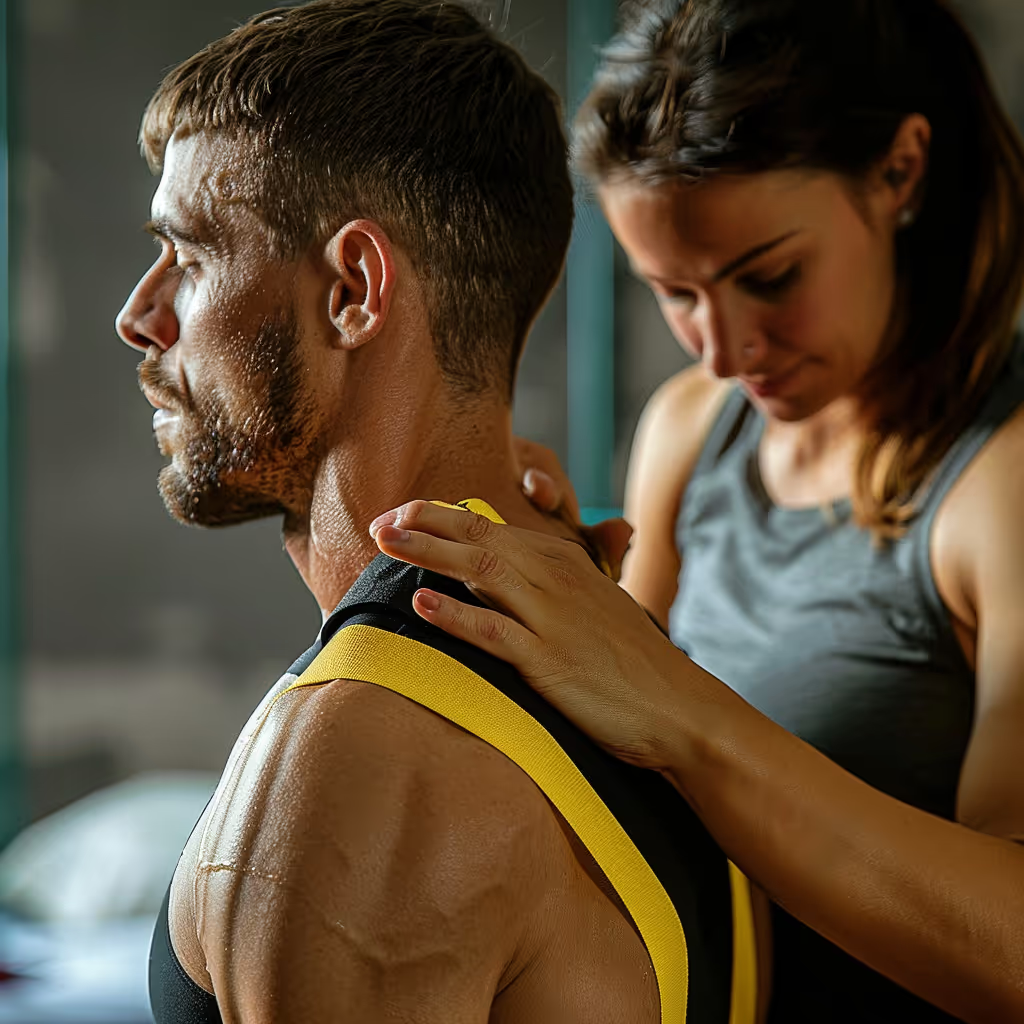
De Quervain's tenosynovitis
It is an inflammation of the fluid within the sheath of the tendons at the base of the thumb.
.png)
.png)
.png)




Synonyms for De Quervain's tenosynovitis:
- Thumb tendinitis
- Tendinitis at the base of the thumb
- Extensor tendinitis of the thumb
- Thumb Tendinopathy or De Quervain's Disease
What is De Quervain's tenosynovitis?
De Quervain's tenosynovitis is an irritation of the sheath surrounding the tendons at the base of the thumb. This sheath thickens, and the tendons do not glide as smoothly inside it, causing pain in the thumb and wrist.1
What is a tendon?
A tendon is the structure that attaches a muscle to a bone. When a muscle contracts, the tendon transmits its force to the bone to enable movement.2
The sheaths surrounding the tendons are called tendon sheaths. Repeated use of the thumb and wrist is often cited as a cause of irritation in these areas. However, research distinguishes between an observed association and a proven cause. A review found a link to certain types of manual labor, without establishing that they cause the condition3. A study comparing people with this condition to those with another wrist problem also found no evidence of more intense manual labor among the former4.
10 Quick Tips to Understand Your Pain
One tip a day for 10 days to help you better understand your pain. About a 2-minute read.
What causes De Quervain's tenosynovitis?
The exact causes of De Quervain’s tenosynovitis remain unclear. Repetitive movements, strenuous activity, certain injuries, and inflammatory conditions are among the factors discussed in clinical settings. These are not proven causes in every individual. One review, in particular, confirms the uncertainty regarding the causal role of work5. Furthermore, one study found no higher incidence of intense manual labor or trauma among affected individuals compared to the control group4.
What topics should be discussed during the evaluation?
- Repetitive movements of the wrist or thumb. One report describes a woman who developed symptoms after sending a lot of text messages, though it does not prove that texting was the cause6
- Overuse, meaning greater or more frequent strain on the wrist or thumb than usual
- A blow to or a fall on the thumb or wrist
- Inflammatory arthritis is a condition that causes inflammation in the joints. Certain forms, such as rheumatoid arthritis, can increase the likelihood of developing this thumb condition. See the AAOS information.
Irritation of the superficial radial nerve —a nerve branch that runs close to the skin on the thumb side—can cause pain similar to that of De Quervain’s tenosynovitis. This condition is among the other diagnoses to consider7. Read the article on arm neuralgia.
Which movements can become painful?
- A mother or father who frequently lifts their baby by bending the wrist may experience pain while doing so. De Quervain’s tenosynovitis is most commonly observed during pregnancy and after childbirth. However, lifting the baby has not been proven to be a cause. A study using wrist imaging describes the condition in mothers after childbirth, without testing this cause8, and a study comparing 63 affected mothers with 630 other mothers found no increased risk when the baby weighed more than 3.5 kg atbirth9, 8.
- Someone doing renovations may experience pain when they frequently use a hammer or sledgehammer.
What are the symptoms of De Quervain's tenosynovitis?
The main symptom of De Quervain's tenosynovitis is pain at the base of the thumb10, which usually develops gradually and may radiate toward the wrist or forearm.
The main symptoms are:
- Pain at the base of the thumb (may also be present at night)
- The pain may feel dull, tight, pulling, or burning.
- Pain that may extend to the wrist or forearm
- Loss of strength in the wrist and hand
- Difficulty performing the following actions:
- Opening a jar
- Picking up an object with an open hand
- Texting on a cell phone
- Holding a book for a long time
- To hold a child in your arms
- There may also be swelling at the base of the thumb11, and a sensation of rubbing or slight cracking when you move your thumb or wrist.
How is De Quervain's tenosynovitis diagnosed?
The diagnosis of De Quervain’s tenosynovitis is based on your description of your symptoms and an examination of your thumb and wrist. The healthcare provider will look for tender areas and swelling, and then examine the movements that trigger your pain.12, 1
A painful test alone is not enough to confirm this diagnosis. An X-ray or ultrasound may be helpful if another problem is suspected. Ultrasound produces images using sounds that are inaudible to the human ear. Read Allbrook’s clinical review.
When should you see a physical therapist for De Quervain's tenosynovitis?
You can see a physical therapist for De Quervain's tenosynovitis as soon as the pain at the base of your thumb persists or prevents you from performing your daily activities.
You can see a physical therapist for the symptoms described above or following an initial medical evaluation. Your physical therapist will also check to see if another condition might be causing the pain.
At a private clinic, you can see a physical therapist without a doctor’s referral. However, be sure to check your insurer’s requirements for reimbursement. If your condition requires medical care, your physical therapist will refer you to the appropriate department. See the OPPQ’s guidelines on access to care for more details.
What symptoms require urgent medical attention?
Seek emergency medical care immediately if you experience any of the following symptoms:
- Severe pain in the thumb, or pain that causes dizziness, nausea, or a feeling of faintness.
- A popping, cracking, or grinding sound at the moment of injury.
- An inability to move the thumb or hold objects.
- A thumb that changes shape or color.
- A loss of sensation in part or all of the hand.
These signs may indicate a fracture or another problem that requires prompt evaluation. Don’t wait for a physical therapy appointment. Check the NHS’s warning signs.
What are the physical therapy treatments for De Quervain's tenosynovitis?
Physical therapy may combine manual techniques for the wrist and thumb, exercises, and advice on how to adapt your activities if you have De Quervain's tenosynovitis.
Your physical therapist will perform an assessment to understand your difficulties, identify what triggers the pain, and examine the following:
- The range of motion in your joints
- Possible symptoms of nerve irritation and how they respond to arm movements
- Your usual positions at work or during your free time
- How you move during painful activities
- Your strength and your ability to control the movements of your wrist and thumb
Based on the results of the evaluation, your physical therapist may:
- Gently mobilize the joints and work the affected muscles to relieve pain and facilitate movement. Mobilizations are movements guided by the hands. Movements tailored to the nerves may be recommended if the examination reveals associated nerve irritation.
- To provide you with tailored exercises to do at home to restore comfortable movement and strengthen your thumb and wrist
- To help you adjust the duration, frequency, and intensity of your activities and hobbies based on your symptoms
- To suggest other ways to perform the actions that cause your pain.
What results do the exercises and manual techniques produce?
Exercises and certain manual techniques show promising results for pain and functional ability, but the studies remain small. A trial involving 28 people compared two manual techniques over a two-week period. Both groups showed improvement; mobilization combined with movements performed by the patient themselves yielded better results for pain and functional ability than small, repeated movements performed by the therapist. However, the trial did not include a control group. Read the study by Qadir and colleagues.
Another trial involving 28 people combined a splint—a device that restricts certain movements—with advice and exercises. Both groups, which performed thumb contractions with varying levels of effort, reported less pain and fewer difficulties with their daily activities. No clear difference emerged between these groups. The study does not allow for distinguishing the effect of the exercises from that of the other treatments. Read the study by McBain and colleagues.
What role do cortisone injections play?
A cortisone injection is a medical option for relieving De Quervain’s tenosynovitis. You can discuss its benefits and risks with a doctor.13, 14 A review of 30 studies recommends considering the injection in combination with a splint for three to four weeks as an initial treatment. In this review, the average additional improvement in activities with the splint is measurable but below the threshold considered clinically significant for patients14. Another review of 16 trials found greater success with the injection than with immobilization alone, and with the combination of both than with either one alone13.
The decision takes into account your pain, your activities, the treatments you’ve already tried, and your preferences. Physical therapy can be part of this plan or chosen when an injection isn’t appropriate. The benefits and risks of cortisone should be discussed before an injection15.
Repeated cortisone injections require a specific discussion of the risks to the tendon. A review of 50 studies—primarily in animals but also involving human tissue—found that these medications can reduce cell survival and proliferation. They can also decrease the production of collagen, a protein that forms strong fibers, and reduce the tendon’s ability to withstand forces. Results vary across studies15. These observations do not specify the exact risk of a single injection in a young person, nor that of repeated injections for De Quervain’s tenosynovitis15.
Tendon ruptures have been reported following cortisone injections. A review of these complications cannot accurately estimate their frequency16. Another review reports one tendon rupture among 991 people who received a corticosteroid—a drug in the cortisone family—in trials that tracked adverse effects17. This figure encompasses several tendon-related issues, not just De Quervain’s tenosynovitis. It therefore does not represent your personal risk. Laboratory observations of tendons also do not allow for this risk to be calculated15.
What can you do at home for De Quervain's tenosynovitis?
At home, you can avoid actions that worsen the pain, keep your thumb movements gentle, and gradually resume your activities.
- A splint—a device that restricts certain movements of the thumb and wrist—can provide temporary pain relief. Kinesiology taping—adhesive tape applied to support the area—can also be tried for comfort. A professional can show you how to apply it properly. Read the advice from the Wrightington, Wigan, and Leigh Therapy Service.
- If the pain wakes you up, try to keep your wrist and thumb in a comfortable position. A properly fitted splint can help at night.
- If sleeping with your arm behind your head or under your pillow increases the pain, change your position. Try keeping your arm at your side or propped up on a pillow.
In a review of seven studies—all of which had significant limitations—taping did not show a clear advantage over other treatments. This does not prove that it can never provide relief. Use it only if it helps you and if your skin tolerates it. Read the review on taping for De Quervain’s tenosynovitis.
What gentle exercise can you try?
You can gently bring the tip of your thumb toward the tip of each finger, without forcing it to the point of pain. Your physical therapist can adjust the number of repetitions and add strengthening exercises based on your tolerance. See the exercises in the therapy section.
Seek medical attention if your symptoms are limiting your activities, getting worse, recurring frequently, or not improving after two weeks of home care. Also have any tingling in your hand or pain in your thumb evaluated if you have diabetes. A loss of sensation or any other urgent sign described above requires immediate medical attention. Read the NHS’s advice on when to seek medical care.
Need professional advice?
Our physical therapists can assess your symptoms and provide you with a personalized treatment plan.
Make an appointmentSources
Links open in a new tab.
- Huisstede BM, Coert JH, Fridén J, Hoogvliet P, European HANDGUIDE Group. Consensus on a multidisciplinary treatment guideline for de Quervain's disease: results from the European HANDGUIDE study. Phys Ther. 2014;94(8):1095-110. (Back to sections: 1, 2)
- Lake SP, Snedeker JG, Wang VM, Awad H, Screen HRC, Thomopoulos S. Guidelines for ex vivo mechanical testing of tendons. J Orthop Res. 2023;41(10):2105-2113. (Back to section: 1)
- Stahl S, Vida D, Meisner C, Lotter O, Rothenberger J, Schaller HE, et al. Systematic review and meta-analysis on the work-related causes of de Quervain tenosynovitis: a critical appraisal of its recognition as an occupational disease. Plast Reconstr Surg. 2013;132(6):1479-1491. (Back to section: 1)
- Stahl S, Vida D, Meisner C, Stahl AS, Schaller HE, Held M. Work-related causes of de Quervain's tenosynovitis: a case-control study using prospectively collected data. BMC Musculoskeletal Disorders. 2015;16:126. (Back to sections: 1, 2)
- Ramchandani J, Thakker A, Tharmaraja T. Time to Reconsider Occupation-Induced De Quervain's Tenosynovitis: An Updated Review of Risk Factors. Orthop Rev (Pavia). 2022;14(4):36911. (Back to section: 1)
- Ashurst JV, Turco DA, Lieb BE. Tenosynovitis caused by texting: an emerging disease. J Am Osteopath Assoc. 2010;110(5):294-6. (Back to section: 1)
- Look N, Mcnulty M, Rodriguez-Fontan F, Fenoglio AK. Differential Diagnoses for Radial-Sided Wrist Pain: Presentation, Pathology, Diagnosis, and Management. Medicina (Buenos Aires). 2023;83(1):96-107. (Back to section: 1)
- Anderson SE, Steinbach LS, De Monaco D, Bonel HM, Hurtienne Y, Voegelin E. "Baby wrist": MRI of an overuse syndrome in mothers. AJR Am J Roentgenol. 2004;182(3):719-24. (Back to sections: 1, 2)
- Daglan E, Morgan S, Yechezkel M, Rutenberg TF, Shemesh S, Iordache SD, et al. Risk Factors Associated With de Quervain Tenosynovitis in Postpartum Women. Hand (N Y). 2024;19(4):643-647. (Back to section: 1)
- Allbrook V. “The side of my wrist hurts”: De Quervain’s tenosynovitis. Aust J Gen Pract. 2019;48(11):753-756. (Back to section: 1)
- Qadir W, Waheed A, Niazi R, Mahmood T, Awan IZ. Comparative short-term effects of oscillatory mobilization and Mulligan MWM on pain, disability, and range of motion among patients with De Quervain's tenosynovitis—a randomized clinical trial. J Man Manip Ther. 2026;34(3):208-216. (Back to section: 1)
- Shehab R, Mirabelli MH. Evaluation and diagnosis of wrist pain: a case-based approach. Am Fam Physician. 2013;87(8):568-73. (Back to section: 1)
- Cevik J, Keating N, Hornby A, Salehi O, Seth I, Rozen WM. Corticosteroid injection versus immobilization for the treatment of De Quervain's tenosynovitis: A systematic review and meta-analysis. Hand Surg Rehabil. 2024;43(3):101694. (Back to sections: 1, 2)
- Challoumas D, Ramasubbu R, Rooney E, Seymour-Jackson E, Putti A, Millar NL. Management of de Quervain Tenosynovitis: A Systematic Review and Network Meta-Analysis. JAMA Netw Open. 2023;6(10):e2337001. (Back to sections: 1, 2)
- Dean BJ, Lostis E, Oakley T, Rombach I, Morrey ME, Carr AJ. The risks and benefits of glucocorticoid treatment for tendinopathy: a systematic review of the effects of local glucocorticoids on tendons. Semin Arthritis Rheum. 2014;43(4):570-6. (Back to sections: 1, 2, 3, 4)
- Brinks A, Koes BW, Volkers AC, Verhaar JA, Bierma-Zeinstra SM. Adverse effects of extra-articular corticosteroid injections: a systematic review. BMC Musculoskeletal Disorders. 2010;11:206. (Back to section: 1)
- Coombes BK, Bisset L, Vicenzino B. Efficacy and safety of corticosteroid injections and other injections for the management of tendinopathy: a systematic review of randomized controlled trials. Lancet. 2010;376(9754):1751-67. (Back to section: 1)
.jpg)
.jpg)
.jpg)
Other conditions

Hip osteoarthritis is the normal wear and tear of the hip joint. It is often said that osteoarthritis is the wear and tear of the cartilage between our bones. That is true, but it involves more than just the cartilage. Cartilage is a tissue that acts as a cushion between the surfaces of our bones and allows our joints to glide smoothly and move fluidly.
This is normal wear and tear of the knee joint. It’s often said that osteoarthritis is the wearing down of the cartilage between our bones. That’s true, but it’s more than just the cartilage. Cartilage is a tissue that acts as a cushion between the surfaces of our bones and allows our joints to glide smoothly and move fluidly.
It is an inflammation of the subacromial bursa in the shoulder joint.
A bursa is a small, thin sac filled with fluid that is found in many of the body's joints. This small sac acts as a cushion within the joint and lubricates the structures that are subject to increased friction.
It is a tissue that surrounds the shoulder and helps keep the shoulder bone in place within the joint. The capsule helps keep the joint stable.
Neck pain is a general term used to describe pain in the neck that has no specific cause, such as an accident or a sudden awkward movement. Neck pain is therefore synonymous with “my neck hurts, and nothing in particular happened.”
In both types of injury, pain is felt in the neck and then radiates into the arm, or vice versa.
Make an appointment now
We offer a three-pronged quality assurance approach: optimized treatment time, a second opinion from a physical therapist, and ongoing expertise to ensure effective care tailored to your needs.
Customer satisfaction is our top priority
At Physioactif, excellence guides everything we do, but our patients are the best ones to tell you about it. Take a look at their verified reviews to get a real sense of their experience.









Discover our physical therapy clinics
We have locations in several areas to better serve you.
Blainville
190 Bas-de-Sainte-Thérèse Road, Suite 110,
Blainville, Quebec
J7B 1A7
Located in Blainville, near Rosemère, the Physioactif clinic is easily accessible to residents of the area and the surrounding communities
Boucherville
690 Rue de Montbrun, Suite S,
Boucherville, Quebec
J4B 8H2
Located in Boucherville, the Physioactif clinic is easily accessible to people in the area
Laval
3224 Jean-Béraud Ave., Suite 220, Laval,
QC H7T 2S4
Located in Chomedey, in the heart of Laval, the Physioactif clinic is easily accessible to people in the area
Montreal
8801 Lajeunesse Street,
Montreal,
QC H2M 1R8
Located in Ahuntsic, near Villeray, the Physioactif clinic is easily accessible to residents of both neighborhoods
Saint-Eustache
180 25th Avenue, Suite
201 Saint-Eustache
QC J7P 2V2
Located in Saint-Eustache, the Physioactif clinic is easily accessible to residents of the area and the surrounding communities
Vaudreuil
21 Cité-des-Jeunes Boulevard, Suite 240,
Vaudreuil-Dorion, Quebec
J7V 0N3
Located in Vaudreuil-Dorion, the Physioactif clinic is easily accessible to people in the area
Make an appointment now