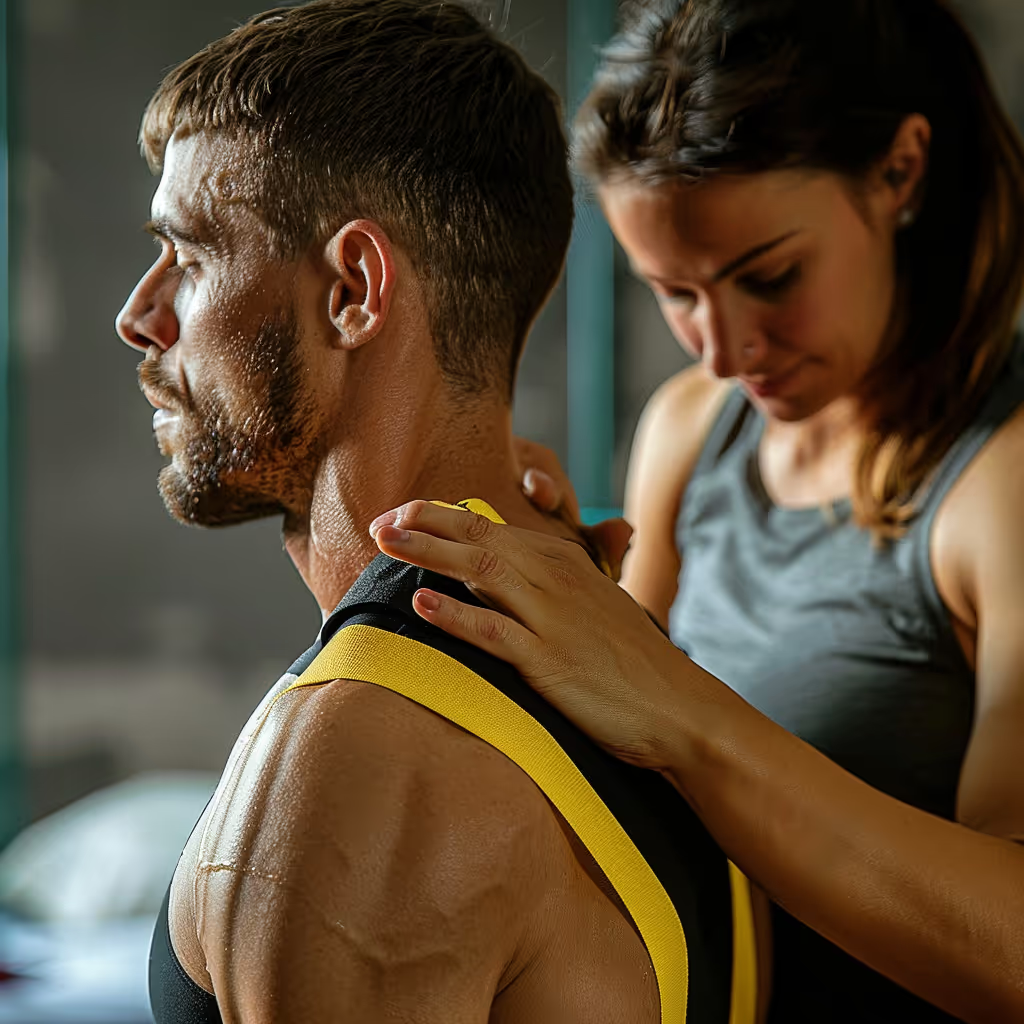
Physiotherapy for Nociceptive Pain: Treatment and Recovery
.png)
.png)
.png)




Should you be concerned about nociceptive pain after an injury?
Pain following an injury warrants urgent medical attention if it is accompanied by signs such as deformity or loss of sensation. Back pain accompanied by a new difficulty urinating also requires urgent care. Other situations depend on the injury and how it progresses. The section “When Should You See a Physical Therapist?” outlines the signs that require medical evaluation first.1, 2
A sprain, a sudden movement, or another injury can cause sudden pain. Moving the affected area may then become painful. This pain may be partly due to the nociceptive mechanism, explained below.3
Our physical therapists work with people who are living with pain. This experience may raise questions about the severity of the injury, the duration of symptoms, and a return to normal activities.
An example: lower back pain. Low back pain is pain located in the lower back. A review of its progression following a recent episode reports improvement, particularly during the first month. However, symptoms may persist or recur.4, 5 Care guidelines recommend, among other things, providing information and a return to normal activities when the situation allows.6
10 Quick Tips to Understand Your Pain
One tip a day for 10 days to help you better understand your pain. About a 2-minute read.
- The recommendation to stay active yields better results than bed rest for recent lower back pain. A fracture or other injury may require different precautions.7, 8
- Pain may cause you to protect a certain area. However, its intensity is not a direct measure of tissue damage.9, 10, 11
- Appropriate exercises can help alleviate pain and improve physical function in many conditions involving chronic pain. The benefits vary depending on the condition and the exercise program.12
- The physical therapist assesses symptoms, movements, and activities to determine the appropriate treatment. Several pain mechanisms may coexist.13, 14
This guide will help you understand what nociceptive pain is, how it is treated, and what you can expect during your recovery. For an overview of physiotherapy, consult our complete guide to physiotherapy.
What is nociceptive pain?
Nociceptive pain results from the activation of nerve endings that detect a threat to or damage to tissues such as the skin, muscles, or joints. These fine nerve endings are called nociceptors. The term distinguishes this mechanism from pain caused by a lesion or disease of the nervous system responsible for sensation.3
For a comprehensive overview of this type of pain, see our A Comprehensive Guide to Nociceptive Pain.Nociceptors respond, in particular, to intense pressure, dangerous temperatures, or substances released near an injury. During inflammation, certain substances can make these nerve endings more sensitive. Inflammation is the body’s defense and repair response.15, 16, 3
Nociception refers to the nervous system’s detection and processing of threats to body tissues. Nerve fibers called A-delta and C fibers transmit this information. A-delta fibers generally conduct it faster than C fibers. The information passes through the spinal cord, which relays messages between the body and the brain. The spinal cord is located within the vertebral column, the set of bones that support the back. The pain experienced depends on how this information is processed and on the context; it does not correspond to the activity of a single fiber.15, 17, 18, 11
Pain can help protect the body, even without accurately indicating the extent of an injury.10, 11, 3 Some people are born with a rare inability to feel pain. A study of six children from three families describes frequent cuts and fractures that were sometimes discovered late because they did not cause pain.19
It is important to distinguish nociceptive pain from other types of pain:
- Neuropathic pain is caused by damage to or a disease of the nervous system responsible for the body's sensations. Diabetes, for example, can damage nerves and cause this type of pain.20 Our page on neuropathic pain explains this mechanism.
- Nociplast pain refers to an alteration in nociception, without clear evidence that damage to other tissues or the nervous system accounts for the pain. This condition may coexist with a nociceptive component.21, 14, 3 Our page on nociplast pain explains the associated signs and treatment.
Nociceptive pain can accompany an injury, inflammation, or stress that threatens tissue. Relief and repair may proceed at different rates.3, 13
How to recognize nociceptive pain?Nociceptive pain may be located near an injured area and may change with movement or pressure. These clues guide the examination. The physical therapist interprets them collectively, since no single sign alone is sufficient to determine the mechanism.14
The assessment examines five aspects of pain: its location, its nature, its intensity, how it changes during activities, and its progression.
Precise localization: Nociceptive pain is often localized near the affected tissue. Pain felt elsewhere is still possible; localization alone does not confirm the mechanism.14
Nature of pain: Nociceptive pain can be sharp, dull, or felt as pressure. A burning sensation or an electric shock does not necessarily indicate neuropathic pain either: these sensations can overlap.14, 22
Intensity: Intensity depends, in particular, on nociception and the physical, emotional, and social context. Severe pain, therefore, is not a direct measure of the severity of an injury.10, 23
Behavior: The physical therapist assesses which movements, exertions, or weight-bearing positions affect the symptoms. This information helps in adapting activities.14
Progress: The physical therapist monitors changes in pain, strength, and movement. A lack of improvement or the onset of new symptoms may require a reevaluation.
| Characteristic | Nociceptive | Neuropathic | Nociplastic |
|---|---|---|---|
| Location | Often near the strained or injured tissue, sometimes farther away | Region corresponding to the affected nerve or part of the nervous system | Often a large area or several areas affected by persistent pain |
| Quality | Sharp pain, dull pain, or pain that feels like pressure | Burns or electrical shocks may occur, but are not guaranteed | A variety of sensations; touch or pressure can become abnormally painful |
| Progression | May subside as the body recovers, persist, or return | May persist or recur depending on the nerve injury or disease | The course of the condition is often variable; fatigue and sleep disturbances may accompany the pain |
| Mechanism | Activation of nociceptors by a threat or injury to non-nervous tissue | Injury or disease of the nervous system responsible for bodily sensations | Altered nociception without clear evidence of tissue or nerve damage to explain the pain |
These descriptions overlap; they are not a substitute for a physical examination.3, 20, 14, 24, 25 Pain that is persistent or recurrent for more than three months is considered chronic pain. The term “chronic” describes duration, while “nociceptive” describes a mechanism.26
What are the common causes of nociceptive pain?
Injuries, surgeries, and certain tissue disorders can cause nociceptive pain. For example, a sprain affects a ligament, a strong band of tissue that connects bones. However, several mechanisms can contribute to pain in the same person.13, 24, 1
The following examples illustrate situations that can activate nociceptors.
Traumas and Accidents- A fall can cause tissue damage.
- A car accident can cause whiplash—a sudden movement of the neck—or a contusion—a bruise resulting from an impact.
- An impact during sports can injure a part of the body.
- A cut or laceration—that is, a tear in the skin—can activate nociceptors.
- A sprain involves stretching or tearing a ligament, for example in the ankle, knee, or wrist.
- A muscle strain or tear affects the fibers of a muscle, which may be stretched or torn.
- A fracture is a break in a bone.
- A dislocation occurs when the bones in a joint lose their normal contact with one another.
A sports injury may involve a nociceptive component, sometimes along with other mechanisms. Our sports physical therapy department evaluates the condition, activities, and goals.
Problems with joints, tendons, and surrounding tissues- Osteoarthritis affects the joint, including the cartilage that covers the bone surfaces. Inflammatory forms of arthritis, such as rheumatoid arthritis, also cause pain and inflammation in the joints.
- Tendinopathy is a painful condition affecting a tendon, the structure that connects a muscle to a bone. The term “tendinitis” specifically refers to inflammation of a tendon.
- Bursitis is the inflammation of a small fluid-filled sac that reduces friction between tissues, such as inthe shoulder, hip, or knee.
- Plantar fasciitis affects the band of tissue under the foot that supports the arch. Despite its name, this condition is not always simply inflammation.
The terms “inflammatory pain,” “acute pain,” and “nociceptive pain” describe different aspects. “Acute” indicates recent pain; “inflammatory” refers to a reaction of the body; “nociceptive” describes the mechanism. Recent pain can be nociceptive, neuropathic, or mixed.13 Clinical criteria for nociceptive pain involving muscles and joints have been proposed for pain lasting longer than three months.25
Post-Surgical Conditions- An incision—that is, the cut made during surgery—can be painful.
- The tissues that have undergone surgery may remain sensitive while they heal.
- When resuming movement after surgery, you must follow the guidelines for protecting the tissues.
- Repetitive movements at work can put strain on the same tissues.
- A significant increase in training intensity can exceed the current capacity of a muscle or tendon.
- A posture maintained for a long time can affect symptoms without proving that tissue is damaged.
The evaluation takes into account the onset of symptoms, activities, the physical examination, and signs that require medical attention. The physical therapist also assesses strength and range of motion. This information guides treatment, even when a specific cause remains unclear.13, 14
How does physiotherapy treat nociceptive pain?
Physical therapy treats nociceptive pain through education, tailored exercises, activity modifications, and, in some cases, manual therapy. The physical therapist selects these treatments based on the specific problem, any medical restrictions, and your goals.13
The physical therapist identifies which components of pain may be involved: the affected tissues, the nerves, or altered information processing by the nervous system. The diagnosis, activities, and response to treatment round out this assessment. No single test can perfectly classify all types of pain.14, 13
Four possible components of treatment: 1. Manual TherapyManual therapy involves movements applied by the physical therapist to the joints and techniques such as massage. It can complement exercises to reduce pain or improve certain movements. The effects vary depending on the problem and do not prove that tissue has been realigned.27, 28, 29
2. Therapeutic ExercisesExercises are designed to improve movement, strength, or the ability to resume an activity. For several chronic pain conditions, studies report improvements in pain and physical function, generally ranging from small to moderate. Results vary, and the evidence in this review remains of low quality.30, 12
3. Physical ModalitiesHeat or cold can be used as comfort options in certain situations. The choice depends, among other things, on the injury, skin sensitivity, and your preference. A recent sprain is not necessarily treated the same way as back pain.1, 2, 31
4. EducationEducation helps you understand the problem, the signs to watch for, and ways to adapt your activities. A review focusing on adults with chronic muscle and joint pain reports that pain education can improve knowledge, reduce pain, and facilitate activities. It is not a substitute for an injury assessment.32 Our article on managing pain at home offers practical advice.
What are the goals of treatment?- The treatment is intended to reduce pain.
- The plan outlines a resumption of activities that is consistent with your restrictions.
- Exercises and certain treatments are designed to improve limited range of motion.
- Strength training is designed to improve the strength of the muscles that need it.
- The physical therapist discusses habits or limitations that can be adjusted.
- The goals take into account the activities you want to resume.
For low back pain with no specific identified cause, the guidelines recommend, among other things, continuing appropriate activities and using non-pharmacological treatments as appropriate.6 Physical therapy can also address muscle tension, stiffness, and loss of mobility.
What manual therapy techniques are used?
Manual therapy includes, among other things, joint mobilization, massage, and certain manipulations. The physical therapist explains the options, checks for any reasons to avoid them, and assesses their effect on your pain and range of motion.27, 33
Joint mobilizationJoint mobilization involves moving a joint using controlled, often repetitive movements. The physical therapist adjusts the direction and intensity based on the problem and your tolerance. The goals may include the following:
- The exercise is designed to improve range of motion, that is, the extent of a movement.
- The physical therapist compares the pain before and after the technique.
- This technique can make a movement that was previously limited or uncomfortable easier to perform.
- The physical therapist will check to see if this change helps you with your exercises or activities.
A 2025 review included 16 trials and 1,157 adults with neck pain of no specific cause. Mobilization techniques showed modest beneficial effects on pain and functional limitations compared with standard physical therapy, minimal interventions, or no treatment. The authors consider the average differences too small to be clinically significant and the evidence to be very uncertain. An increase in neck pain or headaches was occasionally reported.34
Soft Tissue MassageMassage involves applying pressure and movement to the muscles and surrounding tissues. It may be offered for comfort or as a complement to other activities. The results depend on the condition being treated:
- A review of lower back pain that has been present for several weeks or is persistent reports short-term relief compared to inactive interventions.35
- This review also reports a short-term improvement in physical abilities in this comparison. The evidence is of low or very low quality.35
- The physical therapist will assess your comfort and range of motion to determine whether the massage should remain part of your treatment plan.
A manipulation involves a brief, rapid movement with a small range of motion at a joint. A 2026 review compiled studies on spinal manipulations and mobilizations for chronic lower back pain. It found a slight improvement in physical function at one month compared with other conservative treatments—that is, treatments that do not involve surgery. The additional effect on pain is small. Adverse effects are insufficiently reported to rule out any risk.36 In Quebec, physical therapists must hold the required certification to perform manipulations. A neck manipulation also requires written consent after an explanation of the benefits, risks, and other options.33
Mechanisms of actionResearch has observed responses to manual therapy in various parts of the body. Their exact role in a person’s relief remains unclear:28, 27
- Near the treated area: changes may affect the activity of nerve endings and muscles.
- In the spinal cord: the way information about threats to tissues is processed may change.
- In the brain: Activity and communication between certain regions may change. A study of 24 people with exercise-induced back pain observed immediate changes, but did not demonstrate that these changes explained the relief.37
Manual therapy can be used in conjunction with exercises. A 2025 review focused primarily on chronic neck pain. After about four weeks, this combination may improve pain and physical function compared to no treatment. Compared to a sham treatment, it may improve physical function, but the difference in pain remains small or uncertain. The evidence is of low certainty.29
What role do therapeutic exercises play?
Therapeutic exercises are designed to improve movement, strength, and your ability to perform daily activities. The program takes into account the affected tissues and any limitations, such as those following a fracture or surgery.8, 12, 38
In a study on recent lower back pain, the recommendation to continue normal activities yielded better results than bed rest or prescribed exercises. This finding applies to this specific situation; it does not mean that the same exercises are appropriate for all injuries.39
Why adjust your movement during recovery?A tailored program helps you regain the movements you need for daily life. After an ankle sprain, for example, the care guide recommends exercises for mobility, strength, and balance.38
- Movement maintains abilities: the exercises target a specific challenge, such as bending the ankle or maintaining balance.38
- The progression is gentle on the body: the program gradually increases the level of exertion allowed, without exceeding the limitations imposed by a fracture, surgery, or other injury.
- The response after exercise guides the adjustment: the physical therapist takes into account the pain, swelling, and your ability to resume your activities.
- Rest serves a specific purpose: a region of the body may require temporary protection, while other activities remain possible. Prolonged bed rest is not routinely recommended for low back pain.7, 1, 2
The PEACE & LOVE framework summarizes the principles for managing soft-tissue injuries, such as those to muscles and ligaments. It is based on an editorial—a text containing reasoned recommendations—rather than a study validating the entire program.40
- The initial PEACE phase involves protecting the area, elevating the limb, discussing the use of anti-inflammatory medications—drugs that reduce inflammation—and understanding the injury. Proper compression involves supporting the area with an appropriate bandage. The authors recommend avoiding routine use of anti-inflammatory drugs; however, this recommendation should not cause you to stop taking a prescribed medication. A doctor or pharmacist can determine what is appropriate for your situation.40, 1
- The next phase, LOVE, recommends gradually increasing your activity level, maintaining realistic and encouraging expectations, resuming heart-healthy activities, and doing appropriate exercises.40
- Mobility exercises and gentle stretching are designed to maintain or improve the range of motion.
- Progressive strengthening is designed to improve muscle strength and control.
- Exercises related to your daily activities prepare you for specific movements, such as climbing stairs or resuming a sports activity.
A review found that bed rest is less effective than the recommendation to stay active for recent lower back pain. For sciatica—pain that follows the path of a nerve down the leg—there are little or no differences between these two recommendations. Bed rest is therefore not a routine strategy for these conditions.7
The physical therapist can adjust the number of repetitions, the resistance, or the duration of an exercise. You can describe to them what happens during exercise, after exercise, and during your daily activities.
A 2010 review reported modest benefits of exercise for chronic lower back pain, without demonstrating that any one type of exercise is clearly superior.41 A 2025 Cochrane review confirms that exercise can improve pain and physical function compared to no treatment or usual care in the short term. The choice of program should also take into account your abilities and preferences.42
What role do physical aspects play?
Physical modalities include methods such as heat, cold, and various devices. Heat and cold can be used to promote comfort in certain situations. Their use is not a substitute for exercise or necessary medical care.1, 2
TENS (Transcutaneous Electrical Nerve Stimulation)TENS, or transcutaneous electrical nerve stimulation, is a device that delivers a low-intensity electrical current through electrodes attached to the skin. The electrodes are small conductive pads connected to the device.43, 44
- The device allows you to adjust the electrical pulses sent to the skin.45
- Some models are portable; their use requires instructions tailored to the individual.
- The choice of treatment takes into account the evaluation and the activities the patient needs to resume.
Heat can provide comfort and help relax the area or reduce stiffness. For back pain, it can help relieve spasms—involuntary muscle contractions.2, 31
- The heat should remain gentle, without causing a burning sensation.
- Placing a towel between the heat source and your skin helps protect your skin; check it regularly.
- A recent, swollen sprain requires avoiding heat during the first few days. Back pain may require a different approach.1, 31
- Heat therapy does not promote the healing of a muscle, tendon, or other tissue.46
Cold can temporarily relieve pain from certain injuries or back pain. Use it as you see fit and according to the advice you've received.1, 2
- Cold temporarily alters sensations in the area. A towel should be placed between the cold pack and the skin.45, 31
- Application to a small bony area generally takes less time than application to a large muscular area. The hospital protocol recommends 10 to 15 minutes for the ankle and up to 20 minutes for the thigh, with skin checks every 5 minutes.31
In a trial, 60 adults with a recent muscle injury to the neck or back were given ibuprofen, followed by 30 minutes of heat or cold therapy. Pain improved slightly and to a similar extent in both groups. Since neither group received ibuprofen alone, it is not possible to isolate the specific effect of heat or cold. These 30 minutes were part of the study protocol, not a general recommendation for home use.47
Precautions: Do not apply ice to a wound or to an area with reduced sensitivity or circulation. Remove the ice if the skin becomes bluish, painful, and mottled, or very numb. Seek advice before using heat or cold if you have difficulty sensing temperature.31
Therapeutic ultrasound devices apply sound waves to the treatment area. They are not among the treatment options listed in this guide.48
How long does it take to recover from nociceptive pain?
Recovery from nociceptive pain can take a few days, several weeks, or longer, depending on the injury or illness. After a sprain or muscle injury, many people feel better after two weeks, while a severe injury may take months. Relief does not necessarily mean that the tissue has fully recovered.1
How do tissues repair themselves?
The healing process involves overlapping stages. After a skin wound, for example, a clot—a small mass of blood that has solidified—limits bleeding, and an inflammatory response begins. Cells then produce new tissue, which subsequently reorganizes itself. However, muscles, tendons, ligaments, and bones do not all heal at the same rate or in the same way.49
Start of Recovery- The professional assesses the injury and the movements that need to be restricted.
- Swelling, redness, and warmth are evaluated in conjunction with other signs; they alone are not sufficient to distinguish a normal reaction from a complication.
- The initial goals may be to protect the region and to rediscover simple, permissible actions.
- A splint—a device that supports a part of the body—may be necessary, depending on the injury. A walking aid or adjustments to daily activities may also be helpful.1
- The physical therapist selects the movements to work on based on the difficulties observed.
- The follow-up assesses pain and specific functional abilities, such as walking or raising one's arm.
- The exercises are scaled up as the patient's response and medical instructions allow.
- The physical therapist adjusts the duration, number of repetitions, or resistance to prepare for the next activities.
- Recovery depends on the steps to be taken, the strength required, and the restrictions that remain in place.
- The plan gradually increases the demands of work, leisure, or sports.
- The exercises can continue for any difficulties that persist.
- The date for resuming activities is determined based on these criteria; the disappearance of pain or a certain number of days is not always sufficient.
10 Quick Tips to Understand Your Pain
One tip a day for 10 days to help you better understand your pain. About a 2-minute read.
| Type of Injury | Useful Tip |
|---|---|
| Minor muscle strain or minor sprain | Improvement is often seen within about two weeks; however, this timeframe does not guarantee a complete recovery. |
| Sprain, in which grades 1 and 2 describe a mild or partial tear of the ligament | The recovery time varies depending on the severity of the injury and the activities involved. Severe sprains may take several months to heal. |
| After surgery | The recovery time depends on the type of tissue that was operated on, the procedure, and the surgeon's instructions. |
- The severity of the injury and the affected tissue influence the recovery plan.
- Age and health issues, such as diabetes or poor circulation, can affect the healing process.49
- Following the treatment plan allows us to tailor your care and exercises to your specific situation.
- The level of activity and the demands of daily life are taken into account.
- Stress, anxiety, and fear of movement can accompany pain. Certain characteristics are associated with persistent pain, though they do not, on their own, determine how your condition will progress.50
When to reevaluate: Pain that persists or recurs for more than three months is considered chronic.26 Pain that worsens or new symptoms require an earlier evaluation. If the difficulties persist, a specialized program for persistent pain may be discussed.
For recent low back pain, Pengel’s review reports a decline—particularly during the first month—in pain and activity limitations. This average prognosis does not predict the recovery time for a fracture, surgery, or any other nociceptive pain.4
When to consult a physiotherapist?
A physical therapy consultation is helpful when pain limits your activities, recurs regularly, or leaves you unsure about which movements to resume. A serious injury or a warning sign requires, first and foremost, medical advice appropriate to the urgency of the situation.1, 2, 51
Clear indications for consultation:- You can make an appointment if you're concerned about changes in your pain or if new symptoms appear.
- You can seek medical advice if the pain interferes with your work, leisure activities, or sleep.
- A consultation can help you resume your activities after a sports injury or accident, once you have received the necessary medical care.
- Physical therapy can support recovery after surgery, in accordance with the surgeon's instructions.
- Pain that recurs in the same spot warrants evaluation.
- A physical therapist can guide you when you're not sure how to manage your symptoms or adjust your activities.
- The evaluation clarifies the situation: the physical therapist assesses the symptoms, movements, and limitations.
- The discussion helps narrow down the options: you choose a plan that takes into account the problem, the goals, and your preferences.
- The plan outlines the activities: the physical therapist suggests specific adjustments to work, leisure activities, or exercises.
- The assessment may lead to a referral to another professional: certain signs may require a medical examination or other care.
Some symptoms require immediate attention, while others call for a medical consultation without waiting to see how an injury typically progresses. Do not try to determine on your own whether the pain is nociceptive before seeking medical attention.
- After a serious accident: Pain following a fall from a height or a major accident requires urgent evaluation. After an injury, deformity, a cracking sound heard at the time of the trauma, numbness or tingling in an area, or bluish, gray, or cold skin also warrant urgent care.1, 2
- Weakness or numbness: A rapidly progressing loss of strength requires urgent evaluation. If you have back pain accompanied by pain, tingling, weakness, or numbness in both legs, go to the emergency room.2, 52
- Nighttime or unusual pain: Back pain that does not improve with rest or worsens at night warrants a medical evaluation. Severe pain that begins suddenly or worsens rapidly requires urgent medical attention.2
- Urination, bowel movements, or genital sensitivity: Back pain, new difficulty urinating, loss of bladder or bowel control, or loss of sensation around the genitals or anus requires emergency care. A new change in sexual sensations, erections, or orgasms in this situation also requires emergency care.2
- Fever or general malaise: Back pain accompanied by a fever, chills, or general malaise requires urgent medical attention. Unexplained weight loss warrants a medical evaluation. After an injury, a high fever or a sensation of feeling hot, cold, or having chills also requires urgent medical attention.1, 2
Back pain accompanied by chest pain also requires emergency care. After an injury, severe or worsening pain, significant or increasing swelling or bruising, an inability to bear weight, or great difficulty moving require prompt medical attention. In an emergency, have someone drive you or call 911; do not drive yourself.1, 2
Physical therapists who are members of the Ordre professionnel de la physiothérapie du Québec (OPPQ) assess your physical difficulties and their impact on your daily activities. Their physical therapy diagnosis summarizes the issues identified to guide a tailored treatment plan. To find out what to expect during your first visit, read our article on how a physical therapy evaluation works.
Magnetic resonance imaging, or MRI, produces detailed images of the inside of the body. A study of 555 workers with recent low back pain who were on sick leave found that early, non-indicated MRI was associated with longer sick leave and higher medical costs. This observational study does not, on its own, prove that MRI causes these outcomes. Imaging remains indicated when a serious problem is suspected.53, 6
What sets Physioactif's approach apart?
At Physioactif, an assessment of your pain, range of motion, and daily activities guides the development of a plan tailored to your goals. The physical therapist discusses your options with you and adjusts your treatment based on your progress.
Thorough assessmentDuring your first visit, your physical therapist will assess four aspects of your condition:
- The physical therapist investigates possible pain mechanisms and how they may coexist.
- The physical therapist assesses factors related to movement, inflammation, and habits.
- The exam assesses what you can do and which activities are difficult for you.
- The discussion helps clarify the goals that matter to you.
The physical therapist will discuss treatment options, frequency, and exercise intensity with you. These decisions are guided by your limitations, preferences, and response to treatment.
- The choice of interventions takes into account the problem, possible mechanisms, and your goals.
- The physical therapist adjusts the intensity of manual techniques and exercises to suit your situation.
- Information about pain helps you understand your treatment and the signs to watch for.
- The plan provides you with ways to adapt certain activities and continue your exercises at home.
To better understand our approach, read our article on the Physioactif secret.
Our expertise- Our physical therapists are members of the Quebec Professional Order of Physical Therapy.
- Continuing education helps keep knowledge about pain up to date.
- Our clinics in the Greater Montreal area welcome you for an evaluation.
- Research findings, clinical experience, and your preferences guide decision-making.
- Your involvement guides your care: your observations and goals help shape the plan.
- Independence develops gradually: the plan provides you with tools to manage symptoms and reduce certain risks of recurrence—that is, of another episode—whenever possible.
- A return to daily activities remains the focus: your progress in the activities that are important to you guides our interventions.
Frequently Asked Questions about Nociceptive Pain
Frequently asked questions about nociceptive pain include those regarding rest, heat or cold, the number of sessions, exercises, the mechanisms of pain, the persistence of symptoms, and returning to sports.
Does complete rest help nociceptive pain?
Complete rest is not necessary for all nociceptive pain. An injury may require temporary protection; for recent low back pain, staying active generally yields better results than bed rest. Follow any restrictions given to you after a fracture or surgery.7, 1, 2
Is heat or cold more effective for nociceptive pain?
The choice between heat and cold depends mainly on the situation and your comfort. In a trial involving 60 adults with a recent muscle injury to the neck or back, both options, when used in combination with ibuprofen, resulted in a modest and similar improvement. However, in the case of a recent, swollen sprain, heat should be avoided during the first few days.47, 1
How many physiotherapy sessions are needed?
The number of sessions depends on the problem, the challenges you face in resuming your activities, and your progress. Your physical therapist will develop a plan with you and then reassess it. The term “nociceptive” alone is not enough to predict this number.
Is pain during exercise normal?
Pain during exercise should be interpreted based on the specific injury and the instructions received. Certain activities should not cause pain, while others may be modified if they cause tolerable discomfort. A marked worsening of symptoms—whether persistent or accompanied by new symptoms—requires stopping the exercise in question and seeking advice.40, 2, 38
What is the difference between nociceptive and neuropathic pain?
Nociceptive pain results from the activation of nociceptors by a threat to or damage to tissues such as the skin, muscles, or joints. Neuropathic pain results from a lesion or disease of the nervous system responsible for the body’s sensory input. The nature or location of the pain alone is not sufficient to distinguish between the two.3, 20, 14
Can physical therapy prevent chronic pain?
Physical therapy can address certain challenges and modifiable risk factors, but it does not guarantee that pain will go away before it becomes chronic. Research on the factors associated with chronic pain does not prove that modifying these factors prevents chronic pain altogether.50 For recurrent low back pain, a review finds that exercises following treatment reduce new episodes at one-year follow-up compared to no intervention. Preventing a recurrence and preventing the persistence of an episode are two different goals.54
Should I stop playing sports during my recovery?
It is not always necessary to stop sports entirely. The plan can replace a painful movement with an allowed activity and gradually increase the level of exertion. A fracture, surgery, or serious injury may require specific restrictions. The return to sports takes into account strength, movements, and the specific actions to be performed, in addition to pain.1, 38
How can I tell if my pain is nociceptive?
An assessment looks for a plausible link between the pain, the affected tissues, and the findings of the examination. The healthcare professional considers the onset of symptoms, tenderness, range of motion, and signs that suggest another problem. No single sign confirms that the pain is purely nociceptive.14
What should you know about physical therapy for nociceptive pain?
Physical therapy can help manage nociceptive pain and facilitate a return to activities through care tailored to your specific condition and goals. The treatment plan may combine education, exercises, and certain manual techniques.13, 29, 42
Pain remains an important indicator, but it does not accurately measure the severity of an injury or the extent of its healing. Progress is also tracked in terms of strength, movement, and activities.3, 11
The recovery time depends on the problem, other health issues, and the demands of daily activities. Severe pain at the onset, a significant fear of movement, or stress following a trauma may be associated with persistent pain. These factors do not reliably predict your prognosis.50
If the pain persists or limits your activities, our physical therapists can assess your condition and discuss a treatment plan with you. Follow-up visits allow us to adjust your care and seek a second opinion when necessary. Multiple pain mechanisms can coexist and evolve.14
Need professional advice?
Our physical therapists can assess your condition and provide you with a personalized treatment plan.
Make an appointmentReferences
Links open in a new tab.
- nhs.uk. Sprains and strains. 2017. (Back to sections: 1, 2, 3, 4, 5, 6, 7, 8, 9, 10, 11, 12, 13, 14, 15, 16, 17)
- nhs.uk. Back pain. 2017. (Back to sections: 1, 2, 3, 4, 5, 6, 7, 8, 9, 10, 11, 12, 13, 14, 15)
- International Association for the Study of Pain. Terminology. (Back to sections: 1, 2, 3, 4, 5, 6, 7, 8, 9)
- Pengel LH, Herbert RD, Maher CG, Refshauge KM. Acute low back pain: a systematic review of its prognosis. BMJ. 2003;327(7410):323. (Back to sections: 1, 2)
- Hartvigsen J, Hancock MJ, Kongsted A, Louw Q, Ferreira ML, Genevay S, et al. What low back pain is and why we need to pay attention. Lancet. 2018;391(10137):2356-2367. (Back to section: 1)
- Oliveira CB, Maher CG, Pinto RZ, Traeger AC, Lin CC, Chenot JF, et al. Clinical practice guidelines for the management of nonspecific low back pain in primary care: an updated overview. Eur Spine J. 2018;27(11):2791-2803. (Back to sections: 1, 2, 3)
- Hagen KB, Jamtvedt G, Hilde G, Winnem MF. The updated Cochrane review of bed rest for low back pain and sciatica. Spine (Phila Pa 1976). 2005;30(5):542-6. (Back to sections: 1, 2, 3, 4)
- National Institute for Health and Care Excellence. Rehabilitation after Traumatic Injury. NICE Guideline NG211. London: NICE; 2022. (Back to sections: 1, 2)
- St John Smith E. Advances in understanding nociception and neuropathic pain. J Neurol. 2018;265(2):231-238. (Back to section: 1)
- McHugh JM, McHugh WB. Pain: neuroanatomy, chemical mediators, and clinical implications. AACN Clin Issues. 2000;11(2):168-78. (Back to sections: 1, 2, 3)
- Raja SN, Carr DB, Cohen M, Finnerup NB, Flor H, Gibson S, et al. The revised International Association for the Study of Pain definition of pain: concepts, challenges, and compromises. Pain. 2020;161(9):1976-1982. (Back to sections: 1, 2, 3, 4)
- Geneen LJ, Moore RA, Clarke C, Martin D, Colvin LA, Smith BH. Physical activity and exercise for chronic pain in adults: an overview of Cochrane Reviews. Cochrane Database Syst Rev. 2017;4(4):CD011279. (Back to sections: 1, 2, 3)
- Chimenti RL, Frey-Law LA, Sluka KA. A Mechanism-Based Approach to Physical Therapist Management of Pain. Phys Ther. 2018;98(5):302-314. (Back to sections: 1, 2, 3, 4, 5, 6, 7, 8)
- Shraim MA, Massé-Alarie H, Hodges PW. Methods for distinguishing between mechanism-based categories of pain experienced in the musculoskeletal system: a systematic review. Pain. 2021;162(4):1007-1037. (Back to sections: 1, 2, 3, 4, 5, 6, 7, 8, 9, 10, 11, 12)
- Dubin AE, Patapoutian A. Nociceptors: the sensors of the pain pathway. J Clin Invest. 2010;120(11):3760-72. (Back to sections: 1, 2)
- Messlinger, K. [What is a nociceptor?]. Anaesthesist. 1997;46(2):142-53. (Back to section: 1)
- Woller SA, Eddinger KA, Corr M, Yaksh TL. An overview of pathways encoding nociception. Clin Exp Rheumatol. 2017;35 Suppl 107(5):40-46. (Back to section: 1)
- Armstrong SA, Herr MJ. Physiology, Nociception. [Updated May 1, 2023]. In: StatPearls [Internet]. Treasure Island (FL): StatPearls Publishing; 2026. (Back to section: 1)
- Cox JJ, Reimann F, Nicholas AK, Thornton G, Roberts E, Springell K, et al. An SCN9A channelopathy causes congenital inability to experience pain. Nature. 2006;444(7121):894-8. (Back to section: 1)
- Finnerup NB, Haroutounian S, Kamerman P, Baron R, Bennett DLH, Bouhassira D, et al. Neuropathic pain: an updated grading system for research and clinical practice. Pain. 2016;157(8):1599-1606. (Back to sections: 1, 2, 3)
- Misery L. Pruriplastic Itch—A Novel Pathogenic Concept in Chronic Pruritus. Front Med (Lausanne). 2020;7:615118. (Back to section: 1)
- Baron R, Binder A, Wasner G. Neuropathic pain: diagnosis, pathophysiological mechanisms, and treatment. Lancet Neurol. 2010;9(8):807-19. (Back to section: 1)
- McGrath PA. Psychological aspects of pain perception. Arch Oral Biol. 1994;39 Suppl:55S-62S. (Back to section: 1)
- Kaplan CM, Kelleher E, Irani A, Schrepf A, Clauw DJ, Harte SE. Deciphering nociplastic pain: clinical features, risk factors, and potential mechanisms. Nat Rev Neurol. 2024;20(6):347-363. (Back to sections: 1, 2)
- Kosek E, Clauw D, Nijs J, Baron R, Gilron I, Harris RE, et al. Chronic nociplastic pain affecting the musculoskeletal system: clinical criteria and grading system. Pain. 2021;162(11):2629-2634. (Back to sections: 1, 2)
- Treede RD, Rief W, Barke A, Aziz Q, Bennett MI, Benoliel R, et al. Chronic pain as a symptom or a disease: the IASP Classification of Chronic Pain for the International Classification of Diseases (ICD-11). Pain. 2019;160(1):19-27. (Back to sections: 1, 2)
- Keter DL, Bialosky JE, Brochetti K, Courtney CA, Funabashi M, Karas S, et al. The mechanisms of manual therapy: A living review of systematic, narrative, and scoping reviews. PLoS One. 2025;20(3):e0319586. (Back to sections: 1, 2, 3)
- Bialosky JE, Bishop MD, Price DD, Robinson ME, George SZ. The mechanisms of manual therapy in the treatment of musculoskeletal pain: a comprehensive model. Man Ther. 2009;14(5):531-8. (Back to sections: 1, 2)
- Chacko N, Gross AR, Miller J, Santaguida PL, Burnie SJ, Gelley GM, et al. Manual therapy with exercise for neck pain. Cochrane Database Syst Rev. 2025;12(12):CD011225. (Back to sections: 1, 2, 3)
- Geneen LJ, Moore RA, Clarke C, Martin D, Colvin LA, Smith BH. Physical activity and exercise for chronic pain in adults: an overview of Cochrane Reviews. Cochrane Database Syst Rev. 2017;1(1):CD011279. (Back to section: 1)
- Gloucestershire Hospitals NHS Foundation Trust. Ice and heat therapy. (Back to sections: 1, 2, 3, 4, 5, 6)
- Louw A, Zimney K, Puentedura EJ, Diener I. The efficacy of pain neuroscience education on musculoskeletal pain: A systematic review of the literature. Physiother Theory Pract. 2016;32(5):332-55. (Back to section: 1)
- OPPQ. Regulation Concerning a Training Program for Physical Therapists to Perform Spinal and Joint Manipulations. (Back to sections: 1, 2)
- Benetton A, Battista S, Bertoni G, Rossettini G, Maistrello LF. Effectiveness of Manual Joint Mobilization Techniques in the Treatment of Nonspecific Neck Pain: A Systematic Review with Meta-Analysis and Meta-Regression of Randomized Controlled Trials. J Orthop Sports Phys Ther. 2025;55(3):1-20. (Back to section: 1)
- Furlan AD, Giraldo M, Baskwill A, Irvin E, Imamura M. Massage for low-back pain. Cochrane Database Syst Rev. 2015;2015(9):CD001929. (Back to sections: 1, 2)
- de Zoete A, Innocenti T, Petrozzi MJ, van Middelkoop M, Assendelft WJ, de Boer MR, et al. Spinal manipulative therapy for adults with chronic low back pain. Cochrane Database Syst Rev. 2026;1(1):CD008112. (Back to section: 1)
- Gay CW, Robinson ME, George SZ, Perlstein WM, Bishop MD. Immediate changes in resting-state functional connectivity following manual therapy, as measured by functional magnetic resonance imaging, in participants with induced low back pain. J Manipulative Physiol Ther. 2014;37(9):614-27. (Back to section: 1)
- Martin RL, Davenport TE, Fraser JJ, Sawdon-Bea J, Carcia CR, Carroll LA, et al. Ankle Stability and Movement Coordination Impairments: Lateral Ankle Ligament Sprains (2021 Revision). J Orthop Sports Phys Ther. 2021;51(4):CPG1-CPG80. (Back to sections: 1, 2, 3, 4, 5)
- Malmivaara A, Häkkinen U, Aro T, Heinrichs ML, Koskenniemi L, Kuosma E, et al. The treatment of acute low back pain—bed rest, exercises, or ordinary activity? N Engl J Med. 1995;332(6):351-5. (Back to section: 1)
- Dubois B, Esculier JF. Soft-tissue injuries simply need PEACE and LOVE. Br J Sports Med. 2020;54(2):72-73. (Back to sections: 1, 2, 3, 4)
- van Middelkoop M, Rubinstein SM, Verhagen AP, Ostelo RW, Koes BW, van Tulder MW. Exercise therapy for chronic nonspecific low-back pain. Best Pract Res Clin Rheumatol. 2010;24(2):193-204. (Back to section: 1)
- Rizzo RR, Cashin AG, Wand BM, Ferraro MC, Sharma S, Lee H, et al. Non-pharmacological and non-surgical treatments for low back pain in adults: an overview of Cochrane reviews. Cochrane Database Syst Rev. 2025;3(3):CD014691. (Back to sections: 1, 2)
- Gibson W, Wand BM, Meads C, Catley MJ, O'Connell NE. Transcutaneous electrical nerve stimulation (TENS) for chronic pain—an overview of Cochrane Reviews. Cochrane Database Syst Rev. 2019;2(2):CD011890. (Back to section: 1)
- Johnson MI, Paley CA, Howe TE, Sluka KA. Transcutaneous electrical nerve stimulation for acute pain. Cochrane Database Syst Rev. 2015;2015(6):CD006142. (Back to section: 1)
- Shi Y, Wu W. Multimodal, non-invasive, non-pharmacological therapies for chronic pain: mechanisms and progress. BMC Med. 2023;21(1):372. (Back to sections: 1, 2)
- Physiopedia. Thermotherapy. (Back to section: 1)
- Garra G, Singer AJ, Leno R, Taira BR, Gupta N, Mathaikutty B, et al. Heat or cold packs for neck and back strain: a randomized controlled trial of efficacy. Acad Emerg Med. 2010;17(5):484-9. (Back to sections: 1, 2)
- Ebadi S, Henschke N, Forogh B, Nakhostin Ansari N, van Tulder MW, Babaei-Ghazani A, et al. Therapeutic ultrasound for chronic low back pain. Cochrane Database Syst Rev. 2020;7(7):CD009169. (Back to section 1)
- Eming SA, Martin P, Tomic-Canic M. Wound repair and regeneration: mechanisms, signaling, and translation. Sci Transl Med. 2014;6(265):265sr6. (Back to sections: 1, 2)
- Alkassabi O, Voogt L, Andrews P, Alhowimel A, Nijs J, Alsobayel H. Risk Factors for Persistent Pain Following Musculoskeletal Injuries: A Systematic Literature Review. Int J Environ Res Public Health. 2022;19(15). (Back to sections: 1, 2, 3)
- OPPQ. How does it work? (Back to section: 1)
- Cambridge University Hospitals. Back pain. (Back to section: 1)
- Webster BS, Bauer AZ, Choi Y, Cifuentes M, Pransky GS. Iatrogenic consequences of early magnetic resonance imaging in acute, work-related, disabling low back pain. Spine (Phila Pa 1976). 2013;38(22):1939-46. (Back to section: 1)
- Choi BK, Verbeek JH, Tam WW, Jiang JY. Exercises for the prevention of recurrent low back pain. Cochrane Database Syst Rev. 2010;2010(1):CD006555. (Back to section: 1)
- Is Physical Therapy Effective in 2026? Success Rates, Research, and Benefits.
Videos in this category
Other conditions

Hip osteoarthritis is the normal wear and tear of the hip joint. It is often said that osteoarthritis is the wear and tear of the cartilage between our bones. That is true, but it involves more than just the cartilage. Cartilage is a tissue that acts as a cushion between the surfaces of our bones and allows our joints to glide smoothly and move fluidly.
This is normal wear and tear of the knee joint. It’s often said that osteoarthritis is the wearing down of the cartilage between our bones. That’s true, but it’s more than just the cartilage. Cartilage is a tissue that acts as a cushion between the surfaces of our bones and allows our joints to glide smoothly and move fluidly.
It is an inflammation of the subacromial bursa in the shoulder joint.
A bursa is a small, thin sac filled with fluid that is found in many of the body's joints. This small sac acts as a cushion within the joint and lubricates the structures that are subject to increased friction.
It is a tissue that surrounds the shoulder and helps keep the shoulder bone in place within the joint. The capsule helps keep the joint stable.
Neck pain is a general term used to describe pain in the neck that has no specific cause, such as an accident or a sudden awkward movement. Neck pain is therefore synonymous with “my neck hurts, and nothing in particular happened.”
In both types of injury, pain is felt in the neck and then radiates into the arm, or vice versa.
Make an appointment now
We offer a three-pronged quality assurance approach: optimized treatment time, a second opinion from a physical therapist, and ongoing expertise to ensure effective care tailored to your needs.

Customer satisfaction is our top priority
At Physioactif, excellence guides everything we do, but our patients are the best ones to tell you about it. Take a look at their verified reviews to get a real sense of their experience.










Discover our physical therapy clinics
We have locations in several areas to better serve you.
Blainville
190 Bas-de-Sainte-Thérèse Road, Suite 110,
Blainville, Quebec
J7B 1A7
Located in Blainville, near Rosemère, the Physioactif clinic is easily accessible to residents of the area and the surrounding communities
Boucherville
690 Rue de Montbrun, Suite S,
Boucherville, Quebec
J4B 8H2
Located in Boucherville, the Physioactif clinic is easily accessible to people in the area
Laval
3224 Jean-Béraud Ave., Suite 220, Laval,
QC H7T 2S4
Located in Chomedey, in the heart of Laval, the Physioactif clinic is easily accessible to people in the area
Montreal
8801 Lajeunesse Street,
Montreal,
QC H2M 1R8
Located in Ahuntsic, near Villeray, the Physioactif clinic is easily accessible to residents of both neighborhoods
Saint-Eustache
180 25th Avenue, Suite
201 Saint-Eustache
QC J7P 2V2
Located in Saint-Eustache, the Physioactif clinic is easily accessible to residents of the area and the surrounding communities
Vaudreuil
21 Cité-des-Jeunes Boulevard, Suite 240,
Vaudreuil-Dorion, Quebec
J7V 0N3
Located in Vaudreuil-Dorion, the Physioactif clinic is easily accessible to people in the area
Make an appointment now