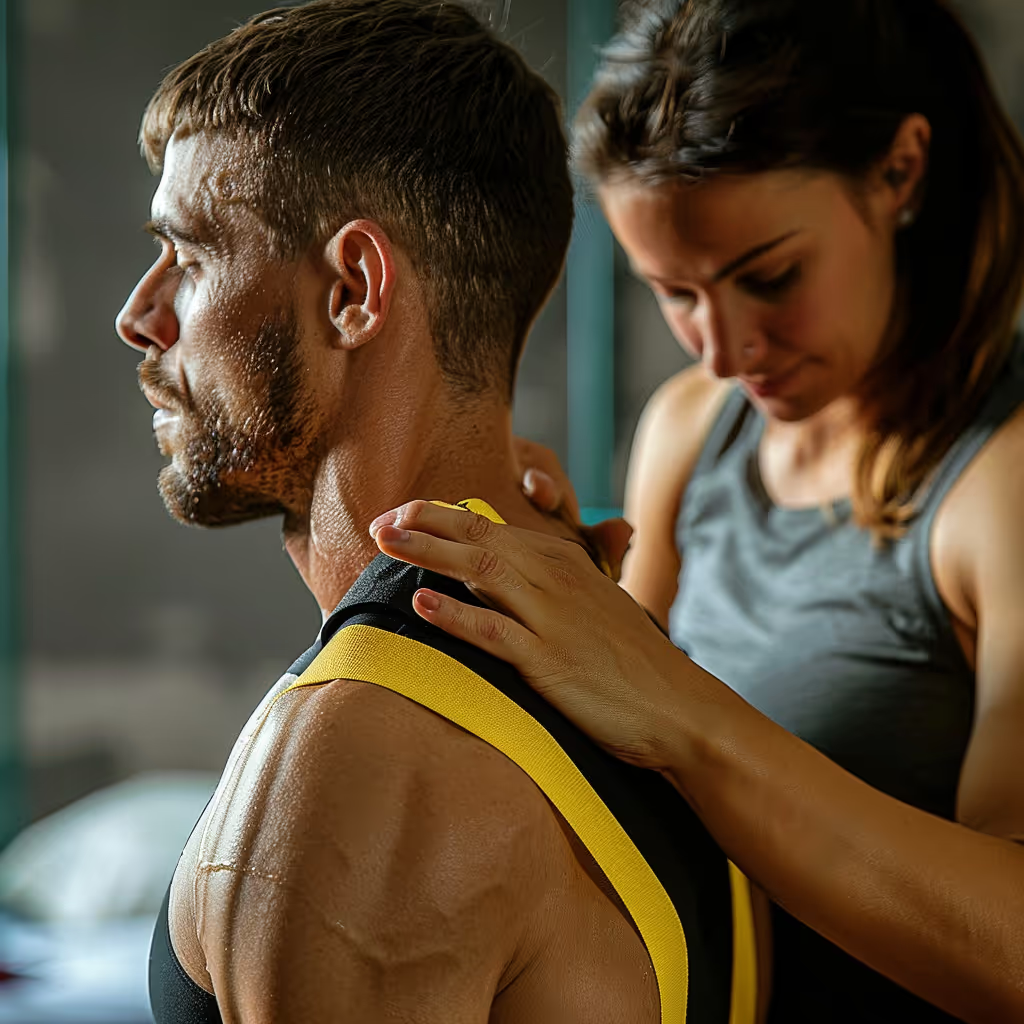
Physiotherapy for Muscle Pain
.png)
.png)
.png)



Muscle pain limits your daily activities. You might wonder if your condition will resolve on its own or if professional treatment could speed up your recovery.
As physiotherapists specializing in musculoskeletal pain, we regularly help patients with muscle strains, chronic tension, and trigger points (painful muscle knots). Therapeutic exercise and manual techniques offer lasting results.
This guide explains how physiotherapy treats muscle pain, what happens during a first session, and the recovery time based on your condition.
What is physiotherapy for muscle pain?
Physiotherapy for muscle pain combines personalized assessment, therapeutic exercises, manual techniques, and education. The goal? To reduce your pain, restore muscle function, and prevent recurrence.
Unlike passive treatments such as medication or injections, you actively participate in your recovery. Your physiotherapist becomes a partner who guides you through a tailored program.
Exercise remains the most scientifically documented intervention. This combination strengthens weakened muscles, improves mobility, and reduces excessive sensitivity of the nervous system.
For an overview of the discipline, consult our guide to physiotherapy.
What muscle conditions does physiotherapy treat?
Physiotherapy effectively treats muscle strains, chronic tension, trigger points, severe muscle soreness, recurrent cramps, and generalized pain.
How are muscle strains and pulls treated?
A muscle strain is a tear in muscle fibers, classified from grade 1 to 3. It's like the strands of a cable breaking.
The apparent severity of a muscle strain is not a reliable predictor of the risk of recurrence. Even a strain that seems mild warrants caution: it’s best to make sure the area is no longer tender before resuming high-intensity activity.
The good news? It’s still possible to re-injure yourself after a muscle strain, especially if you return to high-intensity activity too quickly. A gradual return to activity, focused on controlling your movements before increasing intensity, is designed precisely to reduce this risk. A program that includes eccentric exercises can cut your recovery time inhalf.²
| Grade | Description | Recovery |
|---|---|---|
| Grade 1 | Overstretching with minimal fiber damage | Recovery usually takes a few weeks, but the exact duration varies greatly from person to person and is difficult to predict. |
| Grade 2 | Significant partial tear | Recovery takes longer than for a Grade 1 tear, and there is no set timeframe: it depends on the extent of the tear and the response to treatment. |
| Grade 3 | Complete tear (surgical intervention possible) | 3-6 months |
The most commonly affected muscles include the hamstrings, quadriceps, calves, and adductors. A history of injury increases the risk of recurrence by 2.7 times3.
Among athletes monitored after suffering a hamstring strain, about 80% regained their full performance within 2 weeks. Those who had lost a significant portion of their range of motion at the knee recovered more slowly.
How are chronic muscle tensions relieved?
Manual techniques combined with corrective exercises relieve chronic tension. Common areas include the neck, shoulders, and back. Treatment identifies the factors contributing to your pain: posture, stress, and movement habits.
Stress and mental tension can contribute to persistent muscle pain. When this is the case, treating the muscle alone is not enough: these factors must also be taken into account for the treatment to be effective.
Musculoskeletal pain is an extremely common complaint across all ages and cultures. It is often linked to posture, stress, or movement patterns. Desk work, prolonged static postures, and chronic stress contribute to its prevalence. Rest assured, it responds well to treatment.
How are trigger points deactivated?
Trigger points are hypersensitive areas in your muscles that sometimes cause pain elsewhere. This phenomenon is called referred pain.
A trigger point—that small, tender knot in a muscle—doesn't always cause pain only where it is located. It can also cause pain felt at a distance, either when pressure is applied or on its own. That's why back or shoulder pain sometimes originates in a neighboring muscle.
How to recognize them? Three main signs: pinpoint tenderness (96.9% of cases), referred pain (73.6%), and local twitch response (48.8%)4.
| Technique | How it works |
|---|---|
| Ischemic compression | Sustained pressure for 30-90 seconds that interrupts the contraction cycle |
| Targeted stretches | Progressive lengthening of the affected muscle |
| Positional release | Muscle placed in a shortened position to reduce tension |
How to speed up recovery from severe muscle soreness?
Severe muscle soreness appears 24 to 72 hours after unusual exercise and generally disappears within 3 to 5 days.
Therapeutic massage significantly reduces pain at 24, 48, and 72 hours5. Light exercise also helps by increasing blood circulation.
To better understand the causes of your pain, consult our complete guide to muscle pain.
10 Quick Tips to Understand Your Pain
The ones that have made the biggest difference in my patients' lives. 1 a day, 2 minutes.
How does physiotherapy help treat muscle pain?
Physiotherapy relaxes your tight muscles, gradually strengthens weakened muscles, and improves your mobility. It also recalibrates the sensitivity of your nervous system and teaches you how to manage your condition independently.
How to relieve muscle tension?
Soft-tissue work, such as therapeutic massage, can provide short-term relief from pain. It prepares the body for the real work: restoring its tolerance for movement through progressive exercises.
How does progressive strengthening help healing?
Eccentric exercises are particularly effective for rehabilitation. For example, walking down stairs works your thighs eccentrically, meaning the muscle lengthens while contracting. These exercises add contractile units in series within the muscle, making it more resistant to future injuries6.
Recommended progression: Increase the volume gradually. Monitor the response within 24 hours. This gradual approach helps prevent relapses.
How does physiotherapy reduce nervous system sensitivity?
Your nervous system can become hypersensitive to normal signals. It's like a smoke alarm going off when you're toasting bread.
Therapeutic exercise recalibrates this sensitivity by sending positive signals to your brain. Pain education reduces the fear of movement that often perpetuates the pain cycle.
What does a first physiotherapy session for muscle pain involve?
The first session lasts 45 to 60 minutes and includes a detailed interview, a complete physical examination, a physiotherapy diagnosis, and a personalized treatment plan.
How to prepare before your appointment?
Arrive 10 to 15 minutes early to complete the forms. Wear comfortable clothing that allows access to the painful area. Bring your recent test results and your medication list.
What does the physical examination include?
| Component | What we observe |
|---|---|
| Observation | Posture, swelling, discoloration |
| Palpation | Tight areas, trigger points, muscle tears |
| Mobility tests | Joint range of motion, muscle flexibility |
| Strength tests | Affected and surrounding muscles |
| Functional Tests | Running, jumping, changes of direction (for athletes) |
The goal? To identify the structures causing your pain and understand the injury mechanism to guide rehabilitation.
What treatment techniques are used for muscle pain?
Techniques include therapeutic exercises, manual soft tissue therapy, trigger point therapy, and complementary modalities like heat and cold.
How do therapeutic exercises work?
Exercise is the most scientifically studied intervention for muscle pain7. Studies show favorable effects on pain reduction and improvement of physical function.
Exercise helps relieve muscle pain, and the effect is more pronounced when stretching and strength training are combined rather than when either is done alone.
| Type of exercise | How it helps |
|---|---|
| Strengthening | Progression from simple to challenging. Eccentric exercises for muscle strains. |
| Stretches | Maintaining and improving flexibility |
| Motor control | Coordination, relearning normal movements |
| Aerobics | Walking, cycling, swimming to increase blood flow |
How does manual soft tissue therapy work?
Therapeutic massage relaxes your muscles and temporarily improves circulation. Soft-tissue work can provide short-term relief from pain; it sets the stage for the real work—restoring the body’s tolerance for movement through progressive exercises.
How does trigger point therapy work?
Ischemic compression applies 30 to 90 seconds of pressure to the trigger point, interrupting the contraction cycle.
To relieve trigger point pain in the short term, medical journals consider subcutaneous needling to be the first-line treatment. Manual therapy is a valid alternative, particularly useful when the patient is afraid of needles. The demonstrated effect is primarily short-term.
Dry needling is not a treatment offered at Physioactif. It is essentially a form of symptom relief—much like a massage performed with needles rather than hands. It may help some people, but we prefer approaches that we believe are more effective in bringing about lasting change.
How do complementary modalities work?
Heat relaxes muscles and increases circulation, which is ideal for chronic tension. Cold reduces inflammation and numbs pain, perfect for acute injuries.
Need professional advice?
Our physical therapists can assess your condition and provide you with a personalized treatment plan.
Make an appointmentHow many sessions does it take to see results?
Most patients notice an improvement after 2 to 4 sessions. Grade 1: excessive stretching with minimal fiber damage. Recovery usually takes a few weeks, but the exact duration varies greatly from person to person and is difficult to predict. Grade 2: more extensive partial fiber tear. Recovery takes longer than for a Grade 1 tear, with no set timeframe: it depends on the extent of the tear and the response to treatment. Chronic strain may require gradual treatment.
| Condition | Typical duration |
|---|---|
| Grade 1 muscle strain | Recovery usually takes a few weeks, but the exact duration varies greatly from person to person and is difficult to predict. |
| Grade 2 muscle strain | Recovery takes longer than for a Grade 1 tear, and there is no set timeframe: it depends on the extent of the tear and the response to treatment. |
| Chronic tension | Chronic tension does not follow a set schedule. Treatment is a gradual process, but its duration varies greatly from person to person: some tension subsides quickly, while other tension persists for a long time. |
| Trigger points | Trigger points are unpredictable. Some subside within a few days or weeks, while others persist for much longer. There is no set timeframe. |
| Generalized pain | 8-16+ weeks |
Frequency by phase:
The frequency of sessions does not follow a fixed schedule. They are more frequent at the beginning, when the pain is severe, and then become less frequent as function returns, depending on each person's response.
What exercises are recommended for muscle pain?
Recommended exercises include progressive strengthening, targeted stretches, and low-impact aerobic activities. Eccentric exercises are particularly effective.
What exercises are good for muscle strains?
The progression for treating a muscle strain follows 4 phases:
- Phase 1 (Days 1-5): gentle isometric exercises (contraction without movement), mobility of adjacent joints
- Phase 2 (Days 5-14): concentric exercises, progressive range of motion
- Phase 3 (Weeks 2-4): progressive eccentric exercises, more intense strengthening
- Phase 4 (Weeks 4+): functional exercises specific to your sport or activity
There is no treatment that is guaranteed to speed up recovery from a muscle strain. A review of the literature on hamstring injuries concludes that the effectiveness of common treatments has not been established due to a lack of sufficient research. The most helpful approach remains a gradual and carefully managed return to activity.
What exercises are good for chronic tension?
For neck, shoulder, and upper back tension: trapezius stretches, deep neck muscle strengthening, posture exercises, and chin tucks.
For lower back tension: hip flexor stretches, core muscle strengthening with stabilization exercises, lumbar mobility exercises, and regular walking.
How to prevent recurring muscle pain?
To prevent muscle injuries, focus on a proper warm-up, gradual progression, and maintaining strength and flexibility. A proper warm-up reduces the risk of injury by one-third. The well-known “10% rule”—which advises against increasing training load by more than 10% per week—is not supported by the data. A systematic review of runners concludes that this advice is too simplistic and should not be recommended as is. Increase your training load gradually, then monitor how your body responds in the hours and days following your workout.
A good warm-up really does reduce the risk of injury. And this warm-up doesn't need to include stretching: stretching before exercise doesn't prevent muscle strains.
An often-overlooked criterion for returning to sport: wait until the muscle is no longer sensitive to pressure, not just to use. This sensitivity can persist 2 to 4 weeks after the muscle appears functional9. Returning too soon quadruples the risk of re-injury10.
A reliable guideline for returning to sports: wait until the injured area is no longer tender to pressure—not just during exercise. Athletes who return to sports while their strain is still tender to the touch are nearly four times more likely to re-injure themselves within the following year.
A simple rule of thumb for a leg strain: if it takes more than a day to walk again without pain, expect at least two weeks of recovery.
What sets Physioactif apart for muscle pain treatment
Physioactif provides a comprehensive assessment that goes beyond the painful muscle. Our team creates a personalized plan based on your goals. Our physical therapists are skilled in a variety of techniques, including manual therapy, targeted exercises, and pain education.
Our approach examines your entire body to identify all factors contributing to your pain. Whether you are an athlete or an office worker, your program will be tailored to your specific needs.
Discover all our physiotherapy services and our therapeutic approaches.
How to book an appointment for an assessment?
You do not need a medical referral to consult a physiotherapist in Quebec. Book an appointment online or by phone. Our team will guide you to the physiotherapist best suited for your condition.
Frequently asked questions about physiotherapy for muscle pain
Can physiotherapy really help a strained muscle?Yes, and the evidence is strong. A program that includes eccentric exercises can cut recovery time in half.
How long after a muscle strain can I return to sports?Grade 1: Recovery usually takes a few weeks, but the exact duration varies greatly from person to person and is difficult to predict. Grade 2: Recovery takes longer than for a Grade 1 tear, with no set duration: it depends on the extent of the tear and the response to treatment. Wait until the muscle is no longer tender to pressure, not just when used. Returning to activity too soon quadruples the risk of re-injury.
Are massages really effective?To a certain extent. Therapeutic massage can temporarily alter tissue tone and provide short-term relief, without causing any lasting mechanical changes to the tissues. The effects are often temporary unless combined with exercise.
What is dry needling?Dry needling involves inserting a fine needle into a trigger point to induce a muscle relaxation reflex. This technique is not offered at Physioactif: we consider it primarily a form of symptom relief, comparable to a massage performed with needles. Some people find it helpful, but we prefer approaches that we believe are more effective for lasting change.
Is it normal to feel more pain after a session?A slight increase in pain within 24 hours can be normal, especially at the beginning of treatment. If the pain increases significantly or lasts more than 48 hours, speak to your physiotherapist.
Can I exercise with muscle soreness?Yes. Light exercise can even speed up recovery by increasing blood circulation. Avoid intensely straining the same muscles before full recovery.
Do I need a medical referral?No. In Quebec, you have direct access to physiotherapists. If your condition requires examinations or a medical diagnosis, your physiotherapist will refer you to the appropriate professional.
What's the difference between physiotherapy and massage therapy?Physiotherapy offers a comprehensive approach: assessment, exercises, manual techniques, and education. A physiotherapist can provide a physiotherapy diagnosis and create a complete rehabilitation plan. Massage therapy focuses on manual techniques. Both are complementary.
References
- Orchard JW, et al. Hamstring injuries in professional Australian Rules footballers. Med J Aust. 2013;199(4):220-221.
- Askling CM, et al. Eccentric training in athletic rehabilitation. Int J Sports Phys Ther. 2013;8(3):228-236. PMC3105370.
- Green B, et al. Recurrent hamstring injuries in sport. Br J Sports Med. 2020;54(18):1089-1094.
- Fernández-de-las-Peñas C, et al. Prevalence of myofascial pain syndrome in chronic non-specific neck pain. Clin J Pain. 2020;36(9):669-675. PMID 32841969.
- Guo J, et al. Massage for DOMS: systematic review and meta-analysis. J Bodyw Mov Ther. 2017;21(4):960-970. PMC5623674.
- O'Sullivan K, et al. The effect of eccentric training on muscle architecture. Sports Med. 2012;42(3):239-249. PMID 24736013.
- Geneen LJ, et al. Physical activity and exercise for chronic pain. Cochrane Database Syst Rev. 2017;4:CD011279. PMC5461882.
- Liu L, et al. Dry needling for myofascial pain syndrome: systematic review. Am J Phys Med Rehabil. 2020;99(9):812-821. PMID 33066556.
- Tol JL, et al. A clinical prediction rule for hamstring injury in elite football. J Sci Med Sport. 2014;17(1):67-71.
- Heiderscheit BC, et al. Hamstring strain injuries: recommendations for diagnosis, rehabilitation, and injury prevention. J Orthop Sports Phys Ther. 2010;40(2):67-81. JOSPT 2010.3047.
Videos in this category
Other conditions

Hip osteoarthritis is the normal wear and tear of the hip joint. It is often said that osteoarthritis is the wear and tear of the cartilage between our bones. That is true, but it involves more than just the cartilage. Cartilage is a tissue that acts as a cushion between the surfaces of our bones and allows our joints to glide smoothly and move fluidly.
This is normal wear and tear of the knee joint. It’s often said that osteoarthritis is the wearing down of the cartilage between our bones. That’s true, but it’s more than just the cartilage. Cartilage is a tissue that acts as a cushion between the surfaces of our bones and allows our joints to glide smoothly and move fluidly.
It is an inflammation of the subacromial bursa in the shoulder joint.
A bursa is a small, thin sac filled with fluid that is found in many of the body's joints. This small sac acts as a cushion within the joint and lubricates the structures that are subject to increased friction.
It is a tissue that surrounds the shoulder and helps keep the shoulder bone in place within the joint. The capsule helps keep the joint stable.
Neck pain is a general term used to describe pain in the neck that has no specific cause, such as an accident or a sudden awkward movement. Neck pain is therefore synonymous with “my neck hurts, and nothing in particular happened.”
In both types of injury, pain is felt in the neck and then radiates into the arm, or vice versa.
Make an appointment now
We offer a three-pronged quality assurance approach: optimized treatment time, a second opinion from a physical therapist, and ongoing expertise to ensure effective care tailored to your needs.

Customer satisfaction is our top priority
At Physioactif, excellence guides everything we do, but our patients are the best ones to tell you about it. Take a look at their verified reviews to get a real sense of their experience.










Discover our physical therapy clinics
We have locations in several areas to better serve you.
Blainville
190 Bas-de-Sainte-Thérèse Road, Suite 110,
Blainville, Quebec
J7B 1A7
Located in Blainville, near Rosemère, the Physioactif clinic is easily accessible to residents of the area and the surrounding communities
Boucherville
690 Rue de Montbrun, Suite S,
Boucherville, Quebec
J4B 8H2
Located in Boucherville, the Physioactif clinic is easily accessible to people in the area
Laval
3224 Jean-Béraud Ave., Suite 220, Laval,
QC H7T 2S4
Located in Chomedey, in the heart of Laval, the Physioactif clinic is easily accessible to people in the area
Montreal
8801 Lajeunesse Street,
Montreal,
QC H2M 1R8
Located in Ahuntsic, near Villeray, the Physioactif clinic is easily accessible to residents of both neighborhoods
Saint-Eustache
180 25th Avenue, Suite
201 Saint-Eustache
QC J7P 2V2
Located in Saint-Eustache, the Physioactif clinic is easily accessible to residents of the area and the surrounding communities
Vaudreuil
21 Cité-des-Jeunes Boulevard, Suite 240,
Vaudreuil-Dorion, Quebec
J7V 0N3
Located in Vaudreuil-Dorion, the Physioactif clinic is easily accessible to people in the area
Make an appointment now