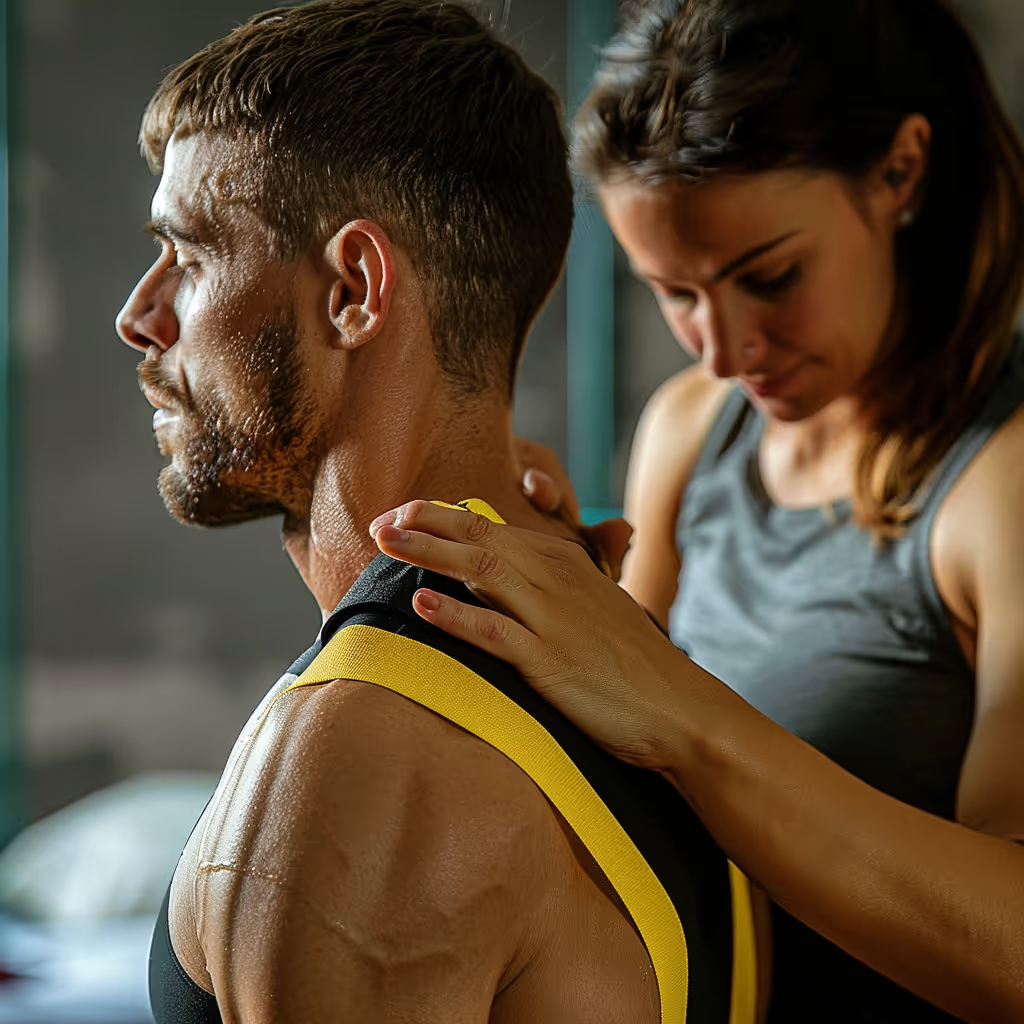
Rotator cuff tear
It is the grouping of the tendons of four shoulder muscles: the supraspinatus, infraspinatus, teres minor, and subscapularis. These four muscles play an important role in shoulder stability. The muscles must coordinate well to allow the shoulder to make healthy movements.
.png)
.png)
.png)


Many tears can initially be treated without surgery. In a trial of 58 people with small tears caused by an accident, physical therapy and surgery showed no clear difference in pain or shoulder function after one year. In the non-surgical group, 29.2% of the tears had grown by more than 5 mm. In the surgical group, 6.5% of the repaired tendons had torn again. These two figures describe different outcomes.2
This article explains the different types of tears, physical therapy treatments, and situations that require medical or surgical evaluation.
What is a rotator cuff tear and what are the types?
A rotator cuff tear is a tear that extends through part or all of the thickness of a shoulder tendon. Tears are also classified by their size and whether they develop gradually or occur following an injury.
The rotator cuff tendons connect the shoulder muscles to the humerus, the bone of the upper arm. One or more tendons may tear. Rotator cuff problems range from tendinopathy—which can cause pain when the tendon is used—to a complete tear. They can occur after an injury or result from changes in the tendon over time.3
10 Quick Tips to Understand Your Pain
One tip a day for 10 days to help you better understand your pain. About a 2-minute read.
The rotator cuff consists of four tendons that cover the head of the humerus like a cap: the supraspinatus, the infraspinatus, the teres minor, and the subscapularis. These tendons connect the muscles to the bones and enable rotational and elevating movements of the arm. Each of these four muscles has subregions that do not all serve the same function: they contribute differently to shoulder stability, movement, and the force generated.4 To see how these structures fit together, visit our page onshoulder anatomy.
The supraspinatus is the tendon most commonly affected: in an anatomical study of 57 postmortem shoulders with complete tears, the majority of tears involved the supraspinatus alone, or the supraspinatus along with the infraspinatus.5 It is not yet clear exactly why this tendon is affected more than others; its position and the load it bears during overhead movements are among the possible explanations. The cause of the tears remains a subject of debate, and research tends to point to a combination of factors: high forces on the tendon, age, injury, changes in tissue over time, and certain anatomical features of the shoulder.6
This injury can affect both active people and those who are less active. The severity of the symptoms does not always reflect the severity of the tear.
Types of Tears:
Tears are classified based onthe thickness of the tendon affected, their size, their location, and their cause.
Depending on the thickness of the material being cut:
-
Partial tear: The tear affects part of the tendon's thickness. Intact fibers maintain the tendon's continuity.
-
Complete (transfixing) tear: The tear passes through the entire thickness of the tendon, from one side to the other, creating an opening in the rotator cuff. This does not mean that the tendon is completely detached from the bone. These tears range from very small to very large: in one anatomical series, their surface area ranged from 0.07 to 19.17 cm², and several involved only the supraspinatus.5 They also vary greatly in terms of location, shape, impact on function, and reparability.7
Depending on the cause:
-
Degenerative tear: The tendon gradually changes over the years and can tear without any specific injury. These changes become more common with age, but they do not always cause pain. A review of 30 studies involving 6,112 shoulders reported rotator cuff abnormalities in 9.7% of shoulders in people aged 20 or younger, compared to 62% in those aged 80 or older. The prevalence increases with age in both symptomatic and asymptomatic individuals.8
-
Traumatic tear: The tendon suddenly tears during a specific event (a fall, lifting a heavy load, or an extreme movement).
Some tears gradually enlarge, while others remain stable. Follow-up studies of painful tears treated without surgery—as well as those of asymptomatic tears—generally show a often gradual enlargement of the tear and progressive changes in the muscle, such as a loss of volume or an accumulation of fat, with significant variations from one person to another.9 Changes visible on imaging do not always correspond to changes in pain or function.
Complete tears tend to get larger more often than partial tears.9 A review of 21 studies and 1,831 tears reports that, on average, 26.7% of partial tears and 54.9% of complete tears progressed. The average follow-up was 2.2 and 3 years, respectively. These figures describe the proportion of tears that enlarge, not the percentage increase in their size. Follow-up durations and definitions of progression varied across studies.10
The type of tear, your symptoms, and the activities you want to resume will guide the choice of treatment.
What are the symptoms of a rotator cuff tear?
A rotator cuff tear can cause shoulder pain, weakness in the arm, and difficulty moving the shoulder. The pain may radiate down the arm, worsen at night, or make it difficult to sleep on the affected side. Some tears do not cause any symptoms.11 You may also feel a popping sensation, but a popping sound alone is not enough to diagnose a tear.
In the Finnish study cited above, rotator cuff abnormalities included tendinopathies and tears. The 96% prevalence rate applied to shoulders that had not experienced pain or functional limitations during the previous week.1
The presence of a tear does not automatically mean pain or disability.
The size of a tear may remain stable or increase over time, depending on how it progresses, which varies from person to person.9
When symptoms appear, here are the most common ones:
-
Shoulder pain: May develop gradually (degenerative tear) or occur suddenly following an injury. The pain often radiates down the arm and, less commonly, toward the neck.
-
Nighttime pain: Worsens at rest, especially when lying on the affected shoulder.
-
Muscle weakness: Significant difficulty raising the arm above the head or carrying loads.
-
Reduced mobility: The arm does not raise as high or rotate as easily.
-
A cracking sensation: Joint noises during certain movements.
Specifically, traumatic tears:
-
Intense pain immediately after the injury
-
A popping or tearing sensation in the shoulder
-
Sudden and severe weakness in the arm
The severity of symptoms varies widely and does not necessarily correspond to the size of the tear. Among 393 people with a painful, non-traumatic complete tear, neither the severity as assessed by imaging, nor the size of the tear, nor the retraction of the tendon—that is, its displacement from its attachment site—was associated with pain intensity.12
Sudden and severe weakness following a fall or other accident requires prompt evaluation, even if the pain subsides.
What causes a rotator cuff tear?
A rotator cuff tear can occur after an injury or develop gradually due to age-related changes in the tendon. Several factors can contribute: the forces exerted on the tendon, its blood supply, and the shape of the acromion—the part of the shoulder blade located above the rotator cuff. No single factor alone explains all tears.6 Most rotator cuff problems develop gradually rather than following an accident.3
Common misconception: "A tear occurs only as a result of a severe accident."
Fact: A tear can occur after an injury or develop gradually due to age-related changes in the tendon. Exercises can improve arm strength and function, even if the tear remains visible.
Factors to consider in non-traumatic tears:
-
Natural aging: Changes in the tendon become more frequent as we get older, occurring gradually without any specific age milestone. The progression of the exercises takes into account your strength, your symptoms, and your activities.
-
Repetitive overhead activities: These are part of the work and sports history considered during the evaluation, but they alone are not sufficient to explain a tear.
-
Compression under the acromion: For a long time, tears were explained by a narrowing space under the acromion (part of the shoulder blade) that was thought to rub against the tendon. Current data show that this mechanical explanation is far from the whole story, though it does not rule out the shape of the bone. A meta-analysis combining the results of several studies found links between various bone measurements and complete degenerative tears: a Type III acromion, whose tip is hooked, was associated with a 2.26-fold higher risk, which indicates an association rather than a direct cause.13 Overuse, age, trauma, and tendon properties are also among the proposed factors, and the literature does not allow us to determine which one carries the most weight.6 This is discussed in more detail on the page about shoulder impingement syndrome.
-
Muscle strength: Shoulder strength and function are assessed to guide the program, without concluding that weakness caused the tear.
Traumatic causes (less common):
-
Direct fall onto the shoulder
-
Sudden lifting of an excessive load
-
A sudden pulling or twisting motion
-
Direct impact in the event of an accident
An age-related tear does not indicate a lack of effort or willpower. Pain and arm function can improve with appropriate treatment, even if the tendon remains torn.
A degenerative tear often occurs alongside shoulder tendinopathy, as both conditions can result from the same changes in the tendon.
The evaluation then allows us to compare your symptoms, your functional abilities, and the characteristics of the tear.
How is a rotator cuff tear diagnosed?
The diagnosis of a rotator cuff tear is based on your symptoms, the circumstances under which they began, and an examination of your shoulder’s range of motion and strength. Your physical therapist or doctor combines this information; a physical test alone is not enough. In a meta-analysis of several studies, the supraspinatus test detected approximately 74 out of 100 complete tears and produced a true-negative result in approximately 77 out of 100 people without such a tear. These values, known as sensitivity and specificity, show why multiple observations are necessary.14Medical imaging supplements the examination in certain situations.
The clinical evaluation includes:
-
Questions about your symptoms: When the pain started, the circumstances under which it occurs, factors that make it worse, and what brings relief.
-
Range-of-motion tests: Distance traveled by the arm in various directions.
-
Strength tests: Resistance against manual pressure for each muscle of the rotator cuff.
-
Specific tests: Positions and movements selected to assess pain and strength, including the Jobe, Neer, and Hawkins tests. The healthcare professional interprets the results of these tests in conjunction with the overall examination.
Medical imaging (MRI or ultrasound):
Imaging is not always necessary to begin treatment. Ultrasound uses sound waves to examine the tendons; MRI produces detailed images of the shoulder. Arthro-MRI involves injecting a contrast agent into the joint. In a meta-analysis combining several studies, these three tests detected more than 90 out of 100 complete tears and correctly classified more than 90 out of 100 shoulders without a complete tear as negative. They were less effective at detecting partial tears and tendinopathies.15
Imaging becomes relevant in these situations:
-
No improvement despite appropriate treatment. For tendinopathy or a partial tear, the 2022 guidelines recommend reassessing the treatment plan after a maximum of 12 weeks without sufficient progress; imaging may then help reorient care.16
-
Suspected complete tear, particularly following an accident
-
Preoperative evaluation to determine the exact size and location of the tear
-
Significant muscle weakness suggesting a severe tear
Important: MRI scans frequently reveal tears in people who are pain-free. The presence of a tear on imaging does not automatically require treatment.1
Treatment options are selected based on pain, weakness, the patient’s desired activities, and the characteristics of the tear.
What are some effective non-surgical treatments?
Non-surgical treatment combines progressive exercises, guidance, and adjustments to daily activities to reduce pain and improve arm function. A physical therapist will tailor this program to your needs. Manual therapy or medication may be added to your treatment plan, depending on your symptoms.
In the trial of 58 people described above, the one-year results showed no clear difference between surgery and physical therapy for small tears caused by an accident.2For many tears, non-surgical management is a reasonable initial option. An analysis of three studies that randomly assigned 252 participants to different treatments found no clinically significant difference between surgery and non-surgical treatment after one year, and the authors recommended starting with non-surgical management.17 The choice depends on whether the tear is traumatic or non-traumatic, its size, function, the patient’s age, treatment goals, and the outcomes achieved through rehabilitation—that is, the care and exercises that help the patient resume their activities.
The benefits can last for several years: in a group of people followed up for a previous complete tear, about 75% of patients treated without surgery still had a treatment considered successful after 5 years, with an average rotator cuff-specific quality-of-life score of 83 out of 100. This is a selected group; it is not a guarantee for all tears.18
Physical therapy as the primary treatment:
Your physical therapist will assess the following:
-
Joint mobility: Movements of the shoulder when the healthcare professional moves your arm, and then when you move it yourself
-
Nerve Function: Sensation and movement in the arm, including nerve stretch tests if symptoms warrant it
-
Quality of movement: The way muscles coordinate movement
-
Strength and stability: Strength of the rotator cuff and scapular muscles
The treatment plan may include:
-
Manual Mobilization : Movements performed by the physical therapist using their hands, depending on pain and range of motion, as a supplement to the active exercise program
-
Progressive Exercises : A program designed just for you, which strengthens the rotator cuff muscles and improves control of the shoulder blade—specifically, how it glides and positions itself as the arm moves.
-
Adjusting Your Activities: Strategies for Balancing Your Daily Routine and Exercise
-
Temporary adjustments to movements: When a specific position or movement triggers pain, avoid it or modify it until the shoulder readapts
Timeframe for Improvement The treatment plan includes: - Manual mobilization: Techniques to reduce pain and restore movement - Progressive exercises: A personalized program to strengthen the rotator cuff muscles and improve scapular control - Activity modification: Strategies for pacing your daily and sports activities - Postural education: Corrections to reduce compression on the tendons To strengthen the internal rotators after a tear, we recommend a shoulder medial rotation exercise with gradual progression. : Symptoms often improve over the course of several weeks of appropriate physical therapy. The rate of improvement varies from person to person and does not necessarily correspond to the healing of the tear.
Other non-surgical treatments:
-
Anti-inflammatory medication: Temporary pain relief (prescribed by your doctor)
-
Cortisone injection: An injection can temporarily reduce pain and make certain activities easier. In trials involving rotator cuff tendinopathy, the average benefit was small between four and eight weeks but absent at three months compared to an injection without the study drug—known as a placebo—and multiple injections were no more effective than a single one.19 A Cochrane review also describes a small short-term benefit for rotator cuff problems, based on small studies of varying quality.20 The injection is intended to provide relief, not to repair the tear. The doctor will discuss its appropriateness, risks, and the timing of the injection, especially if surgery is being considered.
Physical therapy helps avoid the risks associated with surgery. If it proves insufficient, the need for a surgical consultation may be reassessed.
Effectiveness of physiotherapy:
A review of 35 studies on complete tears reports frequent improvements in pain, mobility, strength, and functional activities with exercise. Participants mostly had long-standing tears, with no recent injuries. Methods and programs varied; the authors rated the evidence as moderately strong.21
The active program remains central. The 2022 guidelines also allow for the addition of manual therapy to provide short-term relief from tendinopathy, a category that includes partial tears.16 Another review of 11 trials compared exercises and manual therapy with exercises alone. It found no clear benefit of adding manual therapy in terms of pain during movement or function. For short-term pain at rest, the results favored exercises alone.22
A Cochrane review describes a different comparison: a program combining exercises and manual therapy with a sham treatment, involving 120 people with rotator cuff problems. After 22 weeks, the program resulted in a slight improvement in function, with no clear difference in pain. Adverse effects—mainly temporary pain after sessions—were more common with the active program.11 These results apply to the specific programs and groups studied. Follow-up care allows you to adjust your exercises and complementary treatments based on your response.
The outcome depends, among other things, on your symptoms, function, the characteristics of the tear, your personal goals, and your progress in the program. A comprehensive evaluation allows us to tailor your treatment to your specific situation.
Many patients notice a gradual improvement over the first few weeks of treatment, an improvement that may continue for several months.
Physical therapy may be sufficient to restore a satisfactory level of activity following a partial or complete tear. Surgical evaluation remains an option if pain, weakness, or difficulties persist.
In the longer term, the answer is more nuanced: a randomized trial found that surgical repair yielded better results than physical therapy for up to 15 years in cases of small- to medium-sized tears. The study included 103 people with a complete tear of 3 cm or less, and the results favored surgery in terms of function, pain, and pain-free range of motion. A total of 83 of the 103 people were followed up at 15 years. Of the 51 people assigned to physical therapy, 15 subsequently underwent surgery.23
Our physical therapists can assess your condition and provide you with a personalized treatment plan.
When is surgery necessary?
Surgery may be considered for a recent tear with significant loss of strength, or for symptoms that remain limiting despite appropriate rehabilitation. A complete tear does not automatically require surgery. After an injury, young people or those who are physically active may need an early surgical evaluation.24 For almost all partial tears, treatment begins without surgery, and surgery is considered if this approach does not yield the desired results.25
Surgery is not automatically required for a complete tear. It becomes an option in the following specific situations:
Indications for surgery:
-
Pain or difficulty using the joint that persists despite treatment. The 12-week mark without improvement is used to reassess the treatment plan for tendinopathy or a partial tear; it does not make surgery mandatory and does not delay the evaluation of a recent complete tear with significant weakness.16
-
A recent tear resulting from an accident in a young or very active person.
-
A massive tear affecting multiple tendons, resulting in significant weakness
-
A recent complete tear that prevents a manual laborer from using his arm normally
-
Documented progression of the tear despite treatment
Factors influencing the decision:
-
Age and activities: These are part of the discussion along with symptoms, function, the traumatic nature of the injury, the characteristics of the tear, and treatment goals.
-
Activity Level: Work and sports requirements may influence the choice of treatment
-
Size of the tear: The extent of the tear and the number of tendons affected influence the repair options.
-
Condition of the tendon and muscles: Fat accumulation in the muscles, a large tear, and a retracted tendon are associated with a risk of re-rupture after repair. A review examined these factors following arthroscopic surgery, which is performed using a small camera and instruments inserted through small incisions.26 Age is also a factor in the evaluation, though it does not alone determine the expected outcome.
Types of surgery:
-
Arthroscopic repair: The surgeon uses the camera to guide the sutures—the threads that attach the tendon to the bone. The duration depends on the tear and the procedure required.27
-
Upper capsular reconstruction: A tissue graft reinforces the upper part of the joint capsule, between the shoulder blade and the humerus. This option may be considered for certain irreparable tendons, particularly in the absence of significant osteoarthritis. Osteoarthritis involves changes in the joint that primarily affect the cartilage, the layer that covers the ends of the bones. These changes are not always painful.28
-
Reverse shoulder replacement: Artificial components replace the joint by reversing the positions of the ball and socket. The deltoid muscle, on the side of the shoulder, can then help lift the arm despite severe damage to the rotator cuff. This procedure may be considered for a massive, irreparable tear, particularly when accompanied by osteoarthritis.29
Postoperative recovery:
-
Immobilization: A splint or sling is usually worn for a few weeks after surgery.
-
Rehabilitation follows the surgeon's protocol. Movement and strengthening exercises are introduced gradually to protect the repair.
-
Return to normal activities: This can take several months, depending on the size of the tear and the patient.
10 Quick Tips to Understand Your Pain
One tip a day for 10 days to help you better understand your pain. About a 2-minute read.
Risks of the procedure: Studies generally report low complication rates. However, a review of 137 studies notes that direct comparisons were few and often of poor quality.30 A new tear remains possible. In the small trial involving recent tears caused by an accident, 6.5% of the repaired tendons had torn again after 12 months. This rate does not automatically apply to major ruptures.2
Before surgery: A tailored program can help maintain mobility, strength, and tolerable activities while waiting for surgery.
After an accident, severe pain or a loss of range of motion requires a prompt evaluation before resuming exercises. A fracture or a dislocated shoulder may require special protection.
What should you do at home for a recent traumatic tear?
A recent shoulder injury first requires protecting the arm and a prompt evaluation if the pain or weakness is severe. Seek medical attention immediately if you can no longer move your arm, if the shoulder is misshapen, or if your arm remains numb. Do not attempt to put a dislocated shoulder back into place.31
Landmarks PEACE and LOVE outline general principles for managing injuries. After a tear, follow your healthcare provider’s instructions, especially if immobilization or surgery is planned.
PEACE, in the first few days:
P = Protection: Support the arm with a sling if it helps. Follow any prescribed immobilization; your healthcare provider will specify when to resume movement.
E= Elevation: While sitting, a pillow can support the arm without forcing the shoulder upward.
A= Anti-inflammatories, a decision to be discussed: Do not start or stop taking any medication based solely on these letters. Your doctor or pharmacist will take into account your overall health, your other medications, and the relief you’re seeking.
C = Compression: Do not apply a tight bandage around your shoulder without professional advice.
E= Education: Learn about permitted movements and signs to watch for. The intensity of the initial pain alone does not determine the duration of recovery.
LOVE, during the permitted gradual return to activity:
L = Gradual Load: Resume light tasks according to instructions and how your shoulder responds—for example, brushing your teeth or doing a little dishes. Reduce the effort if the pain increases significantly or persists for longer afterward.
O = Optimism: Improvement in pain and activity levels is still possible without surgery, even if the tear remains visible. You can discuss your concerns with your healthcare provider.
V = Cardiovascular activity: Walking or using a stationary bike with your arm supported can help you stay active without putting strain on your shoulder. Running in water, or aquajogging, is another option if entering and exiting the pool is safe and does not involve movements that are restricted.
E = Exercise: Resume mobility exercises, then strength training, based on your evaluation and safety guidelines. After surgery, follow your surgeon’s protocol.
Additional tips:
-
Sleeping position: Sleep on your uninjured side. Place a pillow between your arm and your body to support your shoulder. Avoid sleeping with your arm behind your head.
-
Neck support: Use a pillow that fills the hollow of your neck to reduce tension.
-
Pain Management: A cold pack wrapped in a cloth may provide temporary relief. Avoid direct contact with the skin, and stop if the cold becomes uncomfortable.
After an injury, a healthcare professional can examine your shoulder and determine whether you need imaging or a medical evaluation before starting exercises. Severe pain, sudden weakness, or deformity requires immediate medical attention.
Follow-up care helps adjust treatment when strength, pain, or mobility change.
Can you treat a rotator cuff tear on your own?
Simple measures can help manage symptoms in the early stages. Without an evaluation, a program may not be appropriately tailored to the patient’s pain, weakness, and targeted activities. Significant pain or loss of function following an injury warrants an evaluation.
The physical therapist assesses shoulder function, looks for signs that require medical evaluation, and tailors the exercise program accordingly. In some cases, imaging or a medical evaluation can help determine the extent of the tear and the available treatment options. The exercises are designed with your symptoms, strength, and the activities you plan to resume in mind.
Assessment and monitoring help tailor the exercises to your symptoms, goals, and progress.
The clinic can provide details about the type of appointment, the fee, and the next available time slot. A medical emergency should not wait for this appointment.
When should you seek medical attention for a rotator cuff tear?
Persistent pain, weakness in the arm, or difficulty performing daily activities are reasons to see a doctor for a shoulder evaluation. A loss of range of motion following an accident, deformity, or persistent numbness requires immediate medical evaluation.
See a physical therapist if:
-
Your pain persists despite your treatment, or it is preventing you from carrying out your daily activities.
-
You are experiencing significant weakness in your arm
-
Pain regularly disrupts your sleep
-
You have recently suffered a shoulder injury; after undergoing the necessary medical evaluation if there are any signs requiring urgent attention
-
Your daily or work-related activities are limited
You do not need a medical referral to see a physiotherapist in Quebec. The physiotherapist will assess your condition and refer you to a doctor if necessary.
Consult your doctor promptly if:
-
Complete loss of arm mobility following an injury
-
Severe pain not relieved by pain medication
-
Significant swelling or visible deformity of the shoulder
-
Persistent numbness or tingling in the arm
For people awaiting surgery: While waiting for surgery, a tailored program can help maintain shoulder mobility, strength, and tolerance. The healthcare professional will specify which activities are permitted based on the nature of the tear and the surgeon’s instructions.
To optimize your recovery, be sure to check out our resources on shoulder pain and physical therapy for the shoulder, as well as all of our pages on shoulder and arm pain.
What are the Frequently Asked Questions about Rotator Cuff Tears?
Frequently asked questions about rotator cuff tears focus on recovery, surgery, sports, the progression of the tear, and how it differs from tendinopathy.
Pain and arm function may improve without surgery, even if the tendon remains torn. When you can return to sports, the duration of follow-up care, and the decision to have surgery depend on your symptoms, the extent of the tear, and your goals.
Can a tear heal without surgery?
Often, yes, in the sense that many people do just fine without surgery. For partial tears, physical therapy is almost always the first choice. A 2024 review recommends starting with non-surgical treatment for almost all partial tears, especially in athletes who use their arms overhead.25 For complete tears, a study followed people treated without surgery: about 75% were still doing well after 5 years.18 That said, other studies show that in the very long term, surgical repair resulted in better outcomes regarding pain, function, and mobility at 15 years for certain complete tears measuring 3 cm or less.23 This is something to discuss with your physical therapist and doctor, depending on your age, the nature of your tear, and what you want to be able to do with your arm.
How long does recovery take?
Recovery from surgical repair takes several months: the AAOS states that most patients regain functional mobility and sufficient strength within four to six months.27 This timeline does not guarantee complete healing of the tendon or permission to resume all sports. The surgeon’s protocol guides the progression based on the type of repair. The consensus of the American Society of Shoulder and Elbow Therapists, for example, recommends gradual strengthening beginning in the twelfth week following arthroscopic repair.32
Without surgery, the timeline depends on the tear, the symptoms, and the treatment goals. For tendinopathy or a partial tear, the Quebec guidelines recommend reassessing the treatment plan after a maximum of twelve weeks of appropriate care and exercises if there has been insufficient improvement.16 This timeframe is intended to reassess the treatment plan; it does not mean that every tear heals within twelve weeks. A recent tear with significant weakness requires prompt medical attention, without waiting until this timeframe has elapsed. At each follow-up visit, range of motion, strength, exercise tolerance, and targeted activities guide the next steps.
Can I keep exercising with a tear?
It depends on the size of the tear and your symptoms. Many elite athletes perform with tears that don’t cause pain. In a small study of elite athletes who use their arms overhead, 8 of the 20 dominant shoulders showed a partial or complete tear on MRI without any symptoms. When the athletes were followed up five years later, they reported no symptoms or shoulder treatment.33 Your physical therapist will help you gradually return to sports.
Will the tear get worse if I don't have surgery?
Not necessarily. Some tears may grow larger over time, but this is not inevitable. A systematic review shows that progression rates vary depending on the type of tear and the definition used by each study, and that only a portion of tears progress during the follow-up periods examined.10 An active physical therapy program strengthens the muscles involved in arm movement and helps preserve your shoulder function.
Can physical therapy repair a torn tendon?
Physical therapy aims to improve strength, movement control, and functional activities; it does not mechanically reattach the tendon to the bone. A tear may remain visible even though the shoulder feels more comfortable and functions better. The review of exercises reports frequent improvements in pain, range of motion, strength, and functional activities in people with a complete tear.21
The subscapularis, which is often overlooked in this exercise, can be targeted with a Subscapularis strengthening exercise.What is the difference between a tear and tendinopathy?
Tendinopathy refers to a problem with a tendon that can cause pain and limit its use. A tear describes a partial or complete rupture of the tendon’s fibers. The two can occur simultaneously: changes in the tendon can range from tendinopathy to a complete rupture, though progression is not always inevitable.3 Microscopic studies have identified changes associated with tendinopathy in torn tendons, including in parts that appear intact.34 Treatments often include exercises and advice, and are then tailored to the specific tear and the observed difficulties. Other conditions can cause similar symptoms, including shoulder bursitis and calcific tendinitis. Bursitis refers to inflammation of a bursa, a small fluid-filled sac that helps tissues glide smoothly. Calcific tendinitis is a tendon condition associated with calcium deposits.
Need professional advice?
Make an appointmentReferences
Links open in a new tab.
- Ibounig T, Järvinen TLN, Raatikainen S, Härkänen T, Sillanpää N, Bensch F, et al. Incidental Rotator Cuff Abnormalities on Magnetic Resonance Imaging. JAMA Intern Med. 2026;186(4):406-414. (Back to sections: 1, 2, 3)
- Ranebo MC, Björnsson Hallgren HC, Holmgren T, Adolfsson LE. Surgery and physical therapy were both successful in the treatment of small, acute, traumatic rotator cuff tears: a prospective randomized trial. J Shoulder Elbow Surg. 2020;29(3):459-470. (Back to sections: 1, 2, 3)
- Bedi A, Bishop J, Keener J, Lansdown DA, Levy O, MacDonald P, et al. Rotator cuff tears. Nat Rev Dis Primers. 2024;10(1):8. (Back to sections: 1, 2, 3)
- Cavanaugh E, Arcot Santillan A, Hoshikawa K, Giambini H. Subregions of the Rotator Cuff Muscles Exhibit Distinct Anatomy, Biomechanics, and Function. Sports (Basel). 2024;12(12). (Back to section: 1)
- Wening JD, Hollis RF, Hughes RE, Kuhn JE. Quantitative morphology of full-thickness rotator cuff tears. Clin Anat. 2002;15(1):18-22. (Back to sections: 1, 2)
- Maffulli N, Longo UG, Berton A, Loppini M, Denaro V. Biological factors in the pathogenesis of rotator cuff tears. Sports Med Arthrosc Rev. 2011;19(3):194-201. (Back to sections: 1, 2, 3)
- Lädermann A, Burkhart SS, Hoffmeyer P, Neyton L, Collin P, Yates E, et al. Classification of full-thickness rotator cuff lesions: a review. EFORT Open Rev. 2016;1(12):420-430. (Back to section: 1)
- Teunis T, Lubberts B, Reilly BT, Ring D. A systematic review and pooled analysis of the prevalence of rotator cuff disease with increasing age. J Shoulder Elbow Surg. 2014;23(12):1913-1921. (Back to section: 1)
- Hsu J, Keener JD. Natural History of Rotator Cuff Disease and Implications for Management. Oper Tech Orthop. 2015;25(1):2-9. (Back to sections: 1, 2, 3)
- Garcia MJ, Caro D, Hammerle MV, Villarreal JB, DeAngelis JP, Ramappa AJ, et al. Disparities in Definitions and Rates of Rotator Cuff Tear Progression: A Systematic Review. JB JS Open Access. 2024;9(4). (Back to sections: 1, 2)
- Manual Therapy and Exercise for Rotator Cuff Disorders | Cochrane. (Back to sections: 1, 2)
- Dunn WR, Kuhn JE, Sanders R, An Q, Baumgarten KM, Bishop JY, et al. Pain symptoms do not correlate with the severity of rotator cuff tears: a cross-sectional study of 393 patients with a symptomatic, atraumatic, full-thickness rotator cuff tear. J Bone Joint Surg Am. 2014;96(10):793-800. (Back to section: 1)
- Andrade R, Correia AL, Nunes J, Xará-Leite F, Calvo E, Espregueira-Mendes J, et al. Is Bony Morphology and Morphometry Associated With Degenerative Full-Thickness Rotator Cuff Tears? A Systematic Review and Meta-analysis. Arthroscopy. 2019;35(12):3304-3315.e2. (Back to section: 1)
- Gismervik SØ, Drogset JO, Granviken F, Rø M, Leivseth G. Physical examination tests of the shoulder: a systematic review and meta-analysis of diagnostic test performance. BMC Musculoskelet Disord. 2017;18(1):41. (Back to section: 1)
- Roy JS, Braën C, Leblond J, Desmeules F, Dionne CE, MacDermid JC, et al. Diagnostic accuracy of ultrasonography, MRI, and MR arthrography in the characterization of rotator cuff disorders: a systematic review and meta-analysis. Br J Sports Med. 2015;49(20):1316-28. (Back to section: 1)
- Lafrance S, Charron M, Roy JS, Dyer JO, Frémont P, Dionne CE, et al. Diagnosing, Managing, and Supporting the Return to Work of Adults With Rotator Cuff Disorders: A Clinical Practice Guideline. J Orthop Sports Phys Ther. 2022;52(10):647-664. (Back to sections: 1, 2, 3, 4)
- Ryösä A, Laimi K, Äärimaa V, Lehtimäki K, Kukkonen J, Saltychev M. Surgery or conservative treatment for rotator cuff tears: a meta-analysis. Disabil Rehabil. 2017;39(14):1357-1363. (Back to section: 1)
- Boorman RS, More KD, Hollinshead RM, Wiley JP, Mohtadi NG, Lo IKY, et al. What happens to patients when we do not repair their rotator cuff tears? Five-year rotator cuff quality-of-life index outcomes following nonoperative treatment of patients with full-thickness rotator cuff tears. J Shoulder Elbow Surg. 2018;27(3):444-448. (Back to sections: 1, 2)
- Mohamadi A, Chan JJ, Claessen FM, Ring D, Chen NC. Corticosteroid Injections Provide Small and Transient Pain Relief in Rotator Cuff Tendinosis: A Meta-analysis. Clin Orthop Relat Res. 2017;475(1):232-243. (Back to section: 1)
- Corticosteroid Injections for Shoulder Pain | Cochrane. (Back to section: 1)
- Jeanfavre M, Husted S, Leff G. EXERCISE THERAPY IN THE NON-SURGICAL TREATMENT OF FULL-THICKNESS ROTATOR CUFF TEARS: A SYSTEMATIC REVIEW. Int J Sports Phys Ther. 2018;13(3):335-378. (Back to sections: 1, 2)
- Paraskevopoulos E, Plakoutsis G, Chronopoulos E, Maria P. Effectiveness of a Combined Program of Manual Therapy and Exercise Versus Exercise Alone in Patients With Rotator Cuff-Related Shoulder Pain: A Systematic Review and Meta-analysis. Sports Health. 2023;15(5):727-735. (Back to section: 1)
- Moosmayer S, Lund G, Seljom US, Haldorsen B, Svege IC, Hennig T, et al. Fifteen-Year Results of a Comparative Analysis of Tendon Repair Versus Physical Therapy for Small-to-Medium-Sized Rotator Cuff Tears: A Concise Follow-up of Previous Reports. J Bone Joint Surg Am. 2024;106(19):1785-1796. (Back to sections: 1, 2)
- Böhm E, Gleich J, Siebenbürger G, Böcker W, Ockert B. [Rotator cuff tear: Indications and pathology-specific reconstructive procedures]. Unfallchirurg. 2021;124(2):108-116. (Back to section: 1)
- Bi AS, Morgan AM, O'Brien M, Waterman BR, Strauss EJ, Golant A. Partial-Thickness Rotator Cuff Tears: Current Concepts. JBJS Rev. 2024;12(8). (Back to sections: 1, 2)
- Darbandi A, Credille K, Darbandi A, Hevesi M, Dandu N, Bodendorfer BM, et al. Fatty Infiltration, Tear Size, and Retraction Size Are Significant Risk Factors for Retear After Arthroscopic Rotator Cuff Repair: A Systematic Review. Arthroscopy. 2025;41(5):1649-1666.e3. (Back to section: 1)
- Rotator Cuff Tears: Surgical Treatment Options - OrthoInfo - AAOS. (Back to sections: 1, 2)
- Eppler MB, Bolia IK, Tibone JE, Gamradt SC, Hatch GF, Omid R, et al. Superior Capsular Reconstruction of the Shoulder. Arthroscopy. 2021;37(6):1708-1710. (Back to section: 1)
- Shoulder Joint Replacement - OrthoInfo - AAOS. (Back to section: 1)
- Seida JC, LeBlanc C, Schouten JR, Mousavi SS, Hartling L, Vandermeer B, et al. Systematic review: nonoperative and operative treatments for rotator cuff tears. Ann Intern Med. 2010;153(4):246-55. (Back to section: 1)
- nhs.uk. Dislocated shoulder. 2017. (Back to section: 1)
- Thigpen CA, Shaffer MA, Gaunt BW, Leggin BG, Williams GR, Wilcox RB. The American Society of Shoulder and Elbow Therapists’ consensus statement on rehabilitation following arthroscopic rotator cuff repair. J Shoulder Elbow Surg. 2016;25(4):521-35. (Back to section: 1)
- Connor PM, Banks DM, Tyson AB, Coumas JS, D'Alessandro DF. Magnetic resonance imaging of the asymptomatic shoulder in overhead athletes: a 5-year follow-up study. Am J Sports Med. 2003;31(5):724-7. (Back to section: 1)
- DE Giorgi S, Saracino M, Castagna A. Degenerative disease in rotator cuff tears: what are the biochemical and histological changes? Joints. 2014;2(1):26-8. (Back to section: 1)
- Kukkonen J, Joukainen A, Lehtinen J, Mattila KT, Tuominen EK, Kauko T, et al. Treatment of non-traumatic rotator cuff tears: A randomized controlled trial with one-year clinical results. Bone Joint J. 2014;96-B(1):75-81.
- Yamamoto A, Takagishi K, Osawa T, Yanagawa T, Nakajima D, Shitara H, et al. Prevalence and risk factors for rotator cuff tears in the general population. J Shoulder Elbow Surg. 2010;19(1):116-20.
- Milgrom C, Schaffler M, Gilbert S, van Holsbeeck M. Rotator cuff changes in asymptomatic adults. The effect of age, hand dominance, and gender. J Bone Joint Surg Br. 1995;77(2):296-8.
- Safran O, Schroeder J, Bloom R, Weil Y, Milgrom C. Natural history of symptomatic rotator cuff tears treated conservatively in patients aged 60 years or younger. Am J Sports Med. 2011;39(4):710-4.
- Sher JS, Uribe JW, Posada A, Murphy BJ, Zlatkin MB. Abnormal findings on magnetic resonance images of asymptomatic shoulders. J Bone Joint Surg Am. 1995;77(1):10-5.
- Galatz LM, Ball CM, Teefey SA, Middleton WD, Yamaguchi K. The outcome and repair integrity of completely arthroscopically repaired large and massive rotator cuff tears. J Bone Joint Surg Am. 2004;86(2):219-24.
- Lambers Heerspink FO, van Raay JJ, Koorevaar RC, van Eerden PJ, Westerbeek RE, van 't Riet E, et al. Comparing surgical repair with conservative treatment for degenerative rotator cuff tears: a randomized controlled trial. J Shoulder Elbow Surg. 2015;24(8):1274-81.
- Bishop J, Klepps S, Lo IK, Bird J, Gladstone JN, Flatow EL. Cuff integrity after arthroscopic versus open rotator cuff repair: a prospective study. J Shoulder Elbow Surg. 2006;15(3):290-9.
- Collin P, Matsumura N, Lädermann A, Denard PJ, Walch G. Relationship between massive chronic rotator cuff tear patterns and loss of active shoulder range of motion. J Shoulder Elbow Surg. 2014;23(8):1195-202.
- Keener JD, Galatz LM, Stobbs-Cucchi G, Patton R, Yamaguchi K. Rehabilitation following arthroscopic rotator cuff repair: a prospective randomized trial comparing immobilization with early motion. J Bone Joint Surg Am. 2014;96(1):11-9.
- Dubois B, Esculier JF. Soft-tissue injuries simply need PEACE and LOVE. Br J Sports Med. 2020;54(2):72-73.
- Moosmayer S, Lund G, Seljom US, Haldorsen B, Svege IC, Hennig T, et al. Tendon repair compared with physical therapy in the treatment of rotator cuff tears: a randomized controlled study of 103 cases with a five-year follow-up. J Bone Joint Surg Am. 2014;96(18):1504-14.
- Miniaci A, Mascia AT, Salonen DC, Becker EJ. Magnetic resonance imaging of the shoulder in asymptomatic professional baseball pitchers. Am J Sports Med. 2002;30(1):66-73.
- Mall NA, Kim HM, Keener JD, Steger-May K, Teefey SA, Middleton WD, et al. Symptomatic progression of asymptomatic rotator cuff tears: a prospective study of clinical and sonographic variables. J Bone Joint Surg Am. 2010;92(16):2623-33.
.jpg)
.jpg)
%20(1).jpg)
Other conditions

Hip osteoarthritis is the normal wear and tear of the hip joint. It is often said that osteoarthritis is the wear and tear of the cartilage between our bones. That is true, but it involves more than just the cartilage. Cartilage is a tissue that acts as a cushion between the surfaces of our bones and allows our joints to glide smoothly and move fluidly.
This is normal wear and tear of the knee joint. It’s often said that osteoarthritis is the wearing down of the cartilage between our bones. That’s true, but it’s more than just the cartilage. Cartilage is a tissue that acts as a cushion between the surfaces of our bones and allows our joints to glide smoothly and move fluidly.
It is an inflammation of the subacromial bursa in the shoulder joint.
A bursa is a small, thin sac filled with fluid that is found in many of the body's joints. This small sac acts as a cushion within the joint and lubricates the structures that are subject to increased friction.
It is a tissue that surrounds the shoulder and helps keep the shoulder bone in place within the joint. The capsule helps keep the joint stable.
Neck pain is a general term used to describe pain in the neck that has no specific cause, such as an accident or a sudden awkward movement. Neck pain is therefore synonymous with “my neck hurts, and nothing in particular happened.”
In both types of injury, pain is felt in the neck and then radiates into the arm, or vice versa.
Make an appointment now
We offer a three-pronged quality assurance approach: optimized treatment time, a second opinion from a physical therapist, and ongoing expertise to ensure effective care tailored to your needs.

Customer satisfaction is our top priority
At Physioactif, excellence guides everything we do, but our patients are the best ones to tell you about it. Take a look at their verified reviews to get a real sense of their experience.









Discover our physical therapy clinics
We have locations in several areas to better serve you.
Blainville
190 Bas-de-Sainte-Thérèse Road, Suite 110,
Blainville, Quebec
J7B 1A7
Located in Blainville, near Rosemère, the Physioactif clinic is easily accessible to residents of the area and the surrounding communities
Boucherville
690 Rue de Montbrun, Suite S,
Boucherville, Quebec
J4B 8H2
Located in Boucherville, the Physioactif clinic is easily accessible to people in the area
Laval
3224 Jean-Béraud Ave., Suite 220, Laval,
QC H7T 2S4
Located in Chomedey, in the heart of Laval, the Physioactif clinic is easily accessible to people in the area
Montreal
8801 Lajeunesse Street,
Montreal,
QC H2M 1R8
Located in Ahuntsic, near Villeray, the Physioactif clinic is easily accessible to residents of both neighborhoods
Saint-Eustache
180 25th Avenue, Suite
201 Saint-Eustache
QC J7P 2V2
Located in Saint-Eustache, the Physioactif clinic is easily accessible to residents of the area and the surrounding communities
Vaudreuil
21 Cité-des-Jeunes Boulevard, Suite 240,
Vaudreuil-Dorion, Quebec
J7V 0N3
Located in Vaudreuil-Dorion, the Physioactif clinic is easily accessible to people in the area
Make an appointment now